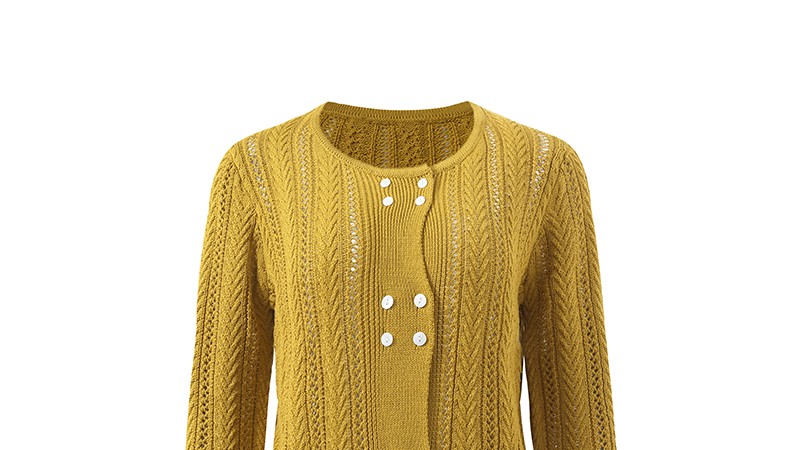
For fashion brands finalizing AW26/27 knitwear lines, the choice between double-breasted and single-breasted cardigans directly impacts collection cohesion, wholesale appeal, and production feasibility. This decision isn’t stylistic alone—it affects yarn consumption, fit engineering, button placement complexity, and alignment with verified 2026 market movement: luxury knitwear sell-through rose +40% at Loro Piana and +23% at Brunello Cucinelli, driven largely by structured, heavy-gauge silhouettes. Buyers evaluating Knitwear Apparel > Women’s Cardigan & Sweater OEM/ODM must weigh silhouette intent against technical execution—especially when sourcing for cropped, 5GG, 100% cotton constructions.
Core Structural Differences Define Function & Fit
A single-breasted cardigan features one vertical column of buttons and a narrow front overlap—typically 1–2 inches—resulting in lighter visual weight and greater ease of wear. Its construction uses less yarn, requires simpler placket finishing, and accommodates relaxed or oversized fits without compromising drape. A double-breasted cardigan, by contrast, has two parallel rows of buttons and overlapping front panels—often 3–4 inches wide—creating inherent structure, vertical line emphasis, and a tailored, architectural impression. This design demands precise front panel symmetry, balanced button spacing, and reinforced placket stability to prevent gapping or twisting during wear.
Market Demand ≠ Universal Suitability
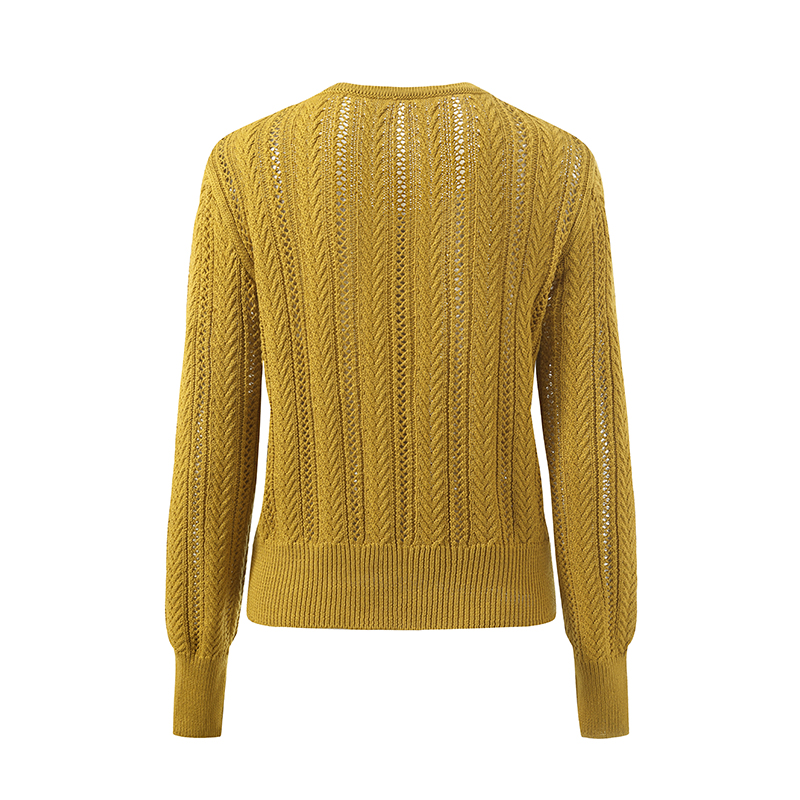
While double-breasted cardigans are trending strongly in 2026—anchoring AW26/27 collections with cropped, 5GG chunky knit iterations—their commercial advantage depends on brand positioning and target customer. Brands targeting elevated contemporary or luxury segments benefit from the silhouette’s inherent formality and texture retention; those focused on everyday layering, Gen Z digital-first channels, or price-sensitive entry points may find single-breasted styles more scalable and versatile across size ranges. Neither is objectively superior: a double-breasted 5GG cardigan delivers high perceived value but requires stricter fit grading and higher material yield; a single-breasted version offers faster development cycles and broader size inclusivity—but risks blending into saturated mid-tier assortments.
Gauge, Material & Silhouette Interdependence
The 5GG gauge (chunky, heavy-weight texture) amplifies structural differences between the two silhouettes. At this gauge, double-breasted construction stabilizes bulkier fabric, preventing front flare and supporting clean lapel roll; single-breasted versions in 5GG risk appearing boxy without careful stitch density calibration and ribbing integration. Material choice further modulates outcome: 100% cotton provides breathability and matte handfeel ideal for transitional layering, but lacks memory—making double-breasted front panel recovery highly dependent on ribbing ratio, stitch tension, and post-knit finishing. Buyers should confirm how cotton yarn count, twist level, and washing method affect final weight (e.g., 311g), drape, and shrinkage tolerance before sampling.
OEM/ODM Development Checklist for Cardigan Silhouettes
Before committing to production, brands sourcing Knitwear Apparel > Women’s Cardigan & Sweater OEM/ODM must align internally and externally on these non-negotiable items:
- Confirm whether Tech Pack includes full front panel pattern pieces—not just flat measurements—for double-breasted overlap consistency;
- Specify button type, diameter, and placement tolerance (±1mm recommended for double-breasted symmetry);
- Define collar stand height and roll line relative to lapel notch—critical for double-breasted balance;
- Clarify placket reinforcement method (e.g., interlining, tape binding) to support repeated fastening;
- Validate sample review protocol: flat measurement sheet, worn-fit photo set, and stretch/recovery test under controlled humidity;
- Confirm OEM/ODM customization scope—e.g., stitch pattern options (cable, honeycomb, rib variants), collar shape (notched, shawl, Peter Pan), and hem finish (faced, bound, raw-edge).
Why Cropped Double-Breasted Fits AW26/27 Strategy
The cropped length adds intentional proportion control—balancing the visual weight of double-breasted fronts while enabling waist definition over high-rise bottoms or dresses. Combined with 5GG texture and 100% cotton composition, it meets three concurrent 2026 demand drivers: tactile richness, seasonless layering utility (AW26/27 spans late autumn through early spring), and private label differentiation potential. For brands building a signature knitwear capsule, this configuration avoids trend fatigue by anchoring novelty in construction—not just color or embellishment.
Recommended Products
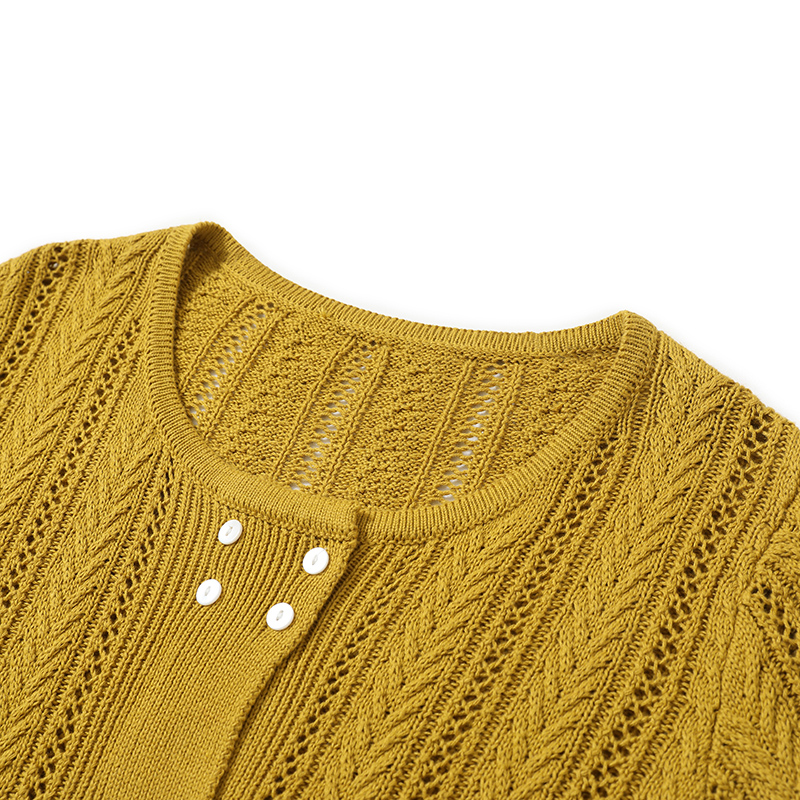
Women’s 100% Cotton Double‑Breasted Cardigan – 5GG Chunky Knit (OEM) — Designed for AW26/27 collection planning, this piece demonstrates how gauge, silhouette, and material intersect to meet verified luxury segment performance benchmarks. It supports full OEM/ODM development within Knitwear Apparel > Women’s Cardigan & Sweater OEM/ODM, making it suitable for fashion brands prioritizing structured, textured layering pieces with private label flexibility.
Frequently Asked Questions
What’s the difference between single‑breasted and double‑breasted cardigans?
A single‑breasted cardigan has one column of buttons with a narrow overlap; a double‑breasted cardigan has two parallel rows of buttons with wider, overlapping front panels. The double‑breasted style offers a more structured, tailored look, while the single‑breasted is simpler and more casual.
Which silhouette sells better for fashion brands in 2026?
Both have strong demand, but double‑breasted cardigans are trending strongly in 2026. Heavy‑gauge structured cardigans (like 5GG double‑breasted) are anchoring the silhouette landscape. Luxury knitwear sell‑through increased 40% at Loro Piana and 23% at Brunello Cucinelli year‑on‑year.
What should I consider when sourcing double‑breasted cardigans?
Key factors: gauge (5GG for chunky vs. 7GG/12GG for finer knits), material (100% cotton offers breathability), customization options (collar, placket, stitch patterns), MOQ flexibility, and the manufacturer’s OEM/ODM capabilities.
Is double‑breasted cardigan more expensive to produce than single‑breasted?
Yes. Because of the wider overlapping front panels, a double‑breasted garment requires more yarn and more complex button placement. This typically raises production cost and retail price.
How often should brands update their cardigan styles?
For AW26/27, cardigans are gaining wholesale share. Review cardigan offerings every season, with 2026 trends focusing on cropped silhouettes, structured double‑breasted designs, and textured knits (e.g., 3D stitches).
No single silhouette guarantees success. The optimal choice depends on your brand’s customer archetype, distribution channel requirements, seasonal layering strategy, and technical capacity to execute precision details like double-breasted front alignment or 5GG cotton drape control. When sourcing for Knitwear Apparel > Women’s Cardigan & Sweater OEM/ODM, prioritize suppliers who support collaborative development—not just production—and whose OEM/ODM process includes structured feedback loops for fit, fabric behavior, and construction validation. Contact our team to discuss your knitwear project and explore customized manufacturing solutions.