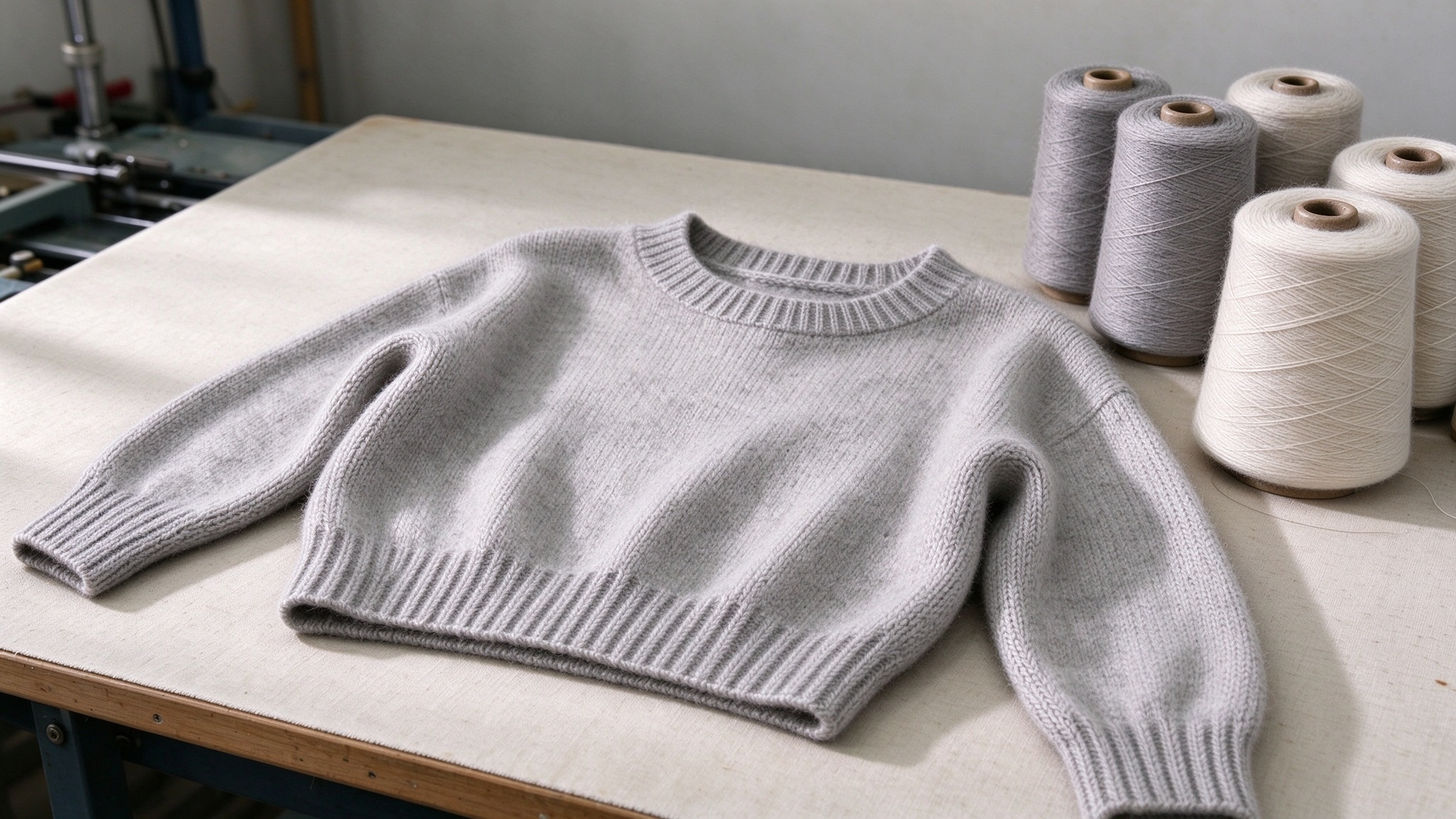
Why Doesn’t an Approved Sweater Sample Guarantee Identical Bulk Production?
For apparel brands, wholesalers and sourcing teams, sample approval is an important milestone before placing a bulk sweater order. Once the color, measurements, handfeel and overall appearance meet expectations, buyers can move forward with production planning and prepare their products for the market.
However, differences may still become noticeable when bulk production begins. Sweaters from different production batches may show slight color variations. Garment measurements may differ from the approved size chart, while the finished products may feel softer, firmer, heavier or more textured than the original sample.
These differences do not necessarily indicate that the entire manufacturing process has failed. Knitwear is influenced by multiple interconnected factors, including yarn batches, knitting structures, production settings, finishing methods, measurement procedures and process consistency.
For B2B buyers, the goal should not be to assume that every bulk garment will be absolutely identical to the sample in every detail. Instead, it is important to define clear acceptance standards, identify potential risks before production and establish a practical quality control process.
This guide examines the main causes of color, size and handfeel variations in bulk sweater production and explains how apparel brands and knitwear OEM manufacturers can work together to reduce avoidable inconsistencies.
1. Why Does Color Variation Occur in Bulk Sweater Production?
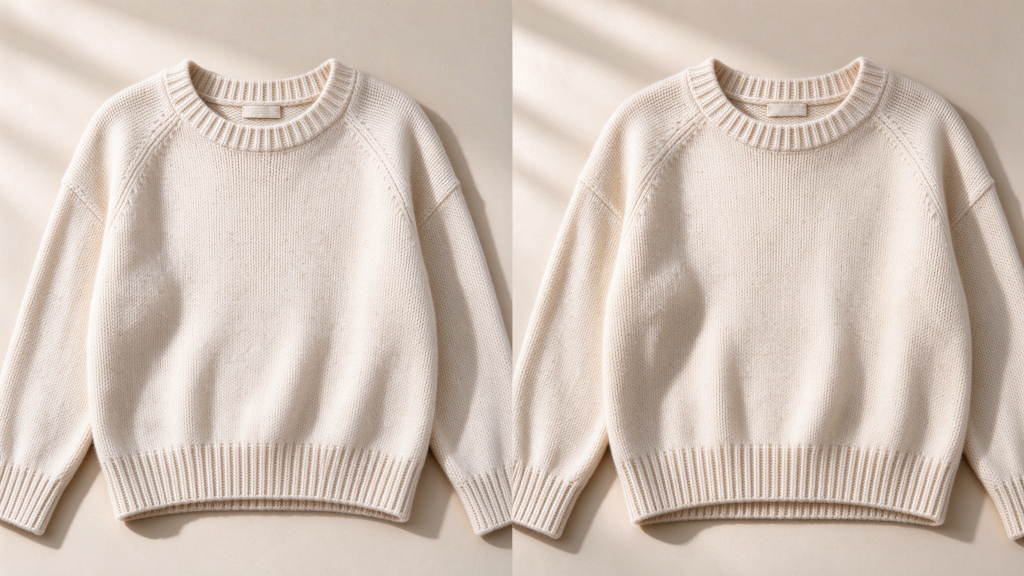
Different Yarn Dye Lots Can Produce Different Color Results
Color consistency begins with the yarn. Even when the same color name or target reference is used, different dye lots may show some visual variation.
Factors such as dye formulation, dyeing conditions, raw material characteristics and batch differences can influence the final appearance. Subtle changes may be especially noticeable in colors such as navy, black, grey and beige, depending on the product and the buyer’s expectations.
If yarns with visibly different shades are used within the same garment or across different production batches, the finished sweaters may not appear completely consistent.
For this reason, buyers should confirm not only the color of the development sample but also the relationship between the approved color standard and the yarn intended for bulk production.
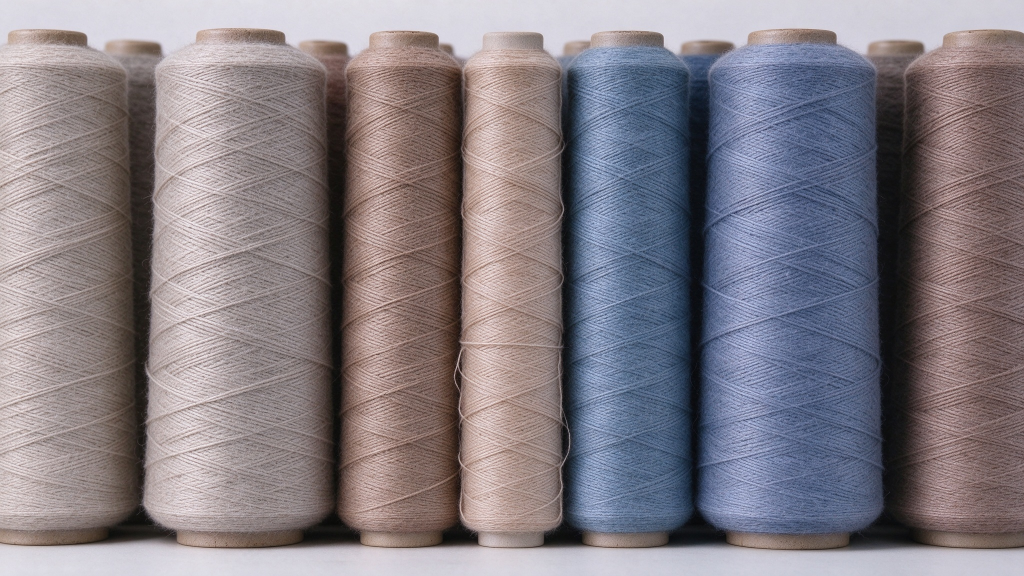
Color Approval Methods Matter
During product development, buyers may use physical samples, color cards, Pantone references or other color specifications to communicate their expectations.
These methods are not always interchangeable. Digital screens vary in display settings, while photographs can be affected by lighting, camera angles and image processing. A product photograph alone may therefore be insufficient for confirming a critical color requirement.
For orders with strict color expectations, buyers should establish a clear reference during development and agree on how color approval will be handled.
If a Pantone color system is used, the specific color reference and applicable system should be identified. A number without a shared reference standard may leave room for different interpretations.
Multicolor Designs Require More Careful Assessment
Color evaluation becomes more complicated when a sweater uses mélange yarn, space-dyed yarn, jacquard, intarsia or multiple color blocks.
For example, a jacquard sweater may use several yarn colors to create a specific pattern. A change in one color can affect not only that section but also the contrast and overall balance of the design.
Buyers should therefore review the main colors, secondary colors and their visual relationships in the finished garment.
How Can Buyers Reduce Color Variation Risks?
Before bulk production, buyers and knitwear manufacturers should consider the following steps:
- Establish an approved color reference using the applicable color code or physical sample.
- Check that the yarn intended for bulk production aligns with the approved color standard.
- Agree on whether different dye lots may be combined within the order.
- Review individual colors and their combined appearance in multicolor designs.
- Compare colors under agreed lighting conditions to reduce inconsistent judgments.
- Define acceptable color variation and inspection procedures for products with strict color requirements.
The appropriate process depends on the yarn, garment design, order requirements and actual production conditions.
2. Why Can Bulk Sweater Measurements Differ From the Approved Sample?
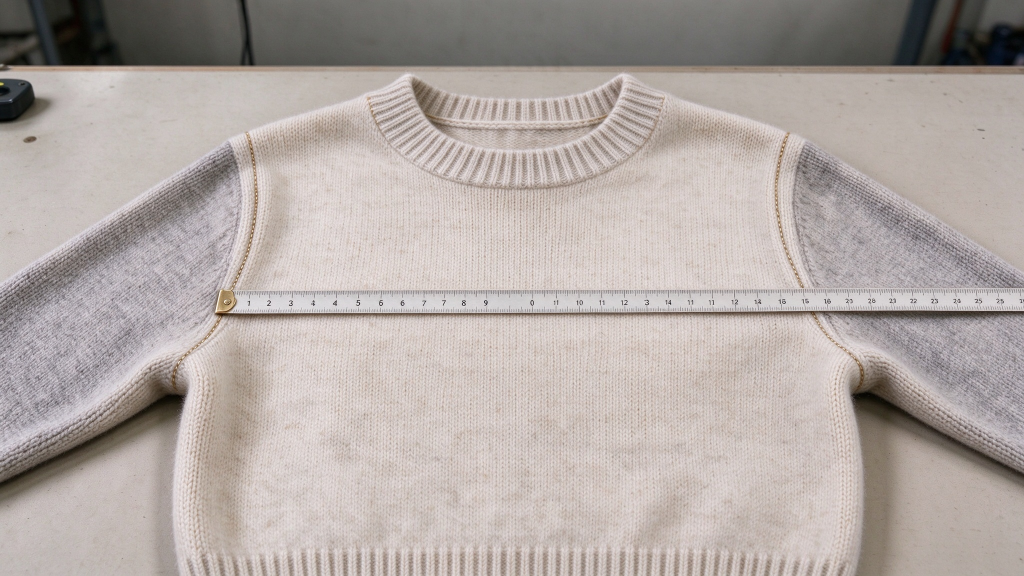
Knitted Fabrics Have Distinct Stretch and Shape Characteristics
Knitted fabrics have loop-based structures that can stretch and change shape under different conditions.
A sweater’s final measurements depend on more than its original design pattern. Yarn properties, knitting structure, fabric density, garment weight and finishing methods can all influence the finished dimensions.
As a result, garments made to the same design specifications may still show some measurement differences under different production conditions.
This is why knitwear sizing should not rely exclusively on a paper pattern or a size chart. The actual knitting and finishing processes also need to be considered.
Knitting Conditions Can Affect Garment Dimensions
Yarn tension, loop formation, fabric density and relevant machine settings can influence the dimensions of knitted fabric and finished garments.
Changes in these conditions may affect garment length, chest width, sleeve length or shoulder width.
Different knitting structures also behave differently. Ribbed structures, for example, generally have distinct stretch characteristics, while heavier or more complex structures may have different dimensional and visual behavior.
Before bulk production, the manufacturer should therefore confirm the relevant production requirements rather than treating the sample measurements as the only reference.
Finishing and Conditioning Should Also Be Considered
After knitting and assembly, sweaters may undergo washing, shaping, pressing or other finishing processes, depending on the product.
These processes can change the state of the yarn and fabric, affecting the final measurements, appearance and handfeel.
If the sample and bulk garments undergo different finishing conditions, their measurements may not be directly comparable. The condition of the garment at the time of measurement can also influence the results.
Some knitwear products may show different dimensional behavior immediately after finishing compared with garments that have rested for a specified period. For products requiring closer dimensional control, buyers should agree on measurement preparation, resting requirements and measurement conditions in advance.
Inconsistent Measurement Methods Can Create Disputes
Not every measurement difference originates in production. Buyers and manufacturers may obtain different results if they use different measurement methods.
For example, chest width, garment length, sleeve length and shoulder width must be measured from consistent reference points. Whether a garment is laid naturally flat or stretched during measurement can also affect the results.
Clear measurement instructions are particularly important for oversized sweaters, drop-shoulder styles, unusual necklines and garments with irregular hems.
To avoid unnecessary disputes, buyers should provide a detailed measurement chart, identify the relevant measurement points and specify the agreed tolerances.
How Can Buyers Improve Size Consistency?
A practical approach includes the following steps:
- Confirm the final fit and key measurements during sample approval.
- Define how chest width, body length, shoulder width and sleeve length should be measured.
- Confirm the knitting structure and finishing requirements for bulk production.
- Establish reasonable measurement tolerances based on the product.
- Check critical measurements at appropriate stages of production instead of relying exclusively on final inspection.
- Investigate abnormal measurements and agree on corrective actions when necessary.
For knitwear OEM projects, dimensional control should remain consistent from product development through sample approval and bulk production. Clear technical documentation helps reduce repeated communication and makes production requirements easier to follow.
3. Why Can Bulk Sweaters Feel Different From the Approved Sample?
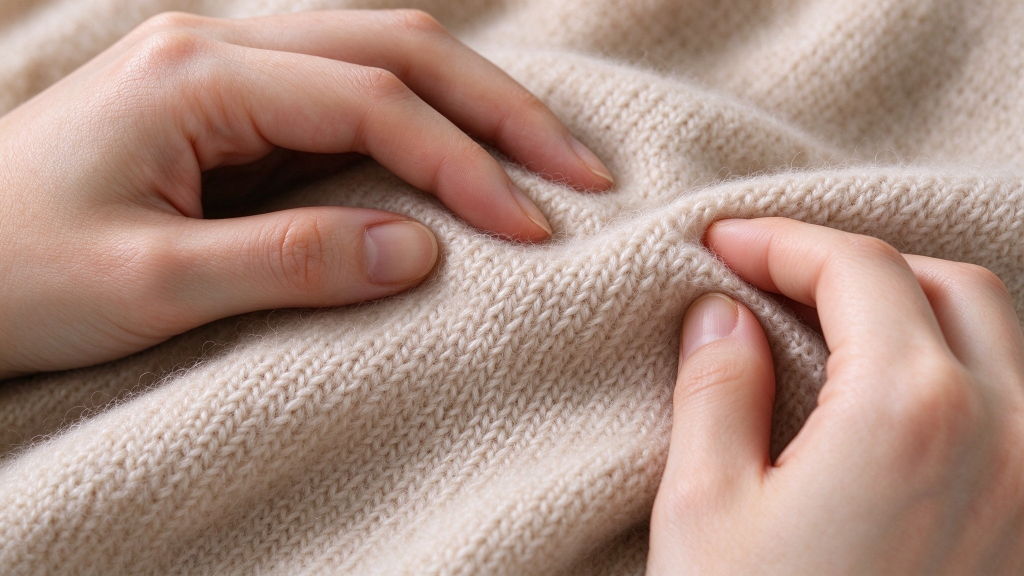
Yarn Composition Is Only One Part of Handfeel
Handfeel is one of the more difficult knitwear characteristics to describe using numbers alone.
Even when two sweaters have the same design, different yarn materials, yarn specifications or yarn batches may produce different tactile results.
Wool, cotton, acrylic, viscose and various blended yarns can differ in softness, bulkiness, elasticity and surface texture.
Even if the fiber composition remains unchanged, differences in spinning methods, yarn twist, yarn structure or subsequent processing may influence the finished garment’s handfeel.
For this reason, buyers should assess more than the fiber composition when approving a sweater sample. The actual yarn and the finished garment’s tactile properties also deserve attention.
Knitting Structure and Fabric Density Influence the Feel
Yarn is not the only factor that determines how a sweater feels.
Ribbed, cable-knit, jacquard and relatively smooth knit structures can produce different levels of elasticity, surface texture and perceived thickness.
Even with the same yarn, changing the knitting structure can create a noticeably different garment.
If the knitting structure, fabric density or relevant production settings differ between the approved sample and bulk order, the finished handfeel may also change.
For sweaters with detailed structures, buyers should evaluate the overall tactile result during sample approval and confirm that the essential knitting requirements can be maintained during production.
Washing and Finishing Can Change Softness and Surface Texture
Finishing is an important part of achieving the intended appearance and feel of a knitted garment.
Depending on the yarn and design, appropriate finishing processes may affect softness, bulkiness, surface texture, dimensional stability and overall appearance.
For example, the same sweater may feel different after different washing or finishing treatments.
If a development sample receives a particular treatment but bulk garments are processed under different conditions, the resulting handfeel may not match expectations.
Buyers should therefore identify the finishing requirements that materially affect the product and include them in the relevant production documentation.
How Can Buyers Turn Subjective Handfeel Into Practical Standards?
Terms such as soft, smooth, fluffy and substantial are useful for communicating product direction. However, these descriptions alone may not provide a complete manufacturing standard.
For brands that place repeat orders or develop related styles over time, a more effective approach is to combine the approved physical sample with yarn information, knitting requirements and relevant finishing specifications.
During product development, buyers should consider:
- Retaining the approved physical sample as a reference for subsequent production.
- Recording the required yarn specifications and fiber composition.
- Confirming the knitting structure and key processes that influence handfeel.
- Documenting applicable washing, shaping and finishing requirements.
- Reviewing handfeel alongside appearance and measurements during bulk production approval.
This approach reduces differences in how individuals interpret subjective descriptions and provides a clearer reference for future orders.
4. Which Production Management Steps Help Maintain Consistency?
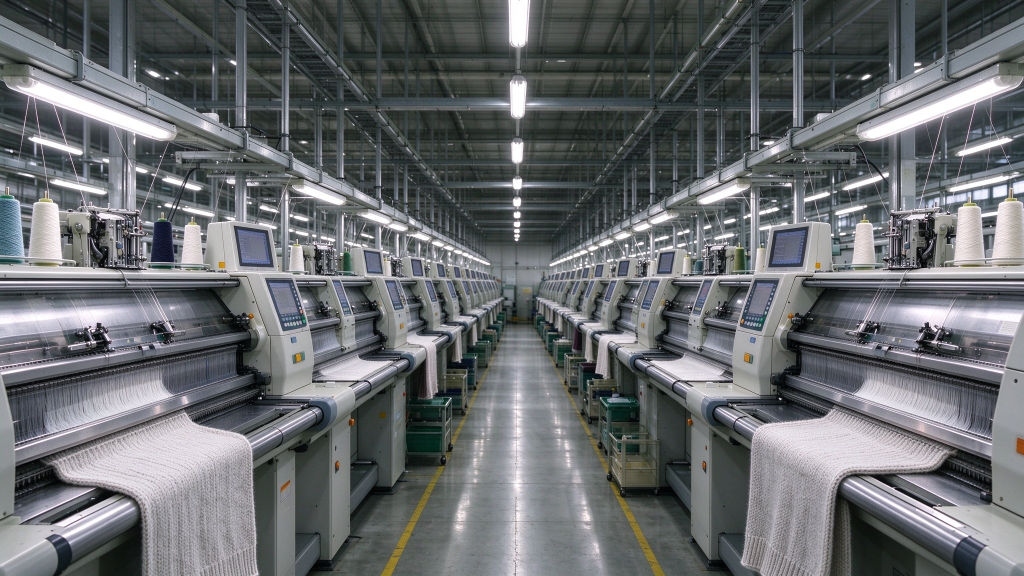
Color, size and handfeel variations rarely result from just one factor. Quality management should therefore extend beyond final garment inspection and cover the entire development and production process.
Build Complete Sample Approval Documentation
Once a sample has been approved, buyers and manufacturers should organize a clear set of production references, including:
- The final approved style and design details.
- Yarn composition, specifications and relevant material requirements.
- The approved color reference.
- Key measurements and measurement methods.
- Knitting structures and important construction requirements.
- Applicable washing, shaping and other finishing instructions.
- The approved physical sample and any details requiring special attention.
Clear documentation makes it easier for manufacturers to communicate the approved requirements across production stages.
Keep Development and Bulk Production Requirements Aligned
A development sample should do more than demonstrate the design. It should also help both parties establish the requirements that will guide bulk manufacturing.
If yarn, color, construction or finishing requirements change between development and production, the differences should be communicated and reviewed before bulk manufacturing proceeds.
Buyers should also avoid relying exclusively on photographs or brief written messages when approving significant changes. When a change may materially affect the finished garment, physical confirmation or another mutually agreed approval method is preferable.
Inspect Quality at Appropriate Production Stages
When problems are discovered only after the entire order has been completed, rework, additional finishing or remanufacturing may become more costly.
A more practical approach is to check color, measurements and handfeel at appropriate production stages and address deviations as they arise.
The specific inspection plan should reflect the garment design, order requirements and agreed quality standards. Complex jacquard patterns, special knit structures and color-sensitive products may require additional attention to their main risk areas.
Establish a Clear Process for Handling Deviations
Prompt communication helps reduce the time needed to resolve production issues.
Buyers and manufacturers should agree on the information needed when a deviation is reported. This may include the style, production batch, affected area, actual measurements, approved sample and relevant photographs.
Before implementing a corrective action, both parties should assess whether the issue originates from materials, knitting, finishing, measurement methods or another part of the process.
Identifying the main cause makes it easier to choose an appropriate response and reduce the risk of the same problem recurring in future production or repeat orders.
5. What Should Overseas Brands Look for in a Knitwear OEM Manufacturer?
For overseas apparel brands, selecting a knitwear OEM manufacturer should involve more than comparing quotations and delivery schedules.
A supplier’s ability to understand design requirements, maintain approved sample standards and communicate production issues promptly can also influence the final order outcome.
When evaluating a potential supplier, buyers should consider five areas.
First, product development communication. Can the manufacturer understand the buyer’s design drawings, reference samples or Tech Pack and identify details requiring further clarification?
Second, sample approval procedures. Can the manufacturer document color, measurements, materials, knitting structures and key finishing requirements instead of relying solely on product photographs?
Third, production traceability. When differences appear between batches, can the manufacturer review relevant material information, production requirements and inspection records to support the investigation?
Fourth, communication about quality issues. Can the supplier notify the buyer when a potential deviation is identified and discuss suitable corrective actions before proceeding?
Fifth, repeat-order consistency. For brands that purchase the same styles over time, can the supplier retain essential production references and use them to support future orders?
These considerations can help apparel brands establish a more reliable sourcing process and reduce the risks associated with repeated development, unclear specifications and batch-to-batch differences.
6. How Does KAIDA APPAREL Support Knitwear OEM/ODM Projects?
JIAXING KAIDA APPAREL CO., LTD. specializes in knitwear manufacturing and product development, serving overseas apparel brands, wholesalers and sourcing teams seeking knitwear production and development support.
In a knitwear OEM/ODM project, a design must pass through several stages, including material confirmation, sample development, production preparation and bulk manufacturing, before it becomes a finished garment that meets the buyer’s expectations.
KAIDA APPAREL places importance on the connection between product development and manufacturing requirements, helping buyers communicate their expectations for garment design, material selection, knitting effects and finished-product specifications.
For bulk sweater production, confirming color standards, key measurements, yarn requirements and applicable finishing methods in advance helps both parties identify potential risks before manufacturing and reduce communication costs caused by inconsistent interpretations.
For overseas brands developing new styles, revising existing products or placing repeat orders, clear sample approval documentation and an organized communication process can also support more efficient project coordination.
KAIDA APPAREL’s business focuses on knitwear OEM/ODM manufacturing and product development support for B2B customers. Specific materials, construction details, quality requirements and production arrangements are reviewed according to each product design and order requirement.
Explore more knitwear products and development references:
- Official Website: https://kaidaknitwear.com/
- Additional Product Categories: https://kaidaknitwear.com/products-womens/
7. FAQ: Bulk Sweater Production Quality Control
Why Can Bulk Sweaters Have Different Colors From the Approved Sample?
The sample and bulk order may use different yarn dye lots, or the color references, production conditions and inspection environments may differ. Buyers should confirm the color standard before bulk production and check that the production yarn aligns with the approved reference.
Are Measurement Differences Between Sweater Samples and Bulk Orders Normal?
Knitted garments may be affected by yarn properties, knitting conditions, finishing methods and measurement procedures. Some variation may occur, but acceptability should be determined by the agreed size specifications and tolerances.
Why Can Sweaters With the Same Fiber Composition Have Different Handfeel?
Fiber composition is only one factor. Yarn structure, knitting construction, fabric density and finishing methods can also influence softness, bulkiness and surface texture.
What Should Buyers Confirm Before Bulk Sweater Production?
Buyers should confirm the approved sample, color standards, material requirements, measurement chart, measurement methods, knitting structures and applicable finishing requirements. The exact documentation should reflect the product’s complexity and order needs.
How Can Brands Reduce Quality Differences in Repeat Orders?
Retain the approved sample and key technical documentation, record relevant material and process requirements, and review these references before starting a repeat order. Any changes to the design, materials or production methods should be discussed and approved in advance.
What Should Buyers Do When They Find a Quality Issue in Bulk Production?
Document the issue with photographs, actual measurements, the affected production batch and the relevant approved sample. Contact the manufacturer promptly to investigate the cause and agree on appropriate corrective actions.
Can a Knitwear OEM Manufacturer Guarantee That Every Bulk Garment Will Be Identical to the Sample?
Some variation may occur because materials and manufacturing processes are not always perfectly uniform. A more practical approach is to establish clear acceptance criteria, critical control points and tolerances, then apply consistent production management and quality inspections to improve uniformity.
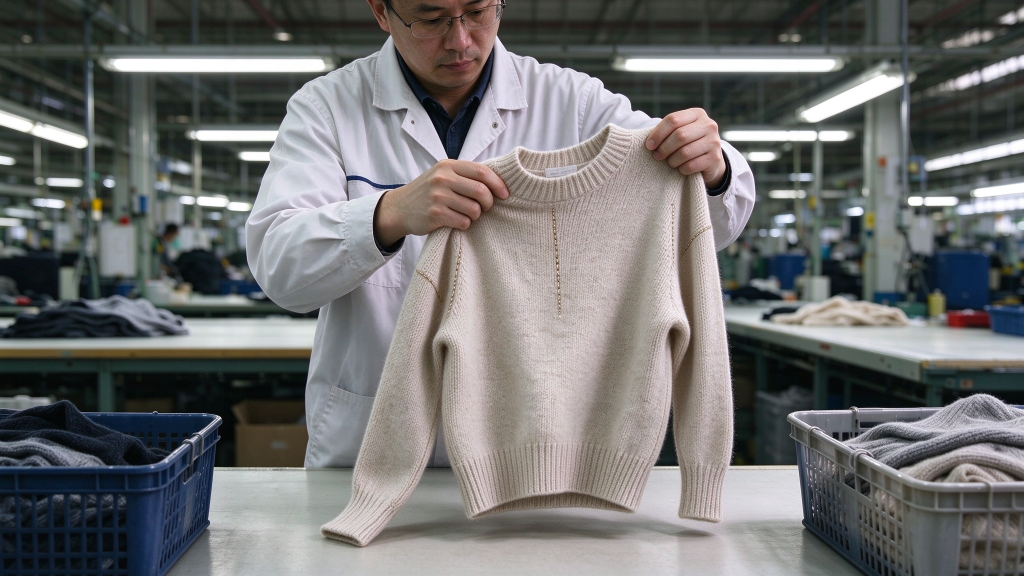
Conclusion
Color variation, measurement differences and inconsistent handfeel are important considerations in bulk sweater manufacturing.
For apparel brands and sourcing teams, reducing these risks requires more than final garment inspection. It begins with clear standards for color, measurements, materials and production processes during sample development, followed by consistent communication throughout bulk manufacturing.
Working with a knitwear OEM manufacturer that values product development, production coordination and quality management can help reduce uncertainty and establish a more reliable foundation for new product launches, bulk purchasing and repeat orders.
By treating sample approval as the beginning of a shared quality control process rather than the end of product development, buyers and manufacturers can work toward more consistent knitwear production and stronger long-term business relationships.