Why Gauge, Weight, and Wash Matter in Men’s Sweater Development
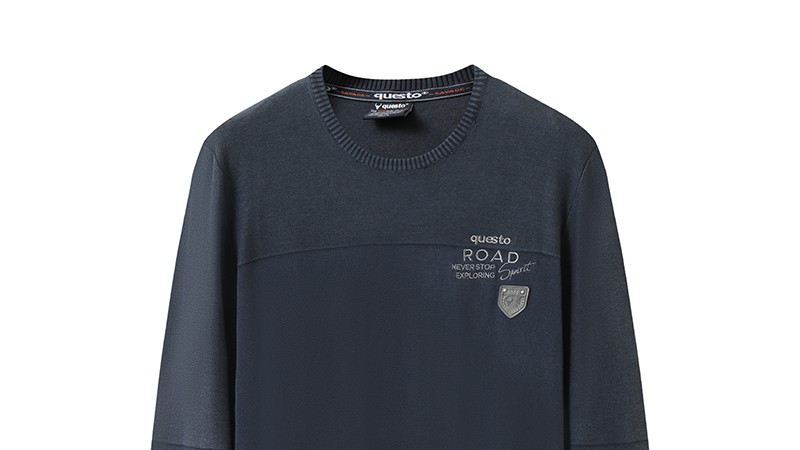
For menswear brands developing heritage, workwear-inspired, or American casual collections, the Men’s Stone-Washed Crewneck Sweater is more than a layering staple—it’s a tactile signature. Unlike standard crewnecks, this style relies on three tightly interdependent variables: 7GG knit construction, ~338g garment weight, and a controlled stone-wash finish. These are not interchangeable specs. A shift in yarn count, rib depth, or wash intensity alters drape, aging behavior, and seasonal positioning—directly impacting fit consistency, buyer perception, and reorder logic. Buyers evaluating a stone washed crewneck sweater manufacturer must treat these as co-dependent development parameters—not isolated features.
How 7GG Knit Defines Structure and Authenticity
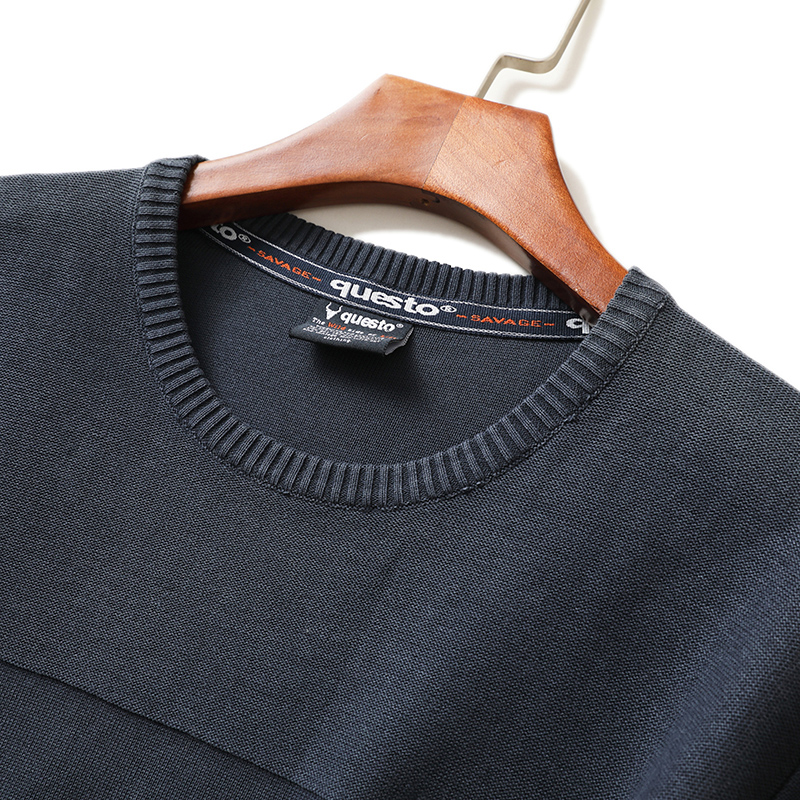
Gauge (measured in stitches per inch) determines fabric density, resilience, and visual texture. At 7GG, the knit strikes a deliberate balance: coarse enough to convey workwear authenticity and hold dimensional texture post-wash, yet refined enough to avoid stiffness or bulk. This differs from finer 12GG+ knits (often used in lightweight fashion sweaters) and heavier 3–5GG iterations (common in rugged outerwear layers). For 100% cotton vintage sweater OEM projects, 7GG supports consistent shrinkage control during stone washing and retains stitch definition after repeated laundering—critical for private label brands requiring repeatable color and handfeel across seasons. Buyers should confirm whether ribbing (e.g., 1×1 or 2×2) is integrated into the gauge specification, as rib depth affects neckline recovery and overall silhouette integrity.
The Functional Role of ~338g Weight in Transitional-Season Collections
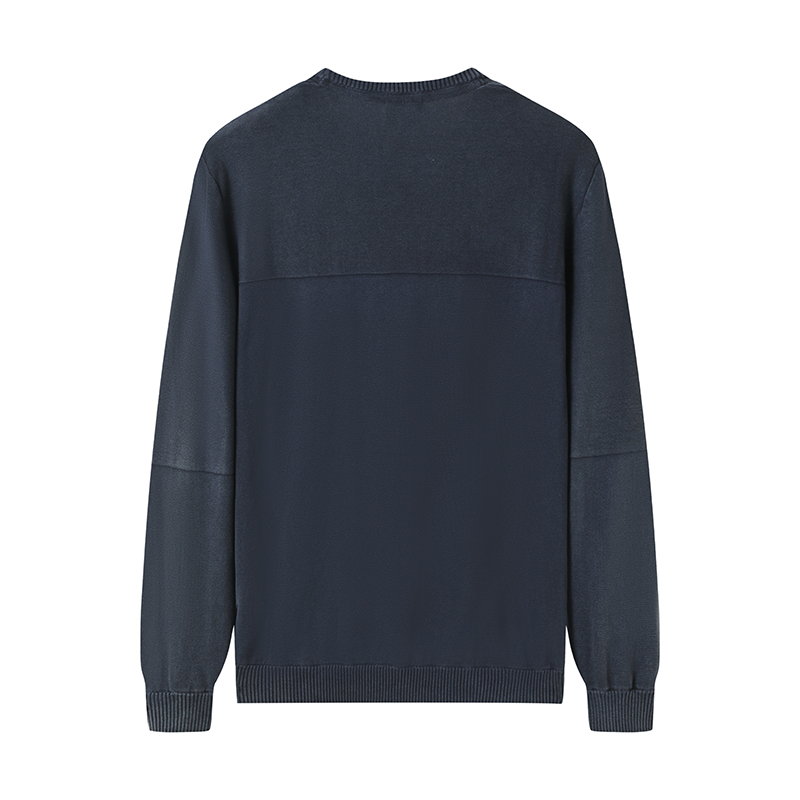
Garment weight—approximately 338g—is not arbitrary. It anchors the piece between lightweight spring knits (<250g) and heavyweight winter layers (>450g), making it suitable for transitional-season collections and everyday layering over denim or oxford cloth. That weight reflects yarn thickness, loop length, and fabric tension—not just raw material volume. A brand targeting denim-focused collections may prefer this weight to ensure the sweater drapes without overwhelming raw or rigid denim; a heritage brand aiming for authenticity may use it to replicate mid-century workwear proportions. Note: Weight can be adjusted via yarn selection or stitch density—but any deviation requires recalibration of washing parameters to maintain dimensional stability and fade consistency.
Stone Wash vs. Vintage Faded Effect: What Buyers Must Specify Upfront
The stone-washed / vintage faded effect is not a single outcome—it’s a spectrum governed by pumice type, soak duration, temperature, and post-wash enzyme treatment. Buyers developing with a workwear inspired knitwear supplier must define the desired aesthetic *before* sampling: Is the goal a subtle, sun-bleached tonal shift? A medium-level abrasion around seams and hems? Or high-contrast contrast fading mimicking decades of wear? Each variation impacts yarn integrity, colorfastness testing protocols, and final handfeel. Since base color and washed color effects are customizable, brands should supply physical PMS references *and* washed swatches—not just digital files—to align expectations. Without this, sample revisions increase, delaying the critical 7–10 day sample lead time window.
Fit, Sizing, and Branding Integration for Private Label Execution
This Men’s Sweater supports size ranges from XS–5XL—or buyer-specified grading, which matters for private label menswear entering diverse markets. However, extended sizing introduces fit validation requirements: sleeve pitch, shoulder drop, and torso length must be verified across at least three size points—not just one sample. Likewise, branding elements (woven labels, care labels, hangtags, custom badges) require separate artwork approval cycles. A woven label’s thread count and placement affect seam durability post-wash; care label content must reflect actual washing instructions validated for the finished garment—not generic cotton guidelines. Buyers should treat branding as part of the technical pack, not an afterthought.
OEM vs. ODM: Which Path Fits Your Collection Strategy?
For brands with existing tech packs and fit standards, 100% cotton vintage sweater OEM offers direct execution—but demands precise spec documentation (yarn lot numbers, rib height tolerances, wash formula IDs). For those without in-house development capacity, 7GG knit sweater private label services provide design-to-production support, including wash effect prototyping and size grading. In both cases, buyers must confirm: (1) Whether base yarn is pre-dyed or piece-dyed, (2) How many wash iterations are included in sample development, (3) Whether garment weight is measured pre- or post-wash, and (4) How size grading aligns with target market body charts (e.g., US vs. EU vs. APAC). No universal standard applies—each decision affects cost, lead time, and reproducibility.
Recommended Products
Stone Washed 100% Cotton Vintage Crewneck Sweater — Designed for heritage menswear collections and workwear-inspired brands, this Men’s Sweater delivers controlled 7GG structure, ~338g weight, and adjustable stone-wash intensity—ideal for private label development where authenticity and seasonal versatility are priorities.
Frequently Asked Questions
What is the MOQ for custom stone-washed crewneck sweaters?
The MOQ depends on the specific yarn, colorway and washing requirements. Low MOQ starts from 100 pcs for suitable orders.
Can the stone-wash effect and garment weight be adjusted for different collection needs?
Yes. The controlled washing process can be adjusted to achieve lightly faded, vintage washed or more pronounced worn-in effects. The garment weight is approximately 338g, suitable for transitional-season collections.
What is the sample and bulk production lead time for private label orders?
Sample lead time is approximately 7–10 days. Bulk production lead time is approximately 25–35 days after sample and specification approval.
What technical details must I provide before initiating a custom stone-washed crewneck sweater project?
You should supply a completed tech pack including fit specifications, graded size chart, base color reference, desired wash effect description (with physical swatch if possible), branding placement and artwork files, and packaging requirements. Yarn sourcing preferences—if any—should also be noted early.
How do I evaluate whether the stone-wash result matches my brand’s aesthetic?
Evaluate samples under natural light and artificial store lighting. Check consistency of fade across seams, collar, and cuffs. Assess handfeel versus your reference garments—and confirm that post-wash measurements match your approved spec sheet. Do not rely solely on visual similarity; dimensional stability is key for repeat orders.
Conclusion: Matching Specifications to Brand Intent
There is no universally optimal Men’s Sweater—only the version most aligned with your audience, channel, and seasonal narrative. A custom stone wash sweater low MOQ order makes sense only when gauge, weight, and finish are intentionally coordinated—not optimized in isolation. For heritage and workwear brands, 7GG + ~338g + stone-wash is a proven triad for authenticity and wearability. For American casual or denim-focused lines, it provides reliable layering weight without visual competition. Buyers should treat each parameter as a negotiation point—not a fixed value—and confirm alignment during sampling. Contact our team to discuss your knitwear project and explore customized manufacturing solutions.