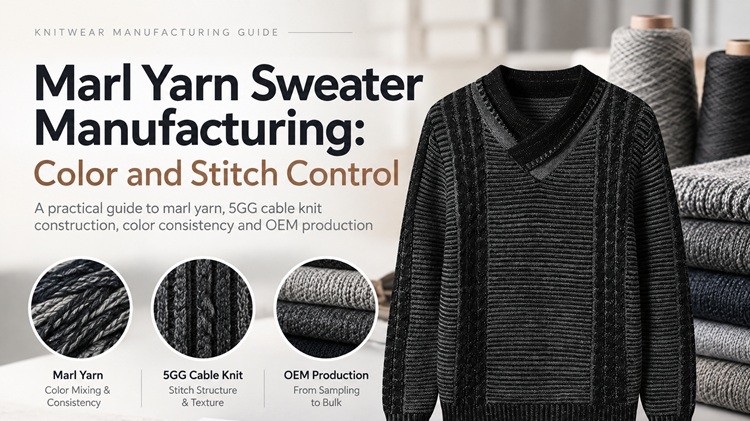
For fashion brands developing textured menswear, marl yarn sweater manufacturing requires more than selecting an attractive two-tone yarn. The final result depends on how yarn colors, knitting gauge, cable structures, machine settings, and finishing processes work together. A combination that looks balanced on a yarn card may appear different when knitted into a raised cable panel or ribbed collar.
This guide explains how to evaluate marl yarn, plan a 5GG cable-knit construction, manage color consistency, and establish practical approval checkpoints before OEM or private label bulk production.
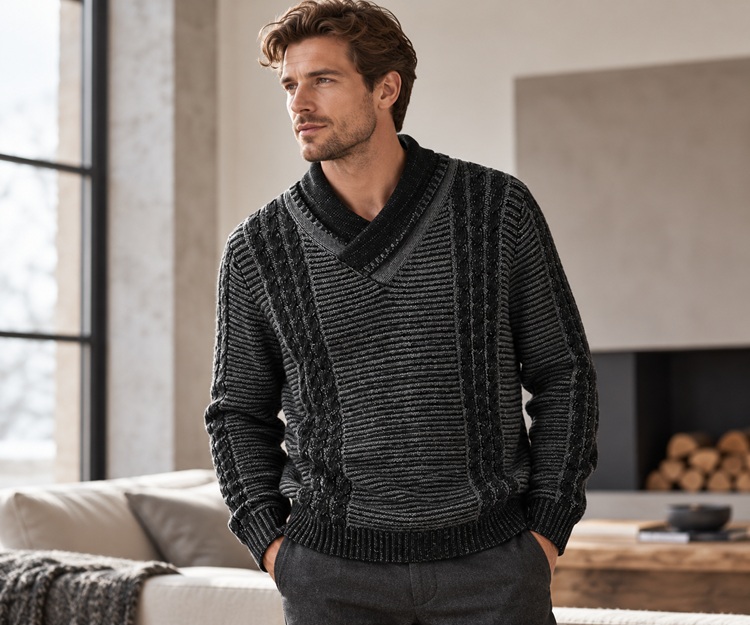
What Is Marl Yarn in Sweater Manufacturing?
Marl yarn generally combines differently colored yarn strands or components to create a twisted, multitone appearance. The contrast between those components remains visible in the knitted fabric, producing a textured color effect that differs from a flat, solid shade.
Terminology varies between yarn suppliers: marl, marled, mélange, and heather are sometimes used inconsistently. Rather than relying on the name alone, buyers should confirm the actual yarn construction, component colors, fiber composition, and an approved knitted reference.
Marl vs. Solid vs. Mélange Yarn
| Yarn appearance | Typical construction or effect | What buyers should verify |
|---|---|---|
| Marl | Contrasting strands or components create a visibly mixed, often twisted color effect. | Component shades, twist appearance, and consistency after knitting. |
| Solid | A comparatively uniform color across the yarn and fabric. | Shade accuracy, dye-lot variation, and stitch visibility. |
| Mélange / heather | Mixed-color fibers or other yarn constructions create a blended, flecked appearance. | Supplier’s actual yarn construction and approval sample; labels alone are insufficient. |
In cable-knit sweaters, marl effects can add visual depth, but strong contrast between component strands may also compete with fine stitch details. The best option depends on the intended look of the finished garment.
Why 5GG Works for Textured Marl Cable Knitwear
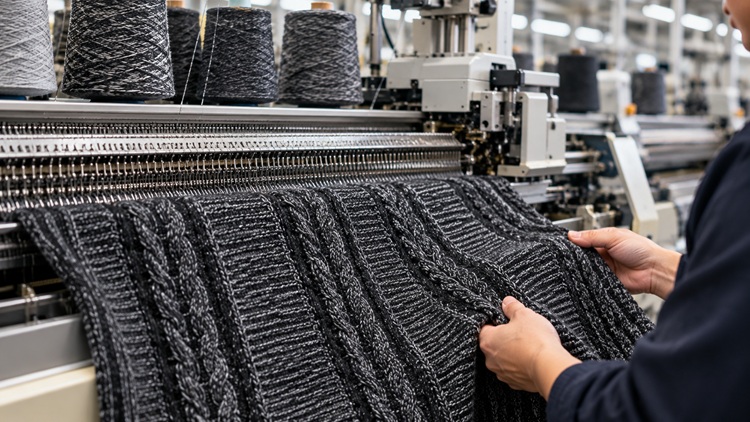
5GG describes the knitting machine’s needle gauge—approximately five needles per inch of needle-bed width—not a guaranteed number of stitches per inch in the finished fabric. It is commonly associated with coarser, more prominent knit structures, but fabric thickness, weight, and drape also depend on yarn count, stitch pattern, tension, and finishing.
For a sweater combining cable panels, raised ridge stitches, and vertical ribs, a 5GG construction can create clear surface relief. However, different structures consume yarn and relax differently, so measurements and appearance must be checked in the actual knitted garment.
Three Technical Decisions That Affect Cable Definition
- Yarn count and ply: The yarn must suit the machine and provide the intended fullness without obscuring the cable pattern.
- Stitch layout and tension: Cable crossings, rib panels, and adjacent plain-knit areas can behave differently; sample evaluation should include transitions between structures.
- Relaxation and finishing: Washing, steaming, and handling can change the width, length, and relief of knitted panels.
Buyer tip: Request a full-size sample or representative knitted panel. A small yarn swatch cannot reliably demonstrate cable alignment, collar behavior, or finished-garment measurements.
Controlling Marl Yarn Color Consistency from Sample to Bulk
Color consistency is a key purchasing concern in custom marl knitwear. Two yarn components can each be close to their approved shade while their combined appearance still differs from the approved sweater. Visual results may also change with stitch orientation, yarn tension, and lighting.
1. Approve the Component Colors and the Knitted Result
Use physical yarn references and a knitted sample to confirm the intended color combination. Pantone references can help communicate a target, but they do not replace approval of the actual yarn and fabric. Record the approved combination, supplier reference, and any applicable dye-lot information.
2. Check Production Lots Before Bulk Knitting
Confirm whether the required quantities can be sourced from compatible lots. If additional yarn lots are necessary, review the resulting knitted appearance before mixing materials across production batches. Color tolerance and replacement procedures should be agreed upon in advance.
3. Evaluate Color Under Consistent Lighting
Compare samples and bulk-production panels under a documented lighting setup. Standardized viewing conditions, such as an appropriate D65 light source where specified, can make comparisons more repeatable. For critical colors, agree on whether instrumental measurements are required and how they will be interpreted for multicolor yarns.
4. Inspect Both Flat and Textured Sections
Check marl distribution in plain-knit areas, cable crossings, rib panels, and the shawl collar. Changes in stitch direction and surface relief can alter perceived contrast even when the same yarn is used.
Material Considerations: 100% Acrylic Marl Yarn
The referenced men’s 5GG sweater is specified with 100% acrylic yarn. Acrylic can offer flexibility in yarn appearance, weight, and commercial positioning, but performance should not be assumed from fiber content alone.
Before approval, consider testing or evaluating:
- Pilling and abrasion: Results depend on fiber properties, yarn construction, knit structure, and use conditions.
- Dimensional change: Check garment measurements after the agreed care or finishing procedure.
- Colorfastness: Specify relevant washing, rubbing, or lightfastness requirements for the intended market.
- Handfeel and recovery: Evaluate the finished fabric, particularly around ribs, cuffs, and neckline areas.
- Care labeling: Confirm the finished garment’s actual care requirements rather than assuming all acrylic sweaters behave alike.
Buyers should also confirm how the yarn was colored and constructed with the supplier; a particular dyeing method should not be inferred merely from the fiber type.
OEM Marl Cable Knit Sweater Manufacturing: Step by Step
Step 1: Define the Tech Pack
Specify the garment silhouette, yarn composition, target marl colors, gauge, cable diagram, collar dimensions, measurement chart, labels, and packaging. For complex panels, include clear placement drawings and reference photographs.
Step 2: Develop and Approve Yarn References
Review yarn options and knitted color swatches. Approve both the component-color combination and the resulting appearance in the intended stitch structures.
Step 3: Make the Development Sample
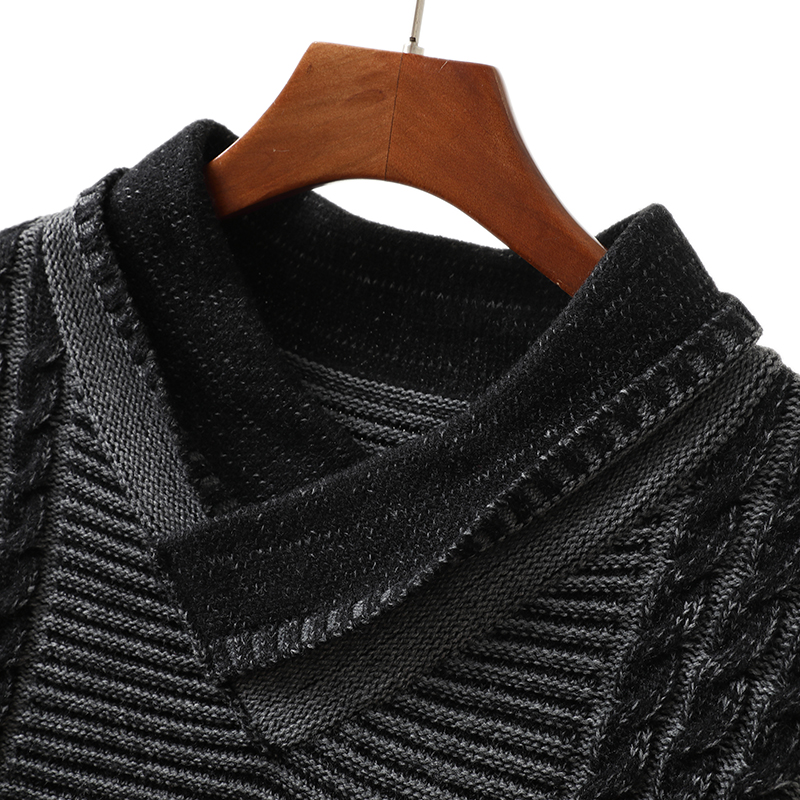
Assess the cable layout, raised ridge stitches, vertical ribs, shawl V-neck overlap, fit, and garment weight. Record required changes in writing.
Step 4: Confirm the Pre-Production Standard
Approve the final sample and update the tech pack. Establish measurement tolerances, appearance references, acceptable workmanship, inspection checkpoints, and any agreed testing requirements.
Step 5: Start Bulk Knitting and Assembly
Verify yarn lots and machine settings before production. During knitting and assembly, monitor panel dimensions, cable placement, stitch defects, joining quality, and collar construction.
Step 6: Finish and Inspect
Apply the appropriate finishing process, allow garments to relax as specified, and compare final measurements and appearance against the approved standard. Check color consistency, surface defects, cable definition, labels, and packaging before shipment.
Quality Control Checklist for Marl Cable Knit Sweaters
| Checkpoint | What to inspect | Approval reference |
|---|---|---|
| Yarn | Fiber specification, component colors, lot references | Approved yarn specification and swatch |
| Knitting | Gauge setup, cable placement, stitch consistency, panel dimensions | Tech pack and approved knitted sample |
| Assembly | Seams or linking, shawl collar overlap, rib alignment | Approved construction details |
| Finishing | Shape, handfeel, dimensional stability, surface appearance | Approved finished sample and agreed tolerances |
| Final inspection | Measurements, visible defects, color appearance, labeling, packing | Purchase agreement and inspection plan |
When third-party inspection or AQL sampling is required, buyers and manufacturers should agree on the inspection level, defect definitions, and acceptance limits before production. Do not assume that one universal tolerance applies to every knitwear program.
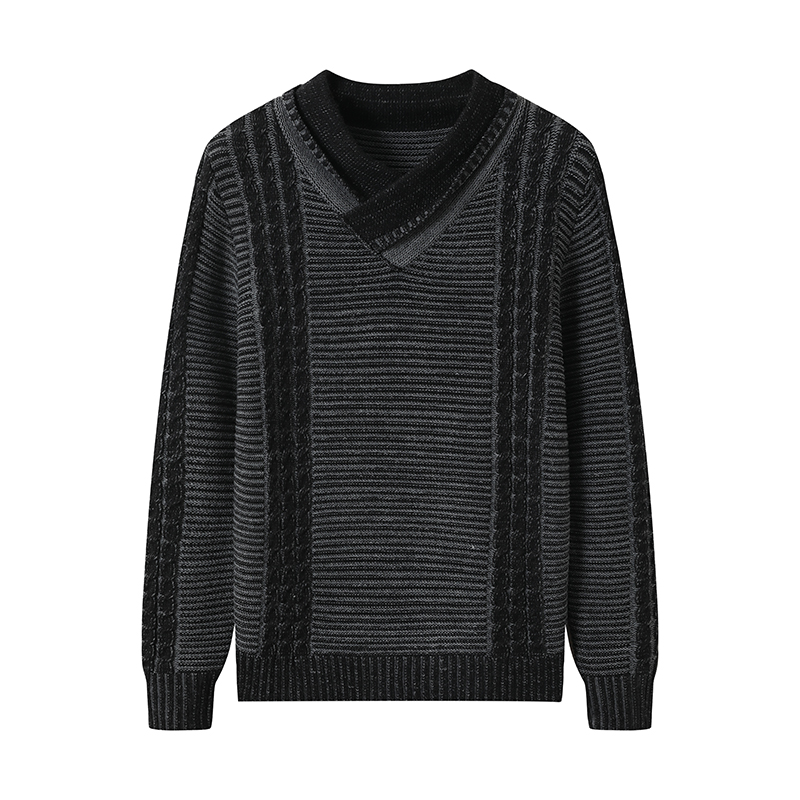
Product Example: Men’s 5GG Marl Cable Knit Shawl V-Neck Sweater
The Men’s 5GG Cable Knit Sweater with Shawl V-Neck provides a practical reference for brands developing heritage-inspired or smart-casual knitwear.
| Specification | Referenced product information |
|---|---|
| Material | 100% acrylic |
| Knitting gauge | 5GG |
| Construction | Cable panels, raised ridge stitch, and vertical rib details |
| Neckline | Overlap shawl V-neck with ribbed construction |
| Garment weight | Approximately 610g ± 15g |
| Fit and sizes | Regular men’s fit; S–5XL, with custom grading subject to confirmation |
| Listed MOQ | From 100 pieces per colorway, subject to project requirements |
| Listed sampling time | Approximately 7–10 days |
| Listed bulk lead time | Approximately 25–35 days after approval |
These figures are product-specific references, not guaranteed conditions for every custom design. Custom yarn development, revisions, material availability, and order volume may change the final quotation and schedule.
For a similar project, buyers can discuss marl color combinations, cable layout, collar proportions, fit, labels, and packaging with the manufacturer. View the full 5GG marl cable knit sweater specifications.
How to Evaluate a Marl Knitwear OEM Supplier
When comparing OEM sweater manufacturers, ask for evidence of technical execution rather than relying only on price or a general capability statement.
- Color approval: Can the supplier provide physical yarn references and knitted marl samples?
- Knitting capability: Can it reproduce the required cable, ridge, and rib structures consistently?
- Sampling workflow: How are revisions documented, approved, and transferred to bulk production?
- MOQ transparency: Are minimums quoted by style and colorway, and do custom yarns require different quantities?
- Quality plan: Which inspections and tests are included, and which require separate arrangements?
- Lead-time clarity: Does the schedule distinguish yarn sourcing, sampling, bulk knitting, finishing, and shipping?
For private label programs, also clarify responsibility for size grading, branding, fiber-content labels, care instructions, and destination-market compliance.
Frequently Asked Questions
What is marl yarn in sweater manufacturing?
Marl yarn generally combines differently colored strands or components to produce a mixed, often twisted color effect. Buyers should confirm the supplier’s actual yarn construction and approve the appearance in knitted form.
How do manufacturers control marl yarn color consistency?
Useful controls include approved component-color references, knitted swatches, yarn-lot records, consistent sample-viewing conditions, and inspection of both plain and textured knit areas.
Why is 5GG used for marl cable knit sweaters?
5GG is a relatively coarse machine gauge that can support prominent cables and ribs. The finished appearance still depends on yarn count, stitch layout, tension, and finishing.
What is the MOQ for custom marl yarn sweaters?
The referenced men’s 5GG marl cable knit sweater lists a starting MOQ of 100 pieces per colorway. Other designs may require different minimums depending on yarn availability and customization.
What should buyers approve before bulk production?
Approve yarn colors and construction, knitted marl appearance, cable layout, collar proportions, fit, measurement tolerances, finishing requirements, and a documented pre-production sample.
How long does a custom marl cable knit sweater order take?
The referenced product lists approximately 7–10 days for sampling and 25–35 days for bulk production after approval. Actual timing depends on material availability, revisions, quantity, and factory scheduling.
Conclusion: Build Color and Stitch Control into the OEM Process
Successful marl yarn sweater manufacturing requires the yarn appearance, 5GG construction, cable layout, and finishing standard to be developed together. For fashion brands and wholesale buyers, the most effective risk reduction comes from physical color approval, documented sample revisions, and agreed inspection criteria before bulk knitting begins.
Planning a custom marl cable knit collection? Share your tech pack, reference images, target colors, size range, estimated order quantity, and delivery requirements with KDA Apparel to discuss sampling and OEM manufacturing options. You can also review the referenced 5GG marl sweater as a starting point for your project.