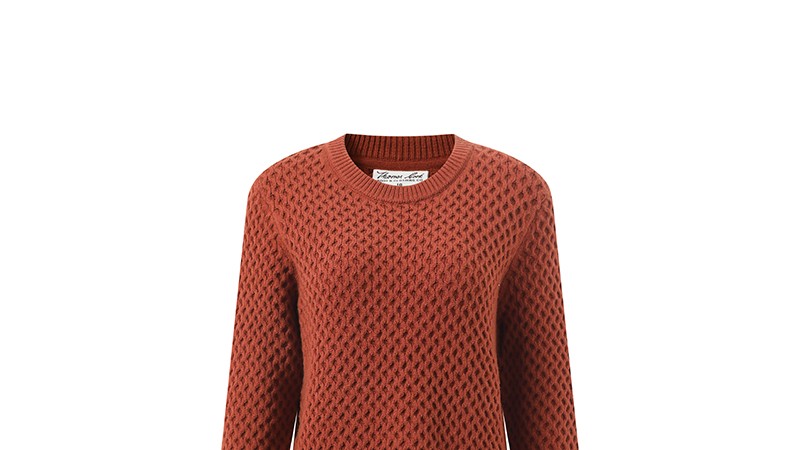
When sourcing knitwear apparel > women’s sweater & pullover OEM/ODM for premium private label or luxury winter collections, the choice of a reliable knitwear factory hinges on precise technical alignment—not just capacity or cost. A 7GG heavyweight Merino wool cotton blend sweater, for example, demands specific expertise in dense jersey construction, controlled pre-shrinkage, and structural reinforcement—factors that directly impact fit consistency, durability, and end-customer perception across department store house brands, designer boutiques, and DTC e-commerce lines.
Why Gauge and Weight Define Development Realities
Gauge (7GG) and garment weight (745g ±25g) are not interchangeable specs—they signal distinct production requirements. 7GG denotes a coarse, low-stitch-count knit suitable for heavyweight, structured pieces. Unlike finer gauges (12GG–16GG), 7GG requires heavier yarns, slower machine speeds, and tighter tension control to maintain dimensional stability. Buyers evaluating an OEM sweater manufacturer China should confirm whether the supplier routinely produces at this gauge—and whether their machines support fully fashioned shaping without excessive seam waste.
Garment weight further constrains material selection and construction logic. At ~745g, the piece sits firmly in the ‘heavyweight’ category: it must balance thermal performance with drape, resist torque distortion, and retain shape after repeated wear and laundering. This makes fully fashioned construction and controlled pre-shrinkage non-negotiable—not optional enhancements. A brand developing a luxury winter knitwear collection should verify that shrinkage testing is conducted per ISO 3758 or equivalent, and that weight tolerance (±25g) is measured post-finishing, not pre-wash.
Material Composition Impacts Sourcing Strategy
A 55% Merino wool / 45% cotton blend delivers natural breathability, soft handfeel, and reduced pilling versus 100% wool—but introduces complexity in dyeing, blending, and finishing. Merino content affects felting risk; cotton modulates elasticity and cost. Buyers engaged in women’s knitwear sourcing must clarify whether the supplier manages both yarn sourcing and spinning—or if blends are procured pre-spun. RWS certification confirms ethical wool traceability; OEKO-TEX Standard 100 verifies absence of harmful substances in final fabric. Neither certifies performance claims like “anti-odor” or “temperature-regulating”—those require separate functional testing.
Color development options—Pantone TPX/TCX or custom heather/mélange—also reflect operational capability. Heather effects rely on precise fiber blending ratios and batch consistency; mélange requires stable, repeatable yarn lots. Brands launching seasonal collections should request lab dips against physical Pantone books—not digital approximations—and confirm whether color matching is validated under D65 lighting.
Structural Details That Determine Long-Term Wear
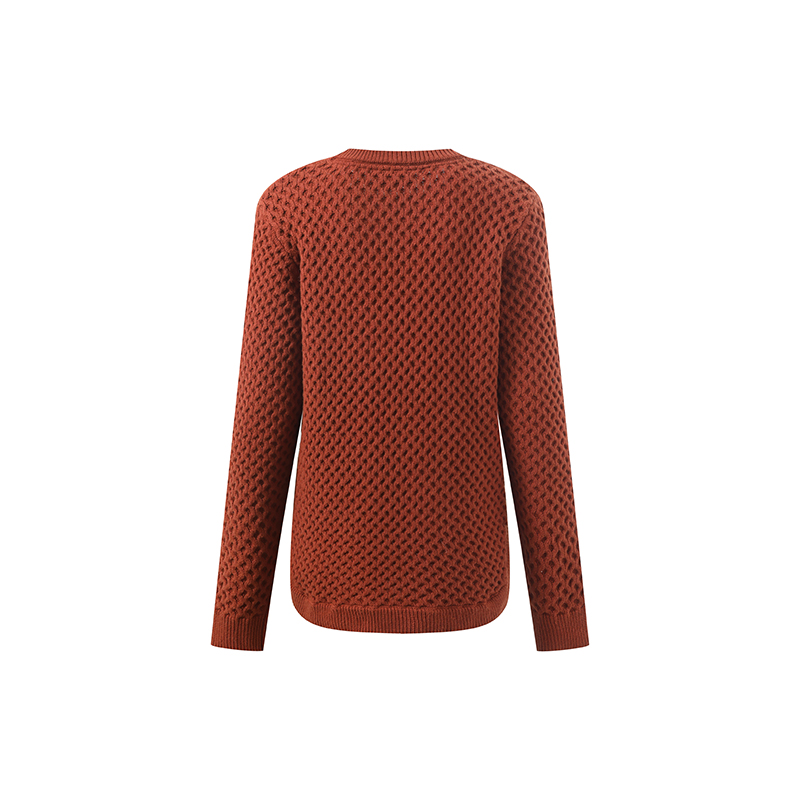
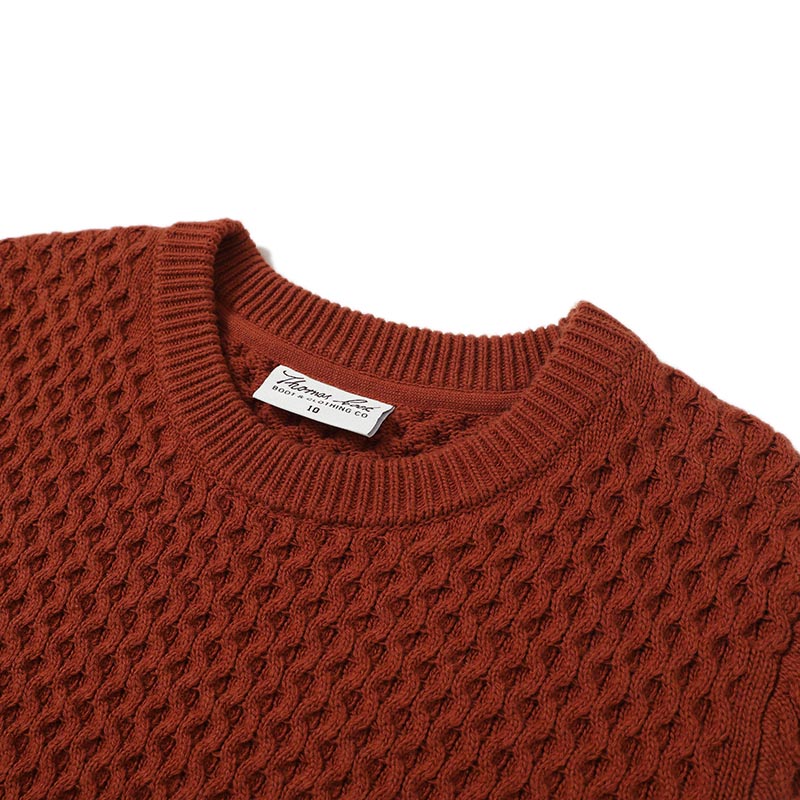
Dense flat jersey with ribbed trims defines silhouette integrity: the body resists stretching while ribbing provides controlled recovery at cuffs and hem. But rib structure (e.g., 1×1 vs. 2×2) and depth affect fit retention—especially critical for relaxed or oversized profiles targeting e-commerce direct-to-consumer lines. Reinforced side splits and shoulder stabilization address high-stress zones common in heavy knits; these aren’t cosmetic additions but engineered solutions to prevent gape or seam slippage over time.
Buyers should review tech packs for stitch type (e.g., latch needle vs. compound needle), loop length, and tension settings—not just final appearance. Fully fashioned construction means minimal cutting waste, but also demands precise grading across XS–3XL. Confirm whether size grading follows ASTM D6200 or ISO 8559, and whether fit validation includes wear-testing on multiple body types—not just mannequin draping.
OEM vs. ODM: What You Must Specify Upfront
For custom knitwear production, OEM implies your tech pack drives all decisions; ODM means the supplier contributes pattern, yarn, or construction input. Either path requires explicit confirmation of:
- Yarn specification source (supplier-sourced vs. brand-provided)
- Pre-shrinkage method (steam, wet, or combined) and test report availability
- Rib trim width, elasticity %, and attachment method (overlock vs. coverstitch)
- Side split reinforcement technique (double-layered, bar-tacked, or bonded)
- Shoulder stabilization method (tape, interfacing, or reinforced seam)
Without these, sampling becomes iterative—not diagnostic. Sample lead time (7–10 working days) assumes finalized tech pack and approved materials. Any deviation—e.g., custom heather development or alternate Merino grade—extends timeline and may require additional lab dips or strike-offs.
MOQ and Production Timing: Alignment Over Assumption
Minimum order quantity (100 pieces per color) reflects scalability for emerging brands—but does not imply flexibility in base unit economics. Bulk production (25–35 days) begins only after formal sample approval, not shipment. Buyers should distinguish between ‘production start date’ and ‘FOB ready date’, and account for packing, labeling, and documentation lead time separately. International apparel sourcing programs often build buffer for customs clearance; DTC brands may prioritize faster transit over extended QC windows.
Size range (XS–3XL) requires full-size grading validation—not just SM/L/XL. Request measurement charts showing key points (bust, waist, hip, sleeve length, body length) for each size, with tolerances aligned to your brand’s spec sheet. Do not assume standard grading curves apply equally across Merino/cotton blends and 100% acrylic knits.
Recommended Products
Heavyweight Merino Wool Cotton Blend Sweater – 7GG Women‘s Crewneck Pullover — Designed for brands requiring certified, heavyweight knitwear with structural integrity and natural fiber appeal; suitable for luxury winter collections, department store private labels, and e-commerce DTC lines prioritizing tactile authenticity and long-term wear performance.
Frequently Asked Questions
What is the minimum order quantity for custom knitwear?
Our MOQ is 100 pieces per color for standard styles, with flexible options for sample orders and trial runs to accommodate emerging brands.
How long does sampling and bulk production take?
Sample development takes 7–10 working days, and bulk production typically requires 25–35 days after sample approval, depending on order volume and customization complexity.
What certifications do your knitwear products carry?
Our products are available with RWS (Responsible Wool Standard) and OEKO-TEX Standard 100 certifications, ensuring ethical sourcing and chemical safety.
Can I customize the yarn composition and fit?
Yes. We offer full customization including yarn blends (higher Merino content, cashmere blends, organic cotton), neckline styles, fit profiles (regular, relaxed, oversized), and size grading for US/EU markets.
What quality control measures do you have in place?
Every batch undergoes 100% inspection including dimensional checks, weight verification, shrinkage testing, and visual inspection for knitting defects before shipment.
No Single Solution Fits All Brand Contexts
There is no universally optimal private label sweater manufacturer. A 7GG heavyweight Merino cotton blend excels for cold-weather layering in premium retail channels—but may be over-engineered for transitional-season capsule collections. Its dense jersey suits structured silhouettes, not fluid drapes; its weight supports slow-fashion positioning, not fast-turnaround replenishment. The right knitwear manufacturer isn’t defined by scale or geography, but by documented capability in your required gauge, material blend, construction method, and compliance framework. Always align technical specifications with real-world use cases—customer expectations, care instructions, and competitive benchmarks—not catalog claims alone.
Contact our team to discuss your knitwear project and explore customized manufacturing solutions.