A few years ago, I watched a knitwear designer in London lose most of her margin on her first production run. She had a small brand with a loyal customer base, but she chose a factory that was not suited to her business. The machines looked impressive, and the facility was large, but the minimum order quantity quietly absorbed most of her working capital.
The sweaters themselves were fine. Her cash flow was not.
Stories like this repeat every season. Buyers search for suppliers around the world, but the biggest problems often arise from the questions they never asked before signing a contract.
Choosing a sweater manufacturer is not a single decision. It involves a series of connected considerations: minimum order quantity, knitting gauge, yarn sourcing, sampling, lead time, communication, and defect policies. Each one can affect your costs, product quality, and ability to launch on schedule.
This guide covers seven essential questions to ask before choosing a sweater manufacturer, helping apparel brands, wholesalers, and sourcing teams make more informed purchasing decisions.
1. What Is the Real MOQ, and Is It Flexible?
Minimum order quantity (MOQ) sounds straightforward until you discover that it may apply separately to each style, color, or other order requirement.
A factory quoting 500 pieces may mean 500 pieces per color rather than 500 pieces across the entire style. For an emerging brand, that difference can significantly affect inventory investment and cash flow.
A supplier that can accommodate smaller trial orders may offer more flexibility to brands testing new designs. Instead of committing too much inventory before understanding market demand, buyers can evaluate selected styles and consider reordering based on sales performance.
However, a low MOQ should not be the only consideration. Buyers should also confirm whether smaller quantities affect unit pricing, yarn availability, sampling arrangements, or production lead times.
How to check: Ask the manufacturer to clarify the MOQ per style and per color. If you have a specific quantity in mind, ask whether that quantity is feasible and what commercial conditions would apply.
For example, instead of asking only, “What is your MOQ?”, ask:
- What is the minimum order quantity per style?
- Is there a separate MOQ for each color?
- Can several colors be included in one style order?
- Would a smaller trial order affect the unit price or delivery schedule?
Clear answers help you determine whether the factory’s production model fits your purchasing needs.
2. What Knitting Gauge Range Can the Factory Actually Handle?
Knitting gauge influences the structure, texture, and overall appearance of a sweater. A chunky knit cardigan and a fine-gauge merino base layer require different knitting setups and production considerations.
If your collection includes both heavyweight winter sweaters and lightweight fine-gauge knitwear, you should confirm whether the manufacturer has suitable equipment and practical experience across those product categories.
Working with a supplier that cannot handle your required structures may mean splitting the collection between multiple factories. That can introduce additional communication, scheduling, and quality coordination requirements.
How to check: Ask which gauges the factory can produce, which knitting structures it specializes in, and whether the relevant work is completed in-house or outsourced.
You can also request examples of comparable products the factory has manufactured.
Do not rely on equipment lists alone. A machine’s presence does not automatically demonstrate that the factory regularly uses it for the types of products you intend to develop.
The key question is whether the supplier has the equipment, technical knowledge, and production experience needed for your specific designs.
3. Where Does the Yarn Come From, and Can You Review Physical Swatches?
Yarn selection affects more than fiber composition. Yarn specifications, spinning methods, dyeing, and material characteristics can influence a sweater’s handfeel, appearance, weight, and performance.
Before placing a bulk order, buyers should understand the proposed yarn source and determine whether the material meets the product’s intended requirements.
For brands with sustainability or chemical-safety requirements, relevant documentation may also be necessary. Depending on the product and supply chain, buyers may request information relating to standards such as Responsible Wool Standard (RWS), Global Recycled Standard (GRS), or OEKO-TEX.
The availability and scope of any certification must be verified for the relevant material, product, facility, or supply-chain stage. Do not assume that a factory or yarn supplier holds a certification simply because it offers certified material options.
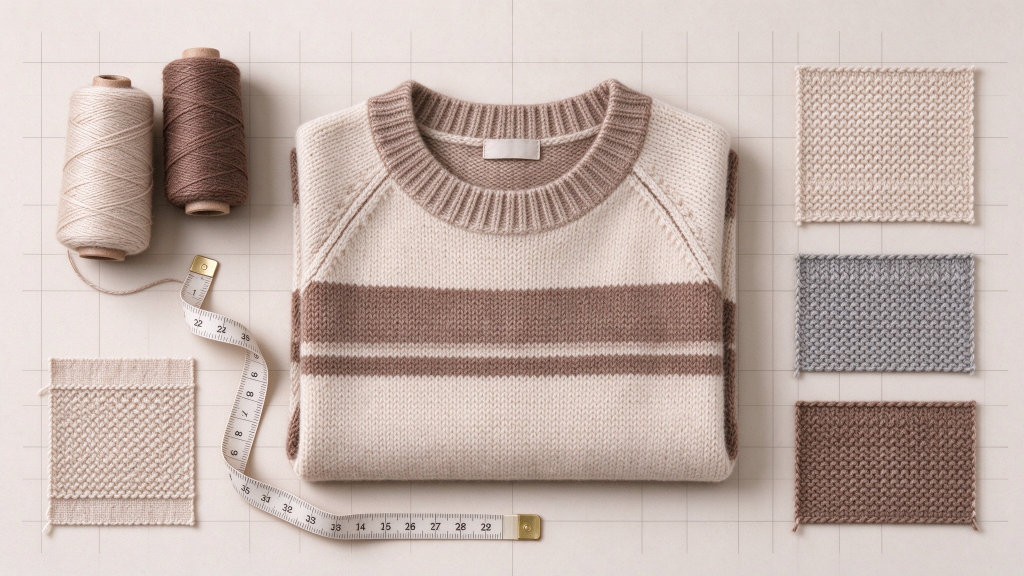
Physical swatches are equally important. Two yarn lots described using the same color name may show visible differences in shade, texture, or surface appearance.
How to check: Ask the manufacturer to provide yarn details, available color references, and physical swatches where appropriate.
Before approving bulk production, confirm the color and material against an agreed reference. For products with strict color requirements, clarify how subsequent yarn lots will be evaluated.
A few simple questions can help:
- What yarn composition and specifications are proposed?
- Can the supplier provide physical swatches before bulk production?
- What color reference will be used for approval?
- Is supporting certification documentation available if required?
These checks help buyers make decisions based on the actual material rather than photographs or general descriptions.
4. How Long Does Sampling Take, and How Many Revision Rounds Are Needed?
Sampling is an important indicator of how a manufacturer manages product development.
A low unit price may offer little value if sample development takes too long or repeated revisions delay the launch schedule.
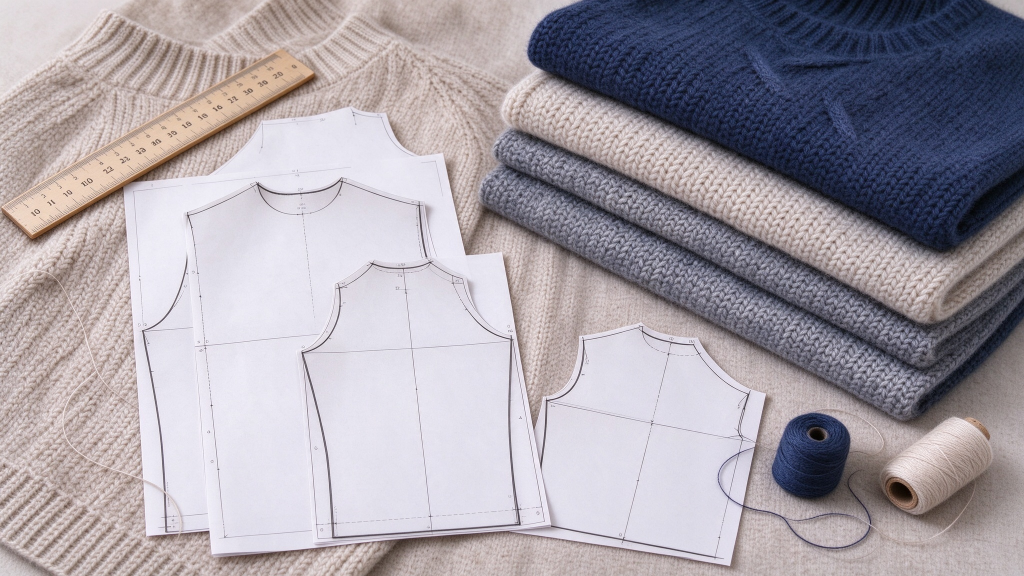
Before starting a project, buyers should clarify the expected sample timeline, the information required to begin, the number of revision rounds anticipated, and any additional charges.
The actual development period depends on factors such as design complexity, yarn availability, knitting structure, sample workload, and the completeness of the technical specifications.
How to check: Ask for a development timeline covering the key stages, from receipt of the design brief to the first sample and final sample approval.
Confirm who will manage each stage and how progress updates will be communicated.
Useful questions include:
- What information is needed before sampling can begin?
- What is the estimated lead time for the first sample?
- How are sample revisions handled and charged?
- How long might revised samples take?
- What approvals are required before bulk production?
A manufacturer with a clear sampling process can help buyers identify outstanding decisions and manage development more effectively.
5. Does the Factory Use Fully Fashioned Knitting or Cut-and-Sew Construction?
Different garment construction methods suit different product requirements.
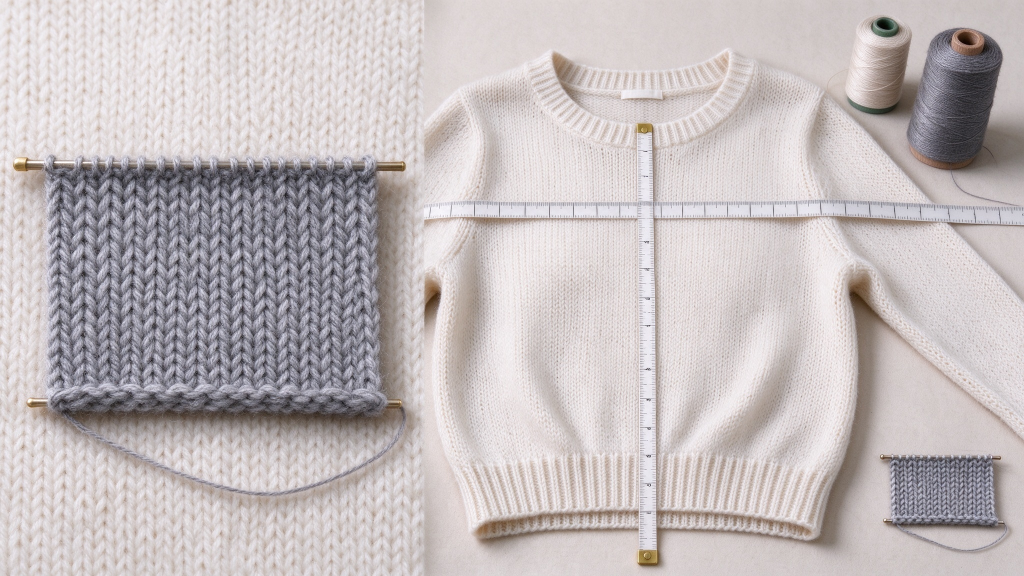
Fully fashioned knitting shapes garment panels during the knitting process. Depending on the design and construction, this can reduce cutting waste and create specific shaping or finishing effects.
Cut-and-sew construction uses knitted fabric or panels that are cut and assembled. It may be appropriate for certain designs, panel arrangements, and production requirements.
Neither method is automatically better for every sweater. The appropriate choice depends on the intended silhouette, structure, appearance, cost target, and manufacturing requirements.
For fitted knitwear or products requiring particular shaping details, buyers may wish to explore whether fully fashioned construction is suitable.
How to check: Ask the manufacturer which construction methods it uses for your product category and whether it has experience with comparable designs.
If fully fashioned knitting is important to your project, ask for relevant samples and clarify which stages are completed in-house.
Rather than focusing only on the number of machines, evaluate whether the factory can consistently produce the construction and finishing details your design requires.
6. Who Will Manage Your Order When Problems Arise?
Even well-planned production projects can encounter changes, delays, or unexpected technical issues. The quality of communication often determines how efficiently these situations are handled.
Before placing an order, find out who will be responsible for communication, production updates, sample revisions, and issue resolution.
A clear point of contact helps prevent information from becoming fragmented across multiple people or departments.
Buyers should also understand how the manufacturer communicates changes that may affect cost, quality, or delivery dates.
How to check: Ask who will manage your account and how frequently you can expect progress updates.
You can also evaluate communication during the quotation and sampling stages. Does the supplier ask relevant questions about the product? Are uncertainties explained clearly? Are potential risks raised before they become production problems?
A useful manufacturer does more than confirm that every request is possible. It should communicate technical limitations, clarify missing information, and discuss practical alternatives when necessary.
These habits can make a meaningful difference during busy production periods.
7. How Are Defects Defined and Handled?
Before committing to bulk production, buyers should understand the manufacturer’s quality requirements and the process for handling nonconforming products.
Important details include the inspection method, agreed acceptance criteria, responsibility for rework or replacement, and the procedure for resolving quality disputes.
The terms should reflect the product requirements and the agreement between both parties. Different products may require different inspection priorities depending on their construction, materials, and intended use.
How to check: Ask the manufacturer to confirm the quality inspection process and the agreed procedure for handling defects in writing.
Clarify the following points:
- What inspection method will be used?
- Which product specifications and approved samples define acceptance?
- How will defects be recorded and reported?
- What happens if the goods do not meet the agreed requirements?
- Who is responsible for rework, replacement, or other remedies?
- What is the process and timeline for resolving a claim?
A clear written agreement helps both parties understand their responsibilities before a problem occurs.
Three Common Traps When Comparing Sweater Manufacturer Quotes
Even after receiving several quotations, buyers can make poor decisions if they compare only the unit price.
Trap 1: Comparing Prices Without Checking What Is Included
One quotation may include sampling or certain finishing requirements, while another may exclude them. The headline price alone does not show the complete commercial picture.
Compare quotations against the same specifications and confirm which services, materials, and production steps are included.
Trap 2: Ignoring Hidden Costs
A higher MOQ can tie up working capital. A long development timeline can delay a product launch. Additional revision charges or changes in material requirements can also increase the final project cost.
These expenses may not appear clearly in the initial quotation, so buyers should identify them before making a decision.
Trap 3: Choosing a Factory That Does Not Fit Your Order Size
A large manufacturer may have extensive equipment and production capacity, but its normal operating model may not suit a smaller or more varied order.
The right supplier is not necessarily the largest one. It is the manufacturer whose capabilities, production arrangements, and commercial terms fit your actual project.
How to Compare Quotations More Effectively
Request quotations from two or three manufacturers using the same product specifications.
Compare the following items side by side:
- Unit price and pricing conditions.
- MOQ per style and color.
- Sample cost and development timeline.
- Bulk production lead time.
- Material specifications and included finishing.
- Inspection requirements and defect-handling terms.
- Payment conditions and shipping arrangements.
This approach helps you evaluate the overall value of each proposal rather than choosing based on price alone.
How to Tell Whether a Manufacturer Is Suitable for Long-Term Cooperation
Technical capabilities and quotations are important, but long-term cooperation also depends on how well the supplier understands your business.
1. Does the Manufacturer Understand Your Brand Positioning?
A supplier should understand the intended customer, product positioning, design direction, and purchasing requirements.
This context helps the manufacturer assess whether proposed materials and construction methods are suitable for the project.
2. Does the Supplier Communicate Risks Clearly?
A reliable manufacturing partner should explain potential technical or commercial challenges rather than automatically agreeing to every request.
For example, a proposed yarn may not deliver the expected handfeel, or a complicated structure may require additional development time. Early communication gives buyers more time to evaluate alternatives.
3. Can the Supplier Support Repeat Orders?
For brands that plan to reorder successful products, consistent records and clear product specifications are important.
Ask how approved samples, yarn details, measurements, and production requirements will be documented. These records can help both parties manage future orders more efficiently.
Long-term cooperation should be evaluated through demonstrated performance, transparent communication, and the ability to meet agreed requirements over time.
What Does the Sweater Manufacturing Order Process Look Like?
For buyers working with a new manufacturer, understanding the general order process makes it easier to plan the project.
Step 1: Submit the Product Brief
Provide available design references, technical specifications, size information, material preferences, target quantities, and delivery requirements.
The more complete the information, the easier it is for the manufacturer to assess the project.
Step 2: Review the Quotation
The manufacturer evaluates the requirements and provides pricing and relevant commercial details. Buyers should clarify any missing information before proceeding.
Step 3: Confirm Sample Development
Agree on the sample requirements, costs, expected timeline, and approval process.
Step 4: Review and Revise the Sample
Evaluate the sample against the intended design, measurements, material requirements, and construction details. Communicate necessary revisions clearly.
Step 5: Approve the Product and Confirm the Bulk Order
Once the sample and specifications are approved, confirm the purchase order, agreed quality requirements, payment terms, and production schedule.
Step 6: Monitor Bulk Production
Maintain communication with the manufacturer and confirm how progress updates and production issues will be reported.
Step 7: Conduct Final Inspection
Inspect the finished goods against the agreed acceptance criteria and resolve any outstanding issues in accordance with the contract.
Step 8: Arrange Shipment
Confirm shipping terms, documentation, packaging, and the responsibilities of each party before dispatch.
The exact process, payment schedule, and delivery arrangements vary by manufacturer and contract. Buyers should confirm these details rather than assuming that every supplier follows the same procedure.
Five Mistakes Buyers Should Avoid When Choosing a Sweater Factory
Even experienced buyers can encounter problems when supplier selection is rushed.
- Choosing based only on an online listing or trade-show introduction. Review relevant product samples, ask technical questions, and verify the supplier’s capabilities before committing.
- Treating price as the only decision factor. Consider materials, production arrangements, quality requirements, and delivery reliability.
- Avoiding detailed questions. Clear questions help both parties identify missing information and potential risks early.
- Skipping sample approval. Approving bulk production without adequately evaluating the product can increase the risk of costly discrepancies.
- Ignoring future cooperation. If repeat orders are likely, discuss documentation, product consistency, communication, and future production planning from the beginning.
The Bottom Line: Choose a Manufacturer That Fits Your Business
The right sweater manufacturer is not necessarily the factory with the lowest quotation or the largest production facility. It is the supplier whose MOQ, knitting capabilities, material options, development process, and communication arrangements match your requirements.
Ask the seven questions, compare suppliers using the same specifications, and confirm important decisions in writing. These steps can help reduce avoidable sourcing risks and give your team a clearer path from product development to bulk production.
For apparel brands, wholesalers, and sourcing teams, choosing a manufacturing partner should be based on product suitability, transparent terms, and the ability to meet agreed requirements.
Looking for a Sweater OEM Manufacturing Partner?
If you are developing a new knitwear collection or sourcing a manufacturer for private label sweaters, prepare your product references, estimated quantities, material preferences, and target delivery schedule.
JIAXING KAIDA APPAREL CO., LTD. welcomes inquiries from international apparel brands and sourcing teams interested in knitwear OEM/ODM development and manufacturing.
Share your available specifications to begin a discussion about your product requirements, sampling needs, and production options.
Explore our website:https://kaidaknitwear.com/