When developing a seasonal knitwear collection, women’s fashion brands face a foundational product decision: cardigan vs pullover sweater. This choice directly impacts styling versatility, production complexity, fit consistency, and end-user functionality — all critical factors for private label apparel buyers evaluating OEM knitwear manufacturers. Selecting the wrong base style early can delay sampling, complicate tech pack alignment, and misalign with target customer behavior across retail channels. Understanding the structural, functional, and developmental implications of each is not about preference — it’s about procurement precision.
Core Structural Differences Define Development Paths
A cardigan features a front opening secured by buttons, snaps, zippers, or ties; a pullover has no front closure and must be donned over the head. This distinction governs construction logic: cardigans require placket reinforcement, buttonhole stability, front band continuity, and often asymmetric shaping to accommodate overlap. Pullovers rely on neck opening elasticity, shoulder seam integrity, and controlled stretch distribution to ensure wearability without distortion. Neither style is inherently simpler — but their technical requirements diverge significantly. Buyers should confirm whether their chosen manufacturer supports both styles at equal depth, particularly regarding front band attachment methods, ribbing transitions, and closure integration.
Market Fit Depends on Collection Intent — Not Just Trend Cycles
Cardigans excel in layering-focused collections (e.g., transitional spring/autumn lines) where ease of removal, adjustable coverage, and styling flexibility matter. They support diverse necklines, sleeve lengths, and hem treatments — cropped, longline, open-front, or belted — making them highly adaptable to brand voice and channel strategy. Pullovers deliver clean silhouettes ideal for core basics, monochrome sets, or performance-adjacent knits where minimal hardware and seamless transitions are priorities. Neither dominates in demand; rather, their suitability maps to how the brand positions its collection: as modular wardrobe pieces (cardigan) or intentional standalone statements (pullover).
Material, Gauge, and Construction Interact Differently
Gauge selection influences drape, recovery, and stability — especially critical for cardigans, where front bands and closures must retain shape after repeated use. A finer gauge may enhance detail definition but require tighter tension control to prevent stretching at plackets. Ribbed cuffs/hems behave differently on pullovers versus cardigans: on pullovers, ribbing contributes significantly to ease-of-wear; on cardigans, it must balance stretch with visual cohesion across overlapping fronts. Yarn structure (e.g., single jersey vs. interlock vs. rib-knit) affects seam visibility, weight perception, and laundering response — all factors that influence sample approval timelines. Buyers should specify intended yarn type and gauge range early, as these impact pattern grading, stitch count validation, and final fit consistency.
OEM & ODM Development Requires Distinct Confirmation Points
Before initiating development, brands must clarify style-specific technical expectations with their OEM knitwear manufacturer. For cardigans: placket width and finish method (folded, bound, or self-fabric), button placement tolerance, closure type compatibility (e.g., corozo vs. metal), and front band roll behavior under wear. For pullovers: neck opening circumference and stretch retention, shoulder seam reinforcement technique, and sleeve cap ease distribution. Both require precise grading rules, but cardigans add dimensional variables tied to closure alignment and overlap allowance. Final specifications depend on yarn, construction, fit, and order requirements — none should be assumed without joint review of first-fit samples.
Private Label Brand Positioning Guides Style Selection
No universal “better” style exists for private label knitwear. A contemporary streetwear line may prioritize oversized pullovers for graphic placement and silhouette cohesion; a premium contemporary brand might select cropped cardigans to emphasize waist definition and layering hierarchy. Fast-fashion retailers often rotate both styles seasonally to cover multiple occasion-based use cases (office, casual, weekend). The decision hinges on three non-negotiable inputs: (1) target customer’s habitual dressing behavior, (2) existing collection architecture (e.g., does the line already feature strong outerwear alternatives?), and (3) production scalability — particularly around closure sourcing and front band consistency. Buyers should align style choice with these before finalizing tech packs.
Recommended Products
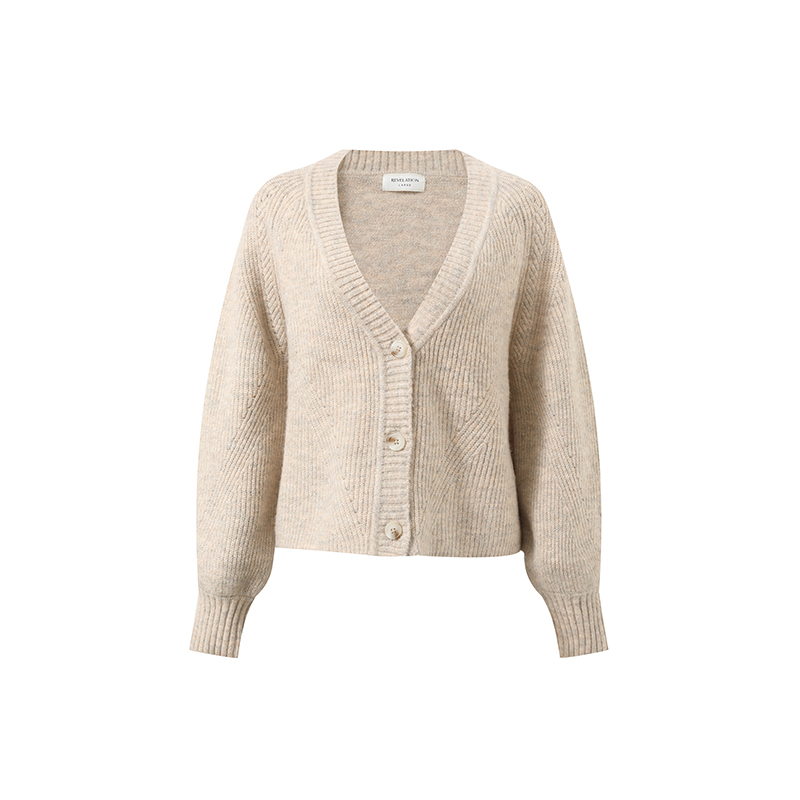
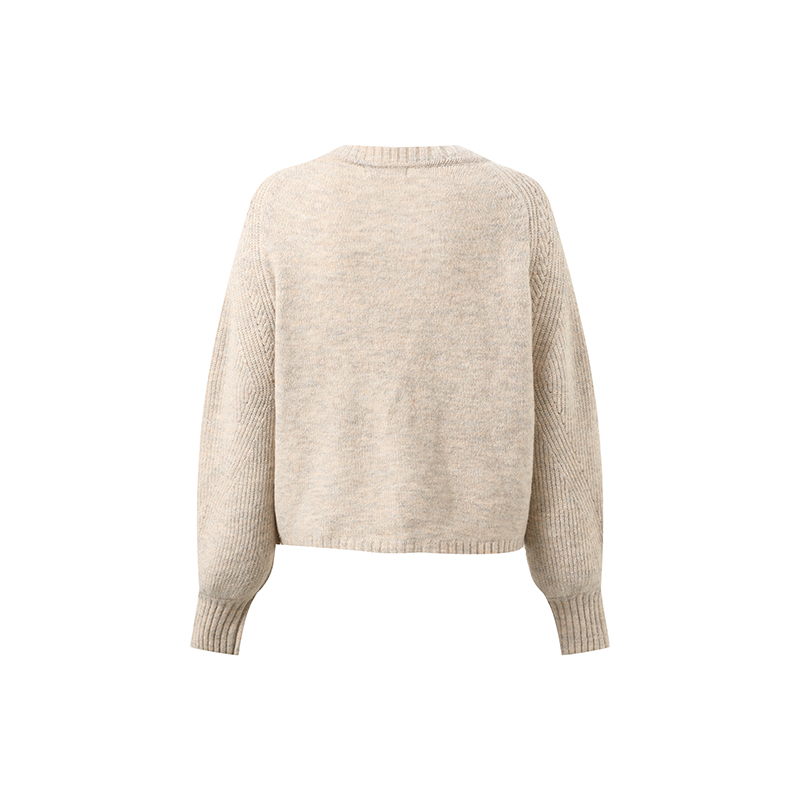
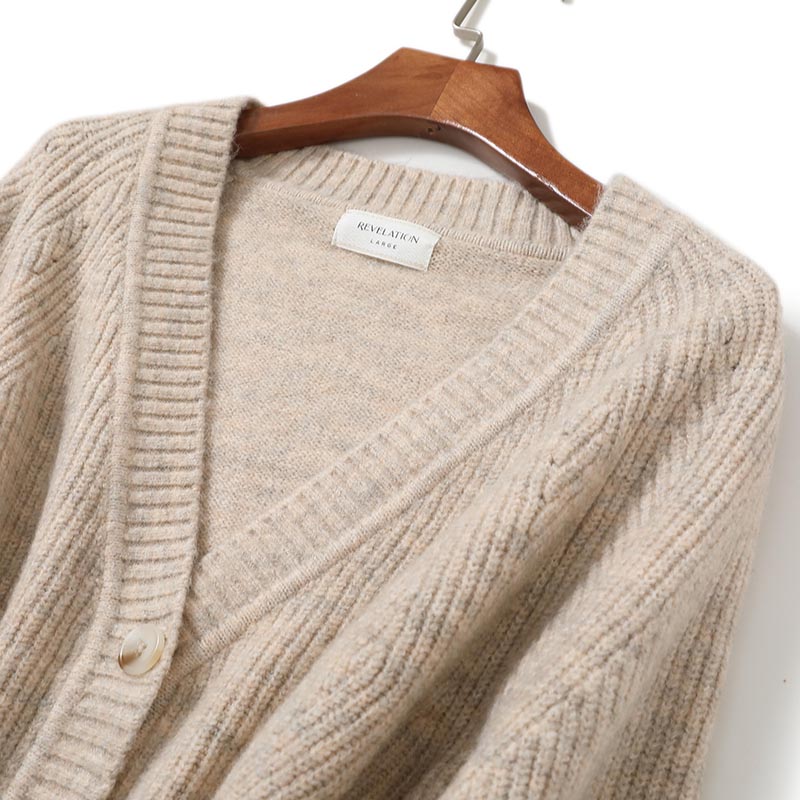
Women’s Cropped V-Neck Cardigan Manufacturer — Designed for brands building modern, proportion-conscious knitwear collections, this style supports stretch-integrated construction and offers flexibility in length, neckline depth, and front closure options. It suits private label fashion brands targeting mid-to-premium positioning within seasonal women’s knitwear collections.
Frequently Asked Questions
What is the difference between a cardigan and a pullover sweater?
Cardigans feature a front opening with buttons or other closures, while pullovers are designed to be worn over the head. The choice depends on styling, functionality, and the target market — not just aesthetic preference. Structural differences affect pattern drafting, seam finishing, and fit validation protocols during sampling.
Which style is better for private label fashion brands?
Both cardigan and pullover sweaters have strong market demand. The right choice depends on your collection, customer preferences, and seasonal positioning. Neither holds inherent advantage — success comes from matching style intent with brand identity and production capability.
Can OEM manufacturers customize women’s cardigan sweaters?
Yes — OEM manufacturers can customize women’s cardigan sweaters across length, neckline, closure type, front band treatment, and stitch construction. However, customization scope must be confirmed per project, as options depend on yarn availability, gauge limitations, and factory setup capabilities.
What should brands provide before OEM development begins?
Brands should supply a complete tech pack including schematic drawings, graded spec sheet, material direction (yarn type, weight, colorway), closure specifications, and fit reference garments. Without these, sampling iterations increase and fit consistency becomes harder to achieve — especially for cardigans requiring precise front alignment.
How do you assess whether a cardigan or pullover fits your market?
Evaluate current bestsellers, competitor assortment analysis, and customer search behavior for terms like ‘layering cardigan’ or ‘oversized pullover’. Also review return reasons — fit issues related to neck opening (pullovers) or band twisting (cardigans) signal style-specific pain points worth addressing pre-development.
Conclusion
Choosing between cardigan and pullover sweater is not a stylistic footnote — it’s a procurement decision with cascading effects on sampling efficiency, fit accuracy, and collection coherence. There is no universally optimal style. The appropriate choice depends on your brand’s design language, customer expectations, and manufacturing partnership readiness. When working with an OEM knitwear manufacturer or private label knitwear supplier, clarity on structural intent, confirmation of style-specific development protocols, and early alignment on material-construction trade-offs are essential. Contact our team to discuss your knitwear project and explore customized manufacturing solutions.