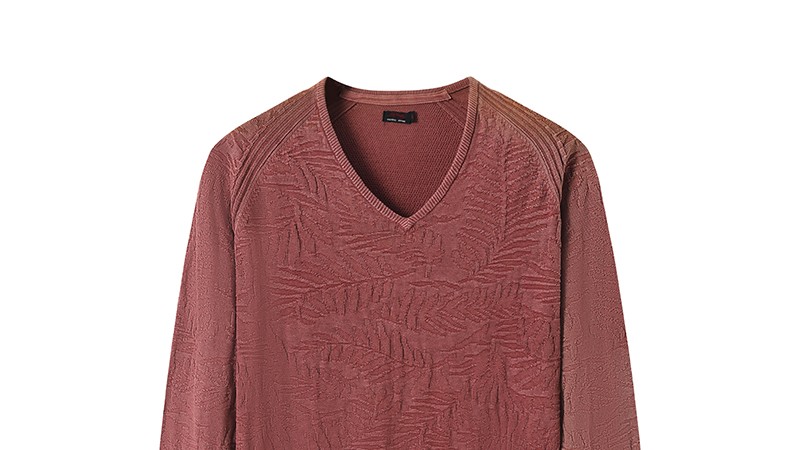
Why Finish and Yarn Composition Matter in Heritage Menswear Cotton Sweaters
For menswear brands developing autumn/winter collections, the botanical jacquard cotton sweater is a matter of construction, finish, and market positioning — not just another cotton sweater. Botanical jacquard relies on patterned stitch variation to build organic motifs (leaves, vines, stems) directly into the fabric rather than printing them on top. Combined with stone washing, the finish changes surface texture, color depth, and hand feel — the factors heritage menswear buyers weigh when a program has to read as authentic and tactile, not just seasonal. For private label sweater lines and stone washed knitwear programs, yarn composition and post-knit treatment jointly determine drape, shrinkage behavior, colorfastness, and shape retention. Those are the variables to settle before tech packs are finalized and bulk orders are placed.
100% Cotton vs. Blended Yarns: What It Means for Development
This botanical jacquard cotton sweater is 100% cotton — combed cotton, per the source description. No polyester, acrylic, or elastane in the base material. That supports breathability, natural softness, and compatibility with stone washing, but it also sets constraints: pure cotton shrinks more readily than blends, recovers less, and shows laundering wear sooner. For heritage menswear, that is often the point — a lived-in drape that relaxes over time fits brand narratives around authenticity and slow wear. Buyers should still confirm whether pre-shrinking happens during knitting or as part of the stone wash, and validate final measurements on the sample rather than assuming them from the spec sheet.
Gauge, Weight, and Structure: How 12GG Defines the Knit Profile
The stated gauge is 12GG — 12 needles per inch — which puts this in fine-gauge territory. In practice, 12GG gives tighter stitch definition, sharper jacquard motif resolution, and smoother color transitions after stone washing. With a finished weight of 338g, the result is a midweight cotton sweater: enough substance for autumn/winter layering without bulk under outerwear. This is a different animal from coarse-gauge (5GG–7GG) cable knits or lightweight 16GG–18GG fashion knits. A brand evaluating this for heritage menswear should check whether the 12GG structure supports the intended silhouette — a relaxed raglan sleeve and a fitted set-in crewneck call for different tension calibration. Gauge alone does not determine fit; it interacts with yarn count, loop length, and post-knit tension release, all of which need sample validation.
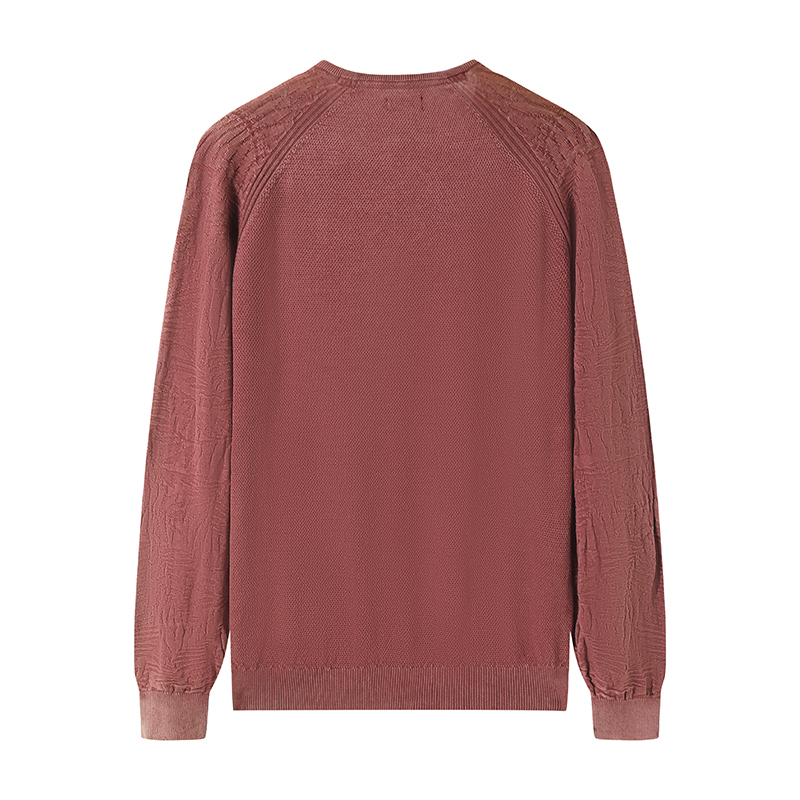
Stone Washing: A Functional Finish, Not Just a Look
Stone washing is a mechanical finishing process, not a vintage visual cue. It abrades the fabric surface using pumice stones or enzyme alternatives, which cuts surface lint, softens hand feel, and creates subtle tonal variation — especially visible on 100% cotton jacquards where color responds unevenly to abrasion. For OEM sweater suppliers, stone washing adds a step that must be locked during sampling: timing, stone size, duration, and rinse parameters. Over-washing risks motif distortion or pilling; under-washing leaves the fabric stiff and visually flat. Buyers should confirm the wash parameters on the sample and request wash test data per order requirement if their channel needs it — the source page does not state certificates for this product.
Choosing the Right Cotton Sweater for Your Brand Position
No single cotton sweater suits every heritage menswear context. A brand focused on archival reissues may prioritize exact stitch replication and minimal shrinkage — favoring tighter gauge control and pre-shrunk yarns. A contemporary private label line emphasizing artisanal texture may accept more batch variation and a softer hand feel, trading precision for character. Distribution channel matters too: direct-to-consumer brands often need consistent sizing across seasons, while wholesale partners may allow tolerance for varied retail fitting standards. The botanical jacquard cotton sweater fits most naturally within stone washed knitwear programs and autumn/winter casualwear — but only if the target customer expects a medium-weight, non-stretch, tactile-driven piece. Buyers should map each development decision against three anchors: end-user expectations (does “heritage” mean rugged durability or refined softness?), layering context (under a coat, or standalone?), and price positioning against comparable 100% cotton jacquards in market.
OEM/ODM Development Checklist: What to Confirm Before Sampling
Before approving first samples, buyers should confirm the following — none of it is assumed from the provided specs:
- Yarn source and micronaire range (affects dye uptake and pilling)
- Whether stone washing happens pre- or post-garment assembly (affects seam integrity)
- Stitch density (stitches/cm) and loop length (mm) — needed for accurate costing and shrinkage modeling
- Pantone matching protocol: dyed yarn vs. piece-dyed vs. overdye, and acceptable Delta E tolerance
- Size grading rule and measurement points for XS–5XL
- Final garment weight tolerance — for consistency across colors
Recommended Product
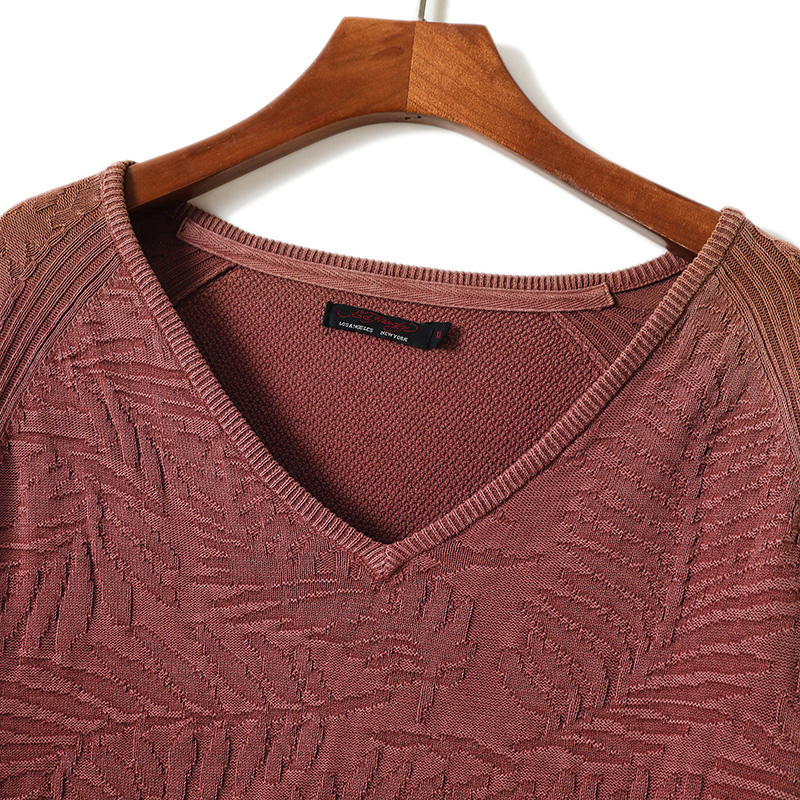
Botanical Jacquard Cotton Sweater Manufacturer | Stone Washed — built for heritage menswear collections and private label sweater lines that need botanical motif clarity, tactile softness, and authentic stone-washed character. Suited to autumn/winter casualwear programs where natural fiber integrity and fine-gauge definition drive the brief.
Frequently Asked Questions
What gauge and weight should I expect from this sweater?
The source page states 12GG and a finished weight of 338g. That combination produces a fine-gauge, midweight cotton knit — detailed enough for botanical jacquard motifs and substantial enough for autumn/winter layering.
What is the lead time for bulk orders?
The source page states bulk lead time is 30–35 days and sample lead time is 7–10 days. Final timing depends on yarn availability, wash scheduling, and the complexity of the size and color matrix.
Is the yarn certified, and can I request wash test data?
The source page does not state yarn certification for this product. Material is 100% combed cotton with customizable Pantone color matching. Wash test data and certification status should be confirmed during technical specification review rather than assumed.
12GG vs. Coarse-Gauge Knits: Selection Boundaries for Heritage Menswear
12GG is not a default choice — it is a boundary decision. Coarse-gauge knits (5GG–7GG) deliver heavier hand, bolder texture, and stronger visual presence, which suits chunky cable programs and outerwear-adjacent silhouettes. Fine-gauge 12GG trades that weight for motif resolution and layerability, which is why it fits botanical jacquard and midweight 338g constructions. Brands should choose by end use, not preference: if the sweater must sit under a coat without bulk, 12GG is the practical ceiling; if it must read as a standalone statement piece, coarse gauge is the better fit. Gauge also drives cost and shrinkage modeling, so the decision should be locked before sampling, not after.
Conclusion: Fit Drives Specification — Not the Reverse
There is no universally optimal botanical jacquard cotton sweater. Whether it suits your heritage menswear collection, stone washed knitwear program, or private label sweater line depends on alignment between yarn composition (100% cotton), structural execution (12GG, 338g), and finishing method (stone washed) — and on your specific customer, channel, and seasonal use case. Treat the provided specs as a baseline, not a fixed outcome. Final decisions come from iterative sampling, objective measurement, and clear communication with the OEM sweater supplier. Contact our team to discuss your knitwear project and explore customized manufacturing solutions.