Introduction
As menswear collection planners and sourcing managers finalize Fall/Winter 2026 development calendars, hybrid outerwear continues to gain strategic relevance—not as a trend, but as a functional response to layered urban living, golf course microclimates, and transitional winter demand. I’ve advised over 70 international brands on knit-woven integration since 2012, and what stands out in 2026 is not novelty for its own sake, but purpose-driven construction. The Grid-Quilted 5GG Hybrid Zip Jacket exemplifies this: it’s not a compromise between knit and woven—it’s a deliberate zoning of performance attributes across the garment. This guide outlines how to evaluate, specify, and source this category responsibly—grounded in real-world OEM experience, not marketing claims.
What Is a 5GG Hybrid Knit-Woven Zip Jacket?
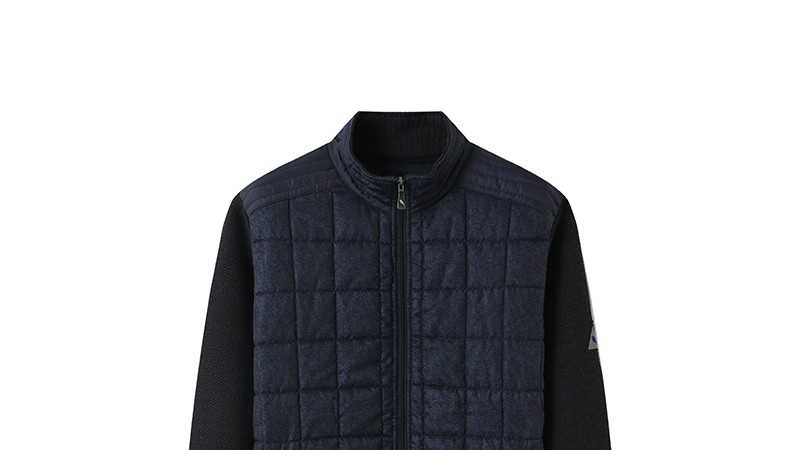
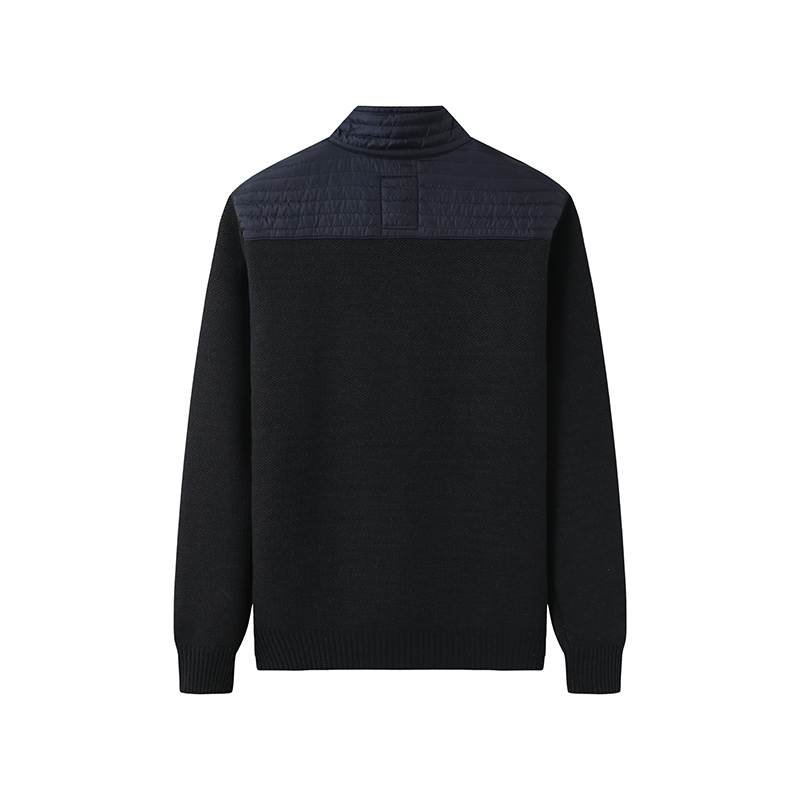
A 5GG hybrid knit-woven zip jacket belongs to the Men’s Knitwear > Knit Hybrid Jackets classification—a precise technical category defined by three non-negotiable elements: (1) a structured front panel made from quilted woven fabric (here, square grid quilting), (2) back and sleeve sections constructed in 5GG (5 stitches per inch) knit fabric, and (3) seamless integration via knit-to-woven panel sewing. Unlike full-knit or full-woven jackets, this design isolates wind resistance to the torso while preserving mobility where it matters most: shoulders, scapulae, and elbows. The 5GG gauge offers optimal balance—tight enough for clean drape and shape retention, open enough to allow breathability and stretch without compromising durability during repeated wear and laundering.
Key Differences: 5GG vs. Other Gauges in Hybrid Construction
Gauge selection directly impacts both aesthetics and function—and misalignment here is one of the top reasons hybrid jackets fail in bulk. Below are practical comparisons based on actual production feedback from 2023–2024 collections:
- 3GG–4GG: Too loose for structured front integration; causes puckering at knit-to-woven seams and reduces perceived quality in premium urban casual or golf contexts.
- 5GG: The industry-validated sweet spot for this hybrid format—provides sufficient stitch density to support ribbed cuffs/hem and hold double-layer stand collar structure, while retaining elasticity for arm movement.
- 7GG+: Over-engineered for this application—increases weight, cost, and seam stress; rarely requested for quilted-front hybrids unless paired with ultra-lightweight technical knits (which then require specialized sewing protocols).
Importantly: Gauge cannot be adjusted post-pattern. If your brand uses proprietary fit blocks, confirm early whether your existing 5GG body block accommodates the added thickness of the quilted front panel at the shoulder seam. We routinely adjust armhole depth by 3–5mm during pattern review—this is not optional calibration.
Advantages & Limitations of Grid-Quilted Front + 5GG Knit Back/Sleeves
The value proposition lies in functional zoning—not uniformity. Here’s how it breaks down operationally:
Advantages
- Wind protection where needed: The square grid-quilted woven front acts as a passive barrier—no membrane required—ideal for commercial apparel programs targeting transitional seasons (e.g., October–November urban commuting or spring golf in northern markets).
- Mobility retention: 5GG knit back/sleeves deliver natural 4-way stretch without compromising thermal efficiency—critical for golf-inspired collections where swing rotation must remain unrestricted.
- Production scalability: Unlike bonded or laminated hybrids, this construction relies on standard industrial sewing—reducing setup time and minimizing tooling dependencies across factories.
Limitations
- No inherent water resistance: The 100% polyester woven front is not coated or laminated. If water repellency is required, specify DWR finish during fabric sourcing—not as an afterthought.
- Fit consistency demands precision grading: The differential stretch between quilted front and knit back means size grading must account for directional growth—especially across chest width and sleeve length. A flat grade rule won’t suffice.
How to Choose for Your Brand: Fit, Use Case & Positioning
Your choice isn’t just about fabric—it’s about alignment with customer behavior:
- Urban casualwear brands: Prioritize relaxed fit with extended sleeve length. The double-layer stand collar must sit cleanly under coat collars—test with layering garments before approving sample.
- Golf-inspired collections: Specify articulated sleeve gussets (even if not visible externally) and verify 1×1 ribbed cuffs maintain 90%+ recovery after 500+ stretch cycles—standard test we run pre-bulk.
- Outdoor lifestyle brands: Avoid oversized silhouettes unless paired with reinforced stitching at high-stress seams (e.g., side seams, pocket openings). The quilted front adds rigidity—oversizing without structural reinforcement creates drag points.
- Transitional winter ranges: Confirm garment weight (~840g) matches your thermal layering strategy. This jacket functions best as mid-layer under shell or standalone above merino—never as outermost in sustained rain or sub-zero windchill.
Material Considerations: Polyester Knit + Quilted Woven
While both components are 100% polyester, their performance divergence is intentional—and often misunderstood. The knit back/sleeves use textured or air-jet yarns for loft and resilience; the quilted front uses tightly woven, low-bulk polyester taffeta or micro-ripstop with minimal stretch. Key procurement notes:
- Do not assume fabric substitution is interchangeable—even within 100% polyester. Yarn denier, twist level, and finishing affect seam slippage at knit-to-woven junctions.
- Request physical swatches of both components *together*, not separately. Visual color match ≠ dye-lot consistency under UV exposure or laundering.
- For private label programs, lock fabric specs *before* artwork placement—quilted panels limit embroidery placement options and alter heat-transfer adhesion behavior.
Manufacturing & OEM Considerations
Hybrid jackets expose OEM capability gaps faster than any other knit category. Three non-negotiable checks during supplier vetting:
- Knit-to-woven seam integrity: Ask for tear-test reports on seam strength (ASTM D1683) at the shoulder and side seams—not just visual inspection.
- Quilting registration accuracy: Square grid must align precisely across front panels. Misaligned quilting reads as defective at retail—request tolerance spec (±1.5mm is industry-acceptable).
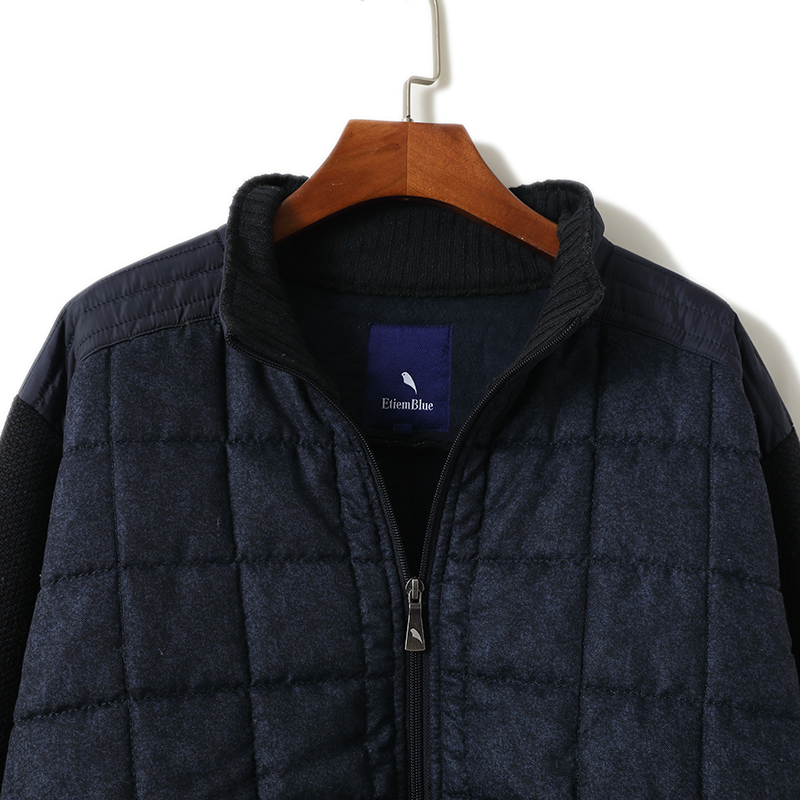
- Zipper insertion protocol: Full-length front zipper must be installed *before* attaching the knit back. Reversing this order causes puckering and compromises double-layer collar alignment.
Sample lead time (~7–10 days) assumes fabric is in stock. If custom dyeing or quilting development is needed, add minimum 5 days—this is not negotiable without compromising seam stability testing.
Recommended Products
Grid-Quilted Front 5GG Knit Hybrid Zip Jacket Manufacturer — Designed for fashion brands developing urban casual or golf-focused Fall/Winter 2026 lines, this OEM-ready specification supports rapid sampling, relaxed or regular fit grading, and scalable bulk production with documented knit-to-woven seam protocols.
Frequently Asked Questions
What is the main advantage of combining a quilted woven front with a 5GG knitted back and sleeves?
The hybrid construction provides different functions in different areas of the garment. The quilted front creates a more protective and structured chest area with wind protection, while the knitted back and sleeves provide flexibility and easier movement during wear.
Can the square quilting pattern be changed for our collection?
Yes. The front quilting can be developed in different geometric layouts, including diamonds, horizontal channels or brand-specific patterns, subject to the technical requirements of the selected fabric.
What is the typical sampling and bulk production timeline?
Sample development generally takes around 7–10 days, depending on material availability and construction complexity. Bulk production typically requires 25–35 days after sample and specification approval.
Can the jacket be developed in different fits and extended sizes?
Yes. We can develop regular, relaxed or oversized silhouettes and grade the pattern according to the buyer’s size chart, including extended sizes where required.
Conclusion
Selecting a hybrid zip jacket OEM isn’t about finding the lowest MOQ—it’s about identifying a partner who treats gauge, quilting geometry, and knit-to-woven seam engineering as interdependent variables—not isolated specs. For private label jacket OEM programs, the Grid-Quilted 5GG Hybrid Zip Jacket offers a proven, scalable entry point into Men’s Knitwear > Knit Hybrid Jackets—with flexibility for fit adaptation, material customization, and rigorous quality control at every stage. Whether you’re building a capsule for urban commuters or expanding a golf lifestyle line, prioritize suppliers who document seam integrity testing, offer transparent sampling timelines, and engage in technical fit dialogue—not just size charts. Contact our team to discuss your knitwear project and explore customized manufacturing solutions.