Why Gauge, Weight, and Composition Matter in Women’s Cable Knit Development
When sourcing a 12GG cable knit sweater for women’s private label or seasonal collections, buyers must align technical specs with brand positioning—not just aesthetics. A 12GG fine-gauge construction delivers refined texture and drape, but differs materially from bulkier 7GG or 9GG cables in recovery, weight distribution, and fit behavior. With a base specification of 280g ±8g per piece, this weight sits deliberately between transitional layering pieces and full-season staples—making it suitable for e-commerce sweater stores targeting year-round wearability and boutique brands building multi-season capsules. Unlike heavier cables that rely on yarn bulk for definition, 12GG cables depend on precise stitch transfer, tension control, and finishing technique to retain raised texture without distortion.
How Material Composition Impacts Performance and Sourcing Decisions
The standard composition—65% acrylic, 34% polyester, 1% spandex—offers dimensional stability, shape retention, and cost-effective production at low MOQs. Acrylic contributes softness and loft; polyester adds tensile strength and reduces shrinkage; spandex enables controlled stretch in ribbed areas. However, this blend requires careful management of pilling and static, especially in fine-gauge structures where surface friction is amplified. Buyers evaluating lightweight sweater supplier options should confirm whether anti-pilling or anti-static finishing treatments are included—or negotiable—based on end-market expectations. For brands prioritizing sustainability, fiber substitution is possible: GRS recycled polyester, GOTS organic cotton, RWS Merino wool, or cashmere blends can replace portions of the base blend—but each change affects knitting parameters, final garment weight, hand-feel, and unit cost. No universal ‘upgrade’ exists; suitability depends on target price point, care instructions, and customer expectations.
What “Low MOQ” Really Means for Private Label Knitwear Manufacturing
A low MOQ sweater factory offering 100 pcs per color enables flexibility for boutique clothing brands launching limited-edition drops or e-commerce sellers testing new silhouettes. But MOQ alone doesn’t define procurement efficiency. Buyers must assess how that MOQ interacts with development lead time (7–10 working days for samples) and bulk readiness (25–35 days). Short sample windows support faster iteration during tech-pack refinement, while predictable bulk timelines allow alignment with regional shipping calendars and inventory planning cycles. Crucially, low MOQ does not imply reduced customization capability: cable pattern layout, neckline shape, rib density, sleeve length, and body fit remain fully adjustable—provided specifications are confirmed before sampling. This makes the model especially relevant for fashion brand collections and seasonal knitwear capsules requiring distinct visual identity across small-batch releases.
Key OEM/ODM Confirmation Points Before Sampling
Before approving the first physical sample, buyers developing with a private label knitwear manufacturer should verify the following—each directly impacting consistency, cost, and market fit:
- Cable geometry: Width, spacing, and placement (e.g., full-panel vs. yoke-only) affect visual impact and fabric contraction—requiring pre-production stitch-length calibration.
- Rib structure: Crewneck and cuff ribbing must specify stitch count, spandex feed ratio, and density to maintain shape after repeated washing.
- Color matching protocol: Pantone TPX/TCX standards require physical lab dips—not digital proofs—to validate dye lot consistency across fiber types.
- Sustainable fiber substitution terms: If replacing acrylic or polyester, confirm revised weight tolerance, minimum order increments, and lead time adjustments.
- Branding integration method: Woven labels, heat-transfer prints, or embroidered logos each impose different setup requirements and QC checkpoints.
Choosing Between Cable Definition and Lightweight Drape
There is no single optimal configuration for a 12GG cable knit sweater. A brand focused on heritage styling may prioritize deep, high-contrast cables—even if that requires slight weight increase or tighter fit. A contemporary e-commerce sweater store might prefer subtle, flattened cables for smoother layering under blazers or coats. The 12GG platform supports both approaches—but only if the development process accounts for trade-offs: deeper cables draw fabric width inward (requiring adjusted panel dimensions), while flatter textures demand tighter knitting tension to avoid surface fuzzing. Buyers should evaluate samples not just for appearance, but for how the garment behaves when stretched, folded, and worn over a turtleneck or shirt collar.
Recommended Products
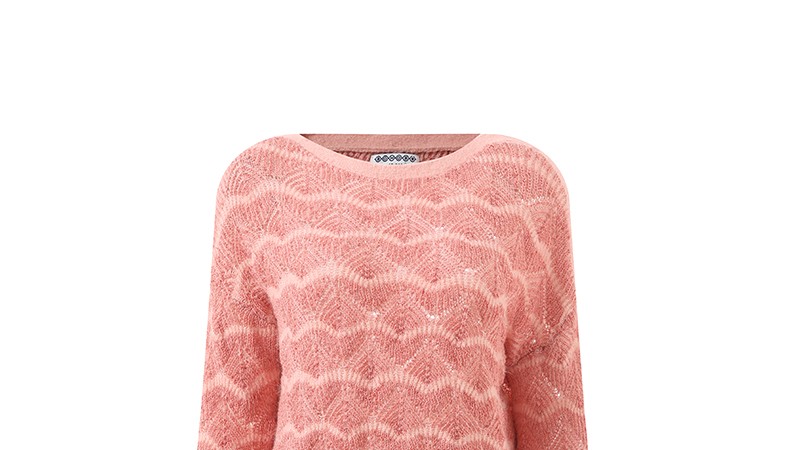
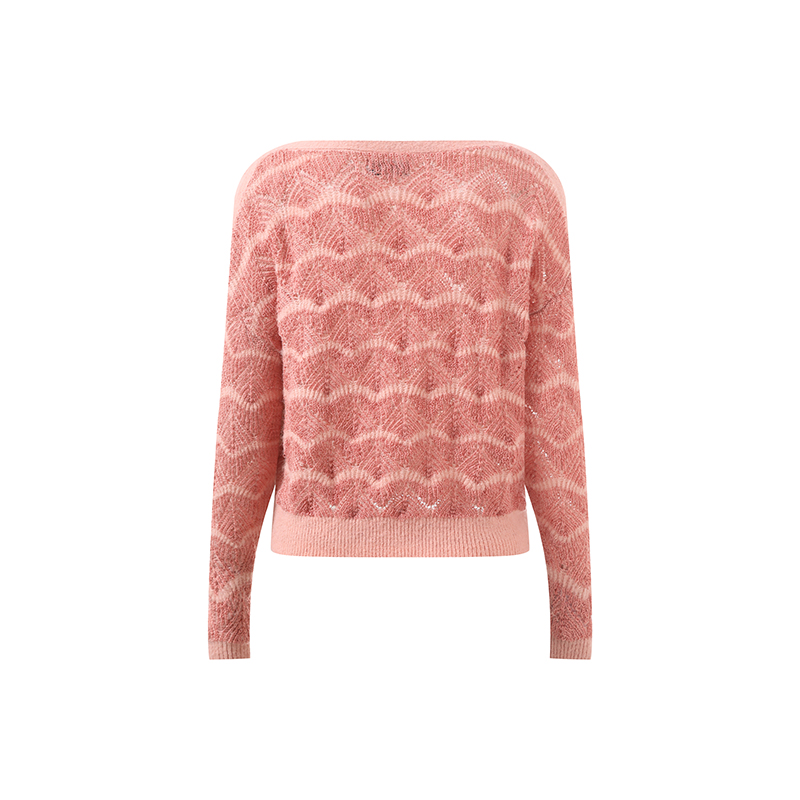
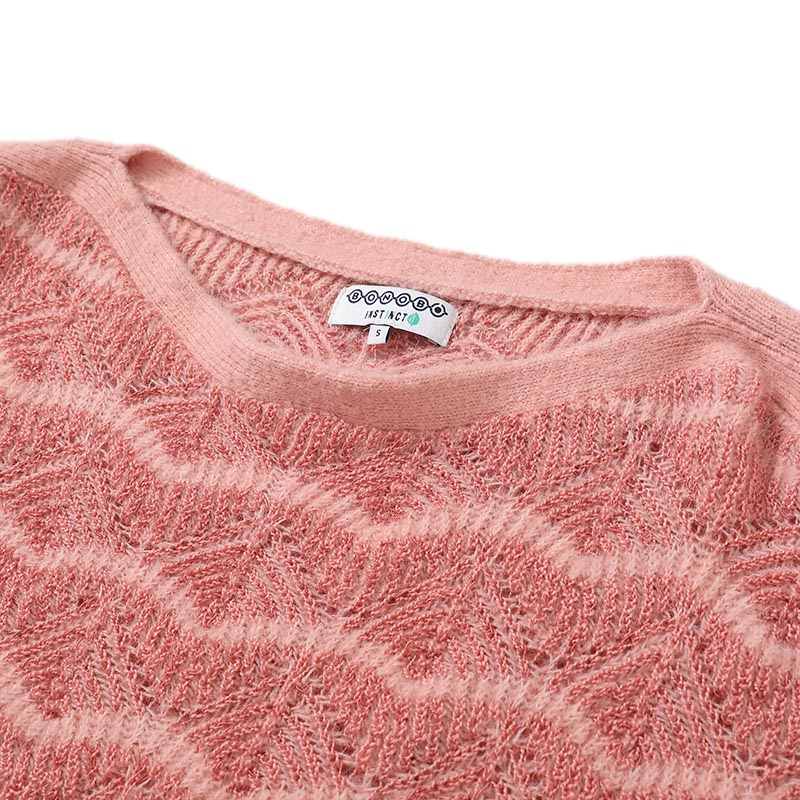
Women’s 12GG Lightweight Cable Knit Sweater | Fine Gauge OEM & Private Label Manufacturer — Designed for fashion brand collections and private label apparel lines needing consistent quality at 100 pcs/color MOQ, this style supports full customization of cable patterns, fit, and sustainable fiber options while maintaining a wearable 280g weight.
Frequently Asked Questions
How do you maintain cable definition in fine 12GG knitwear during finishing?
Cable structures can lose definition if excessive pressure is applied during pressing. The finishing process is controlled according to the cable construction, using controlled steam relaxation and shape setting rather than excessive compression. This helps maintain the raised cable texture while stabilizing finished garment dimensions.
How do you control width changes caused by the horizontal contraction of cable stitches?
Cable structures naturally draw fabric inward because yarn is transferred between needles. Before bulk production, stitch length and knitting tension are adjusted according to approved measurements and cable layout. Knitted panels are then relaxed and measured during finishing to maintain consistent sizing across production lots.
How do you reduce pilling and static on an acrylic-rich 12GG sweater?
Acrylic-rich fine-gauge knitwear can develop surface fuzzing and static under repeated friction. This is managed through yarn selection, knitting tension, and optional anti-pilling or anti-static finishing treatments—applied per buyer-specified performance requirements.
How do you maintain the shape of the crewneck and cuffs after repeated washing?
The rib sections can be developed with spandex reinforcement to improve elastic recovery. Rib density, stitch structure, and spandex feeding are adjusted according to required stretch and recovery performance—reducing edge relaxation and wavy borders.
Can the cable pattern be changed during showroom selection or tech-pack development?
Yes. Buyers can modify cable width, placement, geometric texture, stitch density, and overall pattern layout. A revised knitting program and physical sample can be developed based on approved technical specifications.
Can the 65% acrylic and 34% polyester blend be replaced with more sustainable or premium fibers?
Yes. The yarn composition can be modified with GRS recycled polyester, GOTS organic cotton, RWS Merino wool, cashmere blends, or other approved yarn combinations. Any change may affect garment weight, hand-feel, knitting parameters, and final production cost.
Conclusion: Match Specifications to Strategy, Not Just Style
Selecting a knitwear sourcing guide framework means recognizing that gauge, weight, composition, and MOQ are interdependent variables—not isolated features. A 12GG lightweight cable knit sweater is not inherently ‘better’ than 9GG or 7GG—it serves different brand contexts: transitional collections, direct-to-consumer layering, or compact retail sweater programs where shelf presence and repeat wear matter more than traditional heft. There is no universal best choice. What matters is how well the technical foundation supports your customer’s use case, your channel’s inventory rhythm, and your development timeline. For brands seeking women’s knitwear OEM or custom knitwear manufacturing with responsive sampling and adaptable material options, aligning early on cable behavior, rib performance, and fiber substitution pathways ensures fewer revisions and stronger market fit. Contact our team to discuss your knitwear project and explore customized manufacturing solutions.