Introduction
As menswear brands finalize AW26/27 collections, one structural shift stands out: the rise of hybrid outerwear. I’ve advised over 80+ international brands on knit development since 2009 — and this season, the most frequent briefing I receive isn’t for a new sweater or jacket, but for something in between. Specifically: a men’s cardigan jacket hybrid. This isn’t just semantic blending — it reflects real consumer behavior (layering versatility), retail positioning (smart-casual adjacency), and manufacturing evolution (dense fine-gauge knit structures that hold shape like woven jackets). This guide is written for brand founders, sourcing managers, and private label developers who need to evaluate whether — and how — to integrate this category into their program.
What Is a Cardigan Jacket Hybrid?
A cardigan jacket hybrid sits precisely at the intersection of two traditionally distinct categories within Knitwear Apparel > Men‘s Cardigan & Knit Outerwear OEM/ODM. It is not a lightweight open-front cardigan meant solely for layering, nor is it a fully lined, structured woven jacket. Rather, it’s a fully fashioned knit garment built with jacket-level weight (e.g., 611g ± 15g), tailored silhouette, and functional front closure — yet retaining the drape, breathability, and comfort inherent to knits. The key differentiator lies in construction: dense fine-gauge knitting (like 12GG) enables dimensional shaping without seams, while yarn composition and stitch density deliver stability previously associated only with outerwear-grade wovens.
Cardigan vs Jacket: Functional and Commercial Implications
The distinction matters beyond aesthetics — it affects fit expectations, care instructions, pricing tiers, and even shelf placement. A traditional cardigan signals layering piece: soft hand feel, relaxed shoulder lines, lower weight (typically 350–480g for 12GG), and minimal structure. A jacket signals outerwear function: wind resistance, visual authority, clean lines, and durability under daily wear. The hybrid bridges both — but only if engineered intentionally. For example, a 611g 12GG fine knit cardigan jacket delivers the tactile familiarity of knitwear while meeting commercial requirements for transitional outerwear: it holds its shape after repeated wear, resists stretching at the hem and cuffs, and drapes cleanly over dress shirts or turtlenecks without bulk. That’s why it’s gaining traction across uniform programs, wholesale knitwear procurement, and private label OEM cardigan jacket development.
Advantages & Limitations of Heavyweight Fine-Gauge Knits
Advantages:
- Transitional versatility: Performs across spring, autumn, and mild winter — avoiding the seasonal narrowness of lighter knits or heavier coats.
- Manufacturing efficiency: Fully fashioned dense fine knit eliminates cut-and-sew waste and reduces labor-intensive finishing — critical for MOQ-sensitive programs.
- Brand differentiation: Offers distinctive texture and weight perception versus standard cotton pique or polyester-blend jackets.
Limitations:
- Yarn dependency: Achieving 611g at 12GG requires precise tension control and balanced yarn twist — not all mills can replicate this consistently.
- Fit sensitivity: Dense construction reduces stretch recovery; grading must account for reduced give across chest and sleeve — custom sizing support is non-negotiable for S–5XL ranges.
- Color fidelity complexity: Acrylic content improves lightfastness, but cotton-acrylic blends require lab dips for accurate Pantone (TPX/TCX) matching — especially important for multi-color brand palettes.
How to Choose for Your Brand or Program
Your decision hinges less on ‘what it is’ and more on ‘what it does for your customer’. Ask these three questions before committing to development:
- Does your target use case demand outerwear-level structure? If yes (e.g., corporate uniforms, airport staff apparel, premium resort retail), prioritize weight (611g ± 15g), fully fashioned construction, and acrylic-enhanced yarn blends.
- Is aesthetic continuity with existing knit lines essential? Then focus on gauge consistency (12GG), cotton-acrylic balance for hand feel, and seamless integration with current care labeling standards.
- Are you scaling a private label program? Confirm OEM partners offer full branding support — from woven labels and hangtags to custom hardware (buttons, zippers) — not just base garment production.
For fashion brands in AW26/27 collection planning, this hybrid works best as a hero transitional piece — placed between tailoring and casualwear, priced above standard sweaters but below technical outerwear.
Material Considerations: Why 50% Cotton / 50% Acrylic Works for Hybrid Outerwear
I recommend cotton-acrylic blends for commercial knit outerwear not because they’re ‘trendy’, but because they solve real performance gaps. Cotton contributes natural breathability and skin comfort — essential when worn directly over dress shirts. Acrylic adds tensile strength, shape retention, and resilience against pilling — critical for garments expected to endure 100+ wears in uniform or wholesale settings. Unlike 100% cotton knits, this blend minimizes shrinkage post-wash and maintains consistent gauge density across sizes. And unlike 100% acrylic, it avoids static buildup and synthetic hand feel. Crucially, this ratio is customizable — meaning brands can adjust based on climate (more cotton for humid markets, more acrylic for high-abrasion use).
Manufacturing & OEM Considerations for Cardigan Jacket Development
Developing a true hybrid demands tighter OEM alignment than standard cardigans. First, gauge and weight are interdependent — you cannot increase weight without adjusting stitch density, yarn count, or loop length. Second, fully fashioned dense fine knit requires computerized flat knitting equipment calibrated for heavy-gauge precision — not all facilities in Tongxiang or Puyuan meet this spec. Third, sampling timelines matter: a 7–10 day sample lead time allows rapid iteration on closures, lapel roll, and armhole shaping — vital before locking in production. Finally, certifications like OEKO-TEX® Standard 100 aren’t optional extras; they’re baseline requirements for brands entering EU or North American markets with direct-to-consumer labeling.
Recommended Products
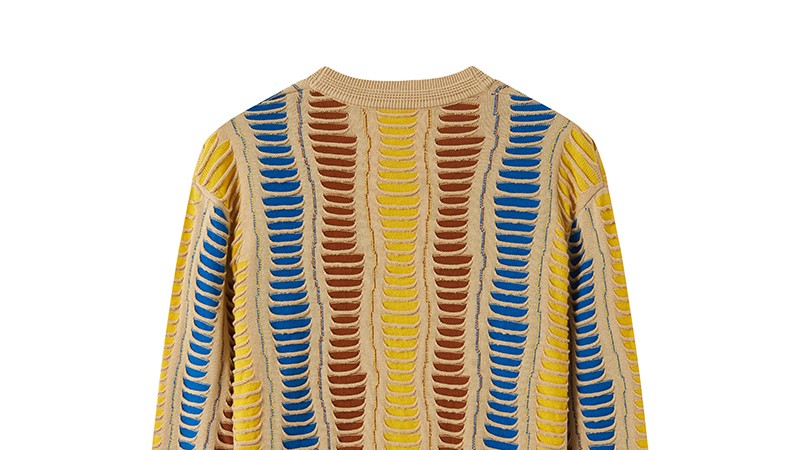
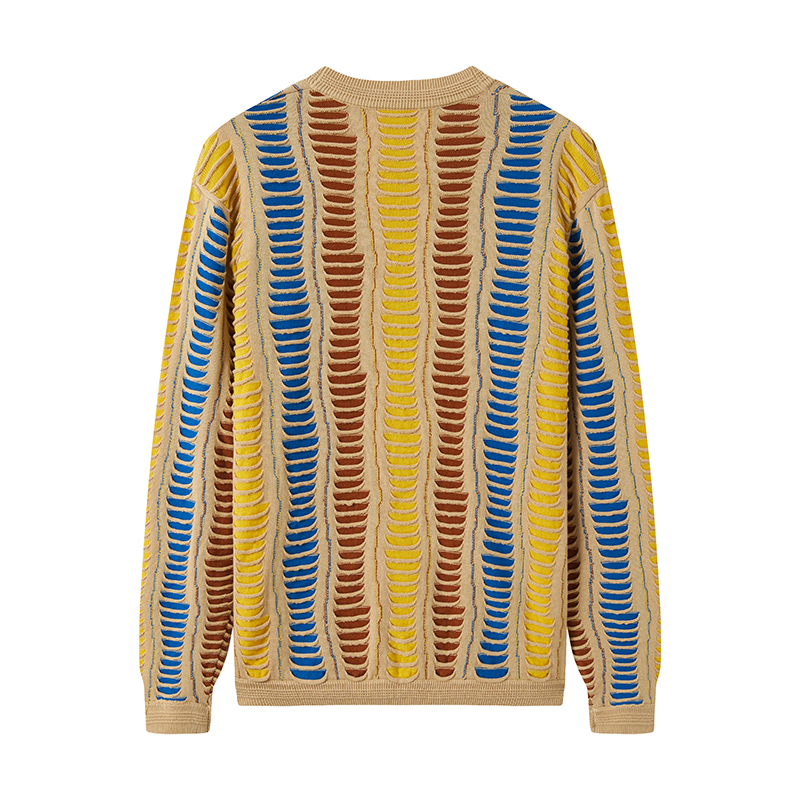
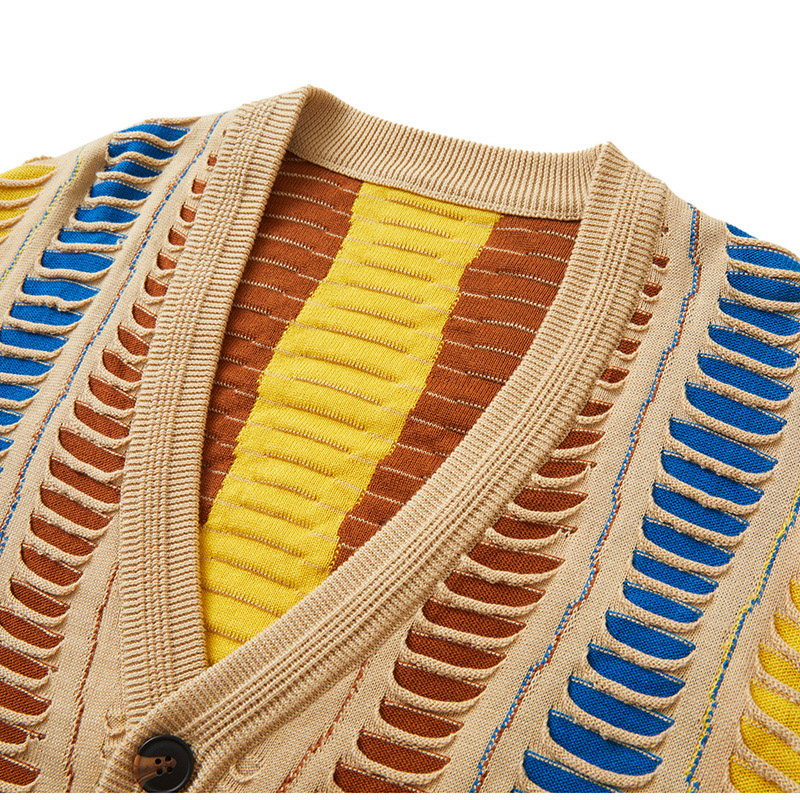
OEM Custom Men‘s 12GG Fine Knit Buttoned Cardigan Jacket – 611g Hybrid — Designed for fashion brands executing AW26/27 menswear collection planning and private label OEM cardigan jacket development, this style delivers the exact hybrid specification referenced throughout this guide: 50% cotton / 50% acrylic, fully fashioned dense fine knit, button-front construction, and 611g ± 15g weight across S–5XL.
Frequently Asked Questions
What’s the difference between a cardigan and a jacket in knitwear?
A cardigan traditionally refers to a knitted garment with an open front, typically lighter in weight and designed for layering. A jacket implies a heavier, more structured outer layer. The 12GG fine knit cardigan jacket blurs this line—it combines the dense fine-gauge knit structure of a premium cardigan with the substantial weight (611g) and structured silhouette of a jacket, making it a true hybrid piece.
Is 611g heavy for a 12GG cardigan?
Yes, significantly. Typical 12GG fine-gauge cardigans weigh between 400–500g. At 611g ± 15g, this style is substantially heavier. The additional weight comes from the dense knit construction and the jacket-like structure, providing a substantial hand feel and a clean appearance suitable for outerwear applications.
Why choose 50/50 cotton-acrylic for a knit jacket?
The 50% cotton provides natural hand feel, breathability, and comfort against the skin. The 50% acrylic adds structural support, durability, and helps the garment maintain its shape through repeated wear. This blend is particularly effective for commercial knitwear programs where both aesthetics and practical durability are required.
What customization options are available for this cardigan jacket?
Full OEM/ODM support including: front closure and hardware development (buttons, zippers), knit structure and weight adjustment, yarn composition development (custom cotton-acrylic ratios), extended men‘s size grading from S to 5XL, and private label branding solutions (woven labels, care labels, hangtags, branded hardware, custom packaging).
What are the MOQ and lead time for this style?
MOQ is 100 pcs per color. Sample lead time is 7–10 days, and production lead time is 25–35 days. The factory operates from Puyuan, Tongxiang, one of China’s major knitwear manufacturing clusters, on computerized flat knitting equipment.
Why is 2026 the right year for a cardigan jacket hybrid?
AW26-27 menswear is moving into a more experimental phase, with hybrid styles that mix familiar classics gaining significant traction. Outerwear is being reinvented with innovative details, delivering “a fresh take on the familiar with surprising new hybrid styles”. The cardigan jacket sits perfectly at this intersection—it offers the comfort of knitwear with the structure of outerwear.
Conclusion
Selecting a men’s cardigan jacket hybrid isn’t about chasing trend language — it’s about solving tangible product gaps: the need for structured yet breathable outerwear, scalable private label development, and versatile transitional pieces that perform across multiple scenarios. Success depends on disciplined material selection (cotton-acrylic balance), precise manufacturing execution (12GG dense fine knit, fully fashioned), and realistic OEM expectations (MOQ of 100 pcs/color, 7–10 day sampling, OEKO-TEX® compliance). Whether you’re developing a smart-casual knit outerwear line, expanding a uniform program, or launching a private label collection, treat this category as a strategic extension of your knitwear capability — not just another SKU. Rigorous sampling, lab dip validation, and collaborative ODM development remain non-negotiable steps. Contact our team to discuss your knitwear project and explore customized manufacturing solutions.