Introduction
As a knitwear consultant with over 15 years of experience supporting fashion brands across Europe, North America, and APAC, I’ve seen how often sourcing decisions for cropped V-neck cardigans hinge not on aesthetics alone—but on precise manufacturing alignment. In 2026, demand is rising for structured-yet-flexible women’s apparel that bridges DTC agility and boutique authenticity. This guide focuses squarely on procurement intelligence: what makes a cropped cardigan manufacturer truly capable, why 5GG cardigan construction matters for proportion integrity, and how to evaluate stretch knitwear OEM partners—not by marketing claims, but by technical responsiveness, material transparency, and process discipline.
What Is a Cropped V-Neck Cardigan in Technical Terms?
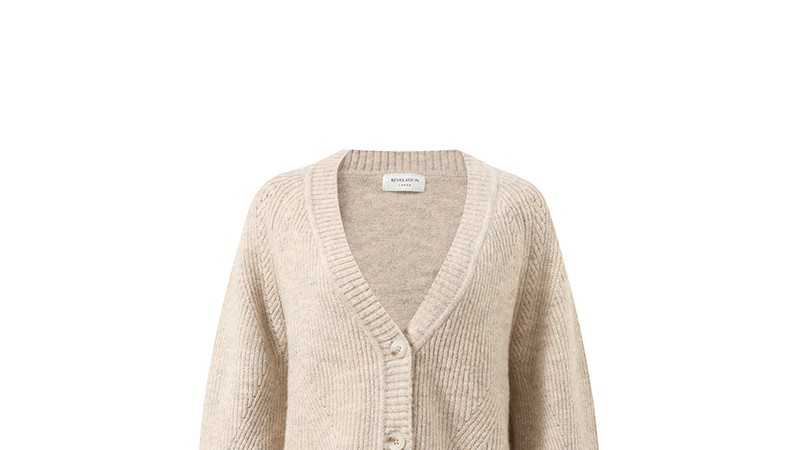
A cropped V-neck cardigan is more than a silhouette trend—it’s a precision-engineered knitwear item defined by three interdependent variables: body length relative to natural waistline, V-neck depth and angle, and front closure functionality. Unlike full-length styles, the cropped format eliminates margin for error in hem recovery, rib elasticity, and stitch density balance. The 5GG gauge—meaning five needles per inch—delivers a dense, stable knit ideal for maintaining clean lines without excessive drape. At 390g, this weight sits between midweight and heavyweight: substantial enough for Autumn/Winter seasonal layering, yet light enough to avoid bulk when worn under blazers or over fitted tees.
Key Differences Between Cropped and Standard Cardigans in Production
The manufacturing divergence isn’t cosmetic—it’s structural. A standard cardigan can absorb minor tension inconsistencies across its longer body; a cropped version cannot. I routinely see quality deviations in OEM batches where producers apply standard ribbing formulas or finishing tensions without recalibrating for shortened body length. As noted in our technical FAQ: “A cropped cardigan requires precise control over hem recovery and proportion stability. The shorter body length means any distortion becomes immediately visible, so manufacturers must coordinate body stitch density, rib structure, and finishing tension specifically for the cropped silhouette.” This means evaluating suppliers not just on capacity, but on their documented ability to adjust gauge-specific parameters per silhouette—not just per fabric.
Advantages & Limitations of This Construction
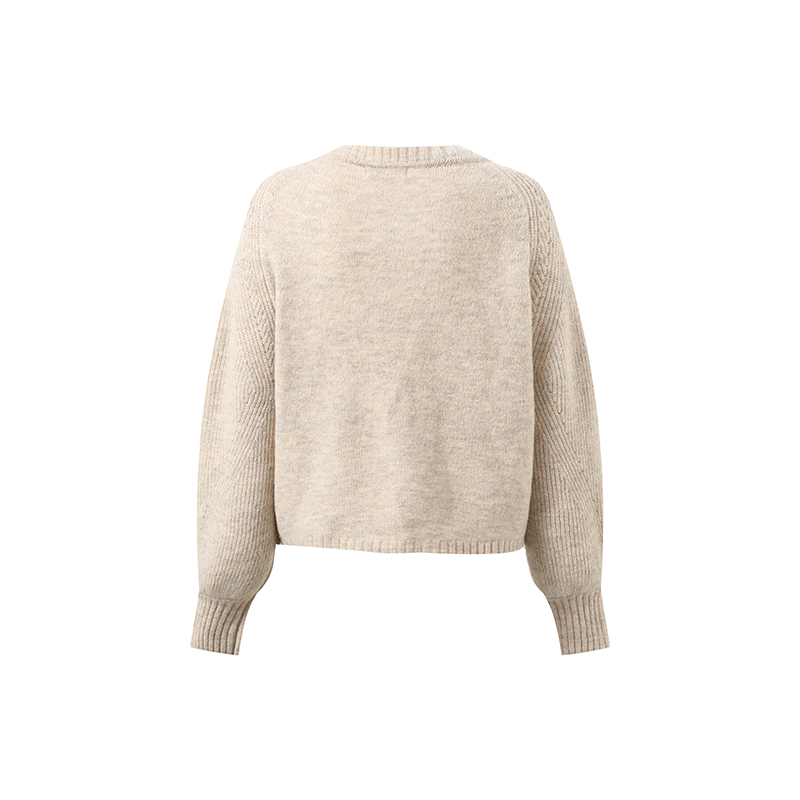
The 55% Acrylic + 36% Polyester + 5% Wool + 4% Spandex blend delivers balanced performance: acrylic ensures shape retention and cost efficiency; polyester adds durability and moisture-wicking; wool contributes natural breathability and subtle texture; and spandex enables functional stretch. That 4% spandex isn’t decorative—it’s engineered for comfort stretch and recovery, especially critical where cropped proportions expose movement-related distortion (e.g., raised arms, seated posture). However, this composition also sets realistic expectations: it’s not a luxury cashmere alternative, nor is it intended for extreme cold. Its strength lies in transitional-season versatility across private label apparel and OEM apparel collections.
How to Choose for Your Brand’s Positioning
- DTC e-commerce brands: Prioritize MOQ flexibility and sampling speed. A starting MOQ of 100 pieces per color allows inventory-light testing—essential when validating new silhouettes without overcommitting capital.
- Boutique retail: Focus on customization depth—especially custom trims (buttons, labels, hangtags) and branded packaging. These details reinforce brand identity at point-of-sale and unboxing moments.
- Women’s fashion collections: Require technical adaptability: adjustable cropped length, V-neck depth, sleeve volume, and shoulder drop—all aligned to your tech pack, not a fixed template.
- Importers sourcing for multiple clients: Verify certification validity (OEKO-TEX Standard 100 is non-negotiable for EU/US compliance) and consistency across colorways—dye lot matching affects perceived quality more than any single garment detail.
Material Considerations Beyond Composition
Yarn blend tells only part of the story. Equally vital are twist level, plying consistency, and fiber micron count—especially for the 5% wool component. Inferior wool can pill or shed; inconsistent acrylic batches cause shade variation. Always request lab dip reports and physical swatches before approving bulk yarn. Also note: the 4% spandex content demands careful heat-setting during finishing. Under-set spandex loses recovery; over-set degrades elasticity. A reliable knitwear factory documents this step—not just claims it.
Manufacturing & OEM Considerations
When engaging a custom clothing manufacturers for this style, assess four operational checkpoints:
• Sampling protocol: Can they deliver a production-intent sample within 7–12 days—including correct buttons, labels, and finishing? Rushed samples often mask fit or recovery flaws.
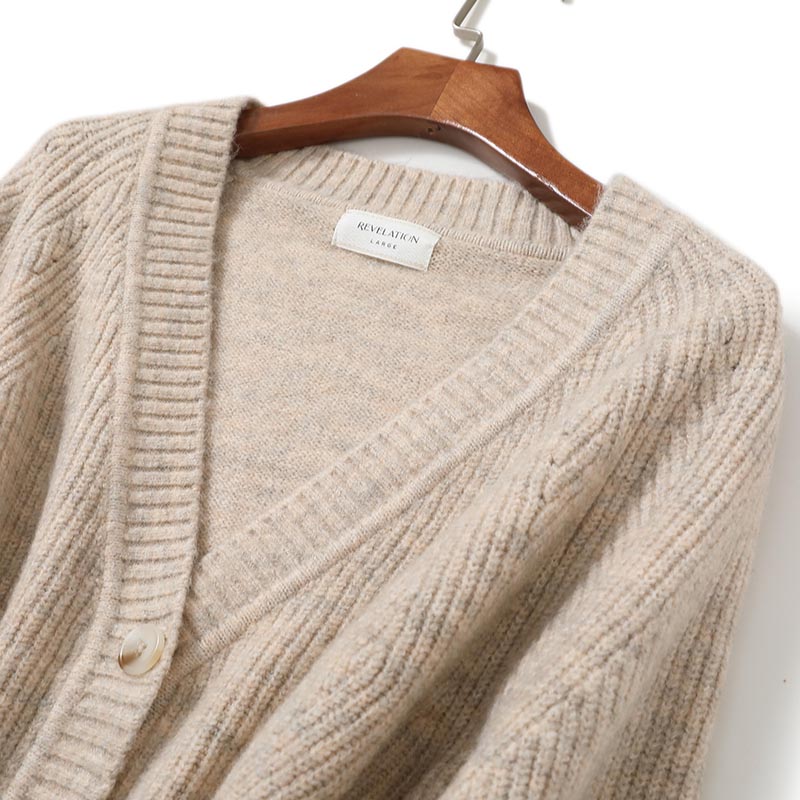
• Buttonhole methodology: As stated in our FAQ: “Buttonhole construction is matched to the stretch level… Higher-density edge construction and reinforcement methods maintain shape retention.” Ask for close-up photos of buttonhole edges—not just finished garments.
• Bulk scalability: Confirm lead time (25–35 days) reflects end-to-end production—not just knitting. Does it include dyeing, finishing, QC, and packing?
• Customization governance: Are custom colors developed from Pantone TCX (not coated), and are trims sourced to your spec—not substituted?
Recommended Products
Women’s Cropped V-Neck Cardigan Manufacturer – Stretch Knitwear OEM — Designed for brands requiring technical consistency across Knitwear, Cardigans, Women’s Apparel, OEM Apparel, Private Label Clothing categories, this style supports DTC launch timelines, boutique minimums, and Autumn/Winter layering strategies with verified OEKO-TEX Standard 100 compliance and 100-piece/color MOQ.
Frequently Asked Questions
What makes a cropped cardigan different from a standard cardigan in manufacturing?
A cropped cardigan requires precise control over hem recovery and proportion stability. The shorter body length means any distortion becomes immediately visible, so manufacturers must coordinate body stitch density, rib structure, and finishing tension specifically for the cropped silhouette.
Is 390g considered a heavyweight cardigan?
This cardigan is a substantial, structured knit rather than an ultra-heavyweight style. The 390g weight provides a solid hand-feel, while the cropped silhouette and 4% spandex contribute to a flexible, wearable construction suitable for transitional seasons.
How does 4% spandex affect the cardigan’s performance?
The spandex provides essential stretch for comfortable movement and recovery to ensure the garment returns to its intended shape after wear. This is particularly important for cropped silhouettes where proportion stability is critical.
Can the cropped length and V-neck depth be customized?
Yes, OEM manufacturers can adjust cropped length, body width, shoulder drop, sleeve volume, and V-neck depth according to your tech pack specifications. No two brands have the same proportion requirements.
How do you prevent buttonholes from stretching out on a knit cardigan?
Buttonhole construction is matched to the stretch level of the garment and selected button size. Higher-density edge construction and reinforcement methods maintain shape retention and reduce excessive gapping during wear.
What is the standard MOQ for a cropped cardigan order?
For this style, the starting MOQ is 100 pieces per color. This allows DTC brands and boutique labels to test the market without overcommitting inventory while maintaining consistent production quality.
Conclusion
Sourcing a cropped V-neck cardigan successfully isn’t about finding the lowest quote—it’s about identifying a partner whose OEM apparel process mirrors your brand’s development rigor. From ODM sweater development through private label clothing execution, consistency hinges on documented controls: gauge-specific tension mapping, spandex-integrated finishing, and customizable knitwear infrastructure. Quality control begins before bulk production—with reproducible sampling, traceable certifications, and transparent customization protocols. Whether you’re launching a women’s cardigan sourcing initiative or scaling a custom clothing manufacturers relationship, prioritize technical fidelity over speed or scale alone.
Contact our team to discuss your knitwear project and explore customized manufacturing solutions.