Introduction
As a knitwear consultant who’s supported over 120 fashion brands across Europe, North America, and APAC since 2008, I’ve seen how critical the right knitwear factory partnership is—not just for cost or speed, but for brand integrity, seasonal reliability, and long-term scalability. In 2026, apparel buyers face tighter timelines, heightened sustainability expectations, and more nuanced consumer demands—especially in Knitwear Manufacturing, OEM Apparel, Private Label Clothing. This guide distills what actually matters when evaluating manufacturing partners: gauge precision, yarn traceability, sampling discipline, and realistic lead time planning. It’s not about finding the ‘biggest’ supplier—but the most operationally aligned one for your brand’s stage, category, and values.
What Is Knitwear Manufacturing — and Why It’s Not Just ‘Sweater Production’
Knitwear manufacturing is a specialized subset of garment manufacturing that relies on flat knitting machines to build garments stitch-by-stitch—layering complexity into structure, drape, and recovery. Unlike cut-and-sew apparel, knits integrate shaping, texture, and fit directly into the fabric construction. That means decisions made at the yarn, gauge, and machine level affect everything from pilling resistance to sleeve cap ease—and ultimately, customer retention. For DTC e-commerce labels launching their first cashmere blend pullover, or high-end boutiques developing signature jacquard intarsia, understanding this vertical integration is foundational. It also explains why true custom clothing manufacturers invest in specific machine gauges (7GG, 12GG, 14GG), not just volume capacity.
Key Differences Between Gauge Levels: 7GG vs. 12GG vs. 14GG
Gauge (GG) refers to the number of needles per inch on a flat knitting machine—and it directly governs fabric density, weight, and hand feel. As an OEM development partner, I advise clients based on end-use, not aesthetics alone:
- 7GG: Best for heavyweight outerwear—think chunky cable-knit cardigans or winter-weight merino blends. Offers excellent thermal retention and structural stability, but limited fine detail capability.
- 12GG: The most versatile gauge for mid-weight Knitwear Manufacturing. Ideal for women’s and children’s pullovers, lightweight turtlenecks, and structured cotton-blend sweaters. Delivers clean stitch definition, balanced drape, and strong compatibility with jacquard patterning—making it the default choice for many private label clothing manufacturers.
- 14GG: Used for fine-gauge luxury knits—delicate merino wool layering pieces, seamless-style tops, or refined ribbed accessories. Requires higher yarn quality and tighter tension control; less forgiving with blended fibers unless precisely engineered.
Importantly: gauge doesn’t equal ‘quality’—it equals *intended function*. A 7GG sweater worn as a statement layer shouldn’t be compared to a 14GG piece designed for next-to-skin comfort.
Advantages & Limitations of Common Yarn Systems
Yarn selection isn’t just about fiber content—it’s about performance under production conditions. Here’s what I consistently observe in real-world B2B apparel manufacturing 2026:
- 100% Merino Wool: Naturally temperature-regulating and biodegradable—but requires careful tension calibration on flat machines to avoid torque or skewing. Best suited for 12GG–14GG applications where stitch definition and softness are priorities. Always verify OEKO-TEX Standard 100 certification—not just ‘natural’ claims.
- Cotton Blends: Offer breathability and washability, especially valuable for children’s and DTC-focused collections. However, cotton’s lower elasticity demands precise pattern grading and seam reinforcement. Blends with modal or TENCEL™ improve recovery without compromising OEKO-TEX compliance.
Never assume ‘blend’ means ‘balanced’. Ask for actual yarn composition reports—not just marketing descriptors. And remember: even certified yarns behave differently across gauges and machine makes.
How to Choose for Your Brand: Women’s, Men’s, Children’s, DTC & Boutique Contexts
Your brand’s positioning determines which manufacturing capabilities matter most:
- Women’s fashion brands often prioritize silhouette versatility—so 12GG machines with full-fashioned shaping capability (e.g., shaped armholes, tapered waistbands) are essential. Avoid factories that only offer straight-cut patterns.
- Men’s collections demand consistent shoulder and sleeve cap geometry. Look for partners with proven experience in tailored knitwear—not just jersey tees. Gauge consistency across sizes is non-negotiable.
- Children’s lines require extra attention to yarn safety (OEKO-TEX Standard 100 Class I), seam flatness, and shrinkage control. Soft plush yarns—like those used in jacquard pullovers—must pass rigorous abrasion testing before bulk.
- DTC e-commerce labels benefit from flexible MOQ structures and fast sample turnaround. A starting MOQ of 150–300 pieces per color/size allows real-world market testing without overcommitting inventory.
- High-end boutiques need private-label packaging, custom hangtags, and physical top samples—not digital mockups. If a factory can’t provide pre-production samples with your exact yarn, gauge, and finishing, they’re not ready for your tier.
Material Considerations Beyond Fiber Content
When sourcing knitwear, look beyond ‘100% Merino’ or ‘Cotton Blend’ labels. Ask these three questions:
- Is the yarn pre-shrunk and pre-relaxed? Unstable yarns cause inconsistent gauge after washing—even if lab tests pass.
- Are dye lots tested for cross-lot color consistency? Critical for multi-size orders where shade matching affects perceived quality.
- Does the OEKO-TEX Standard 100 certification cover *final finished fabric*, including dyes, auxiliaries, and finishing agents—not just raw fiber?
I’ve seen brands reject entire shipments because certifications applied only to greige yarn—not the dyed, finished knit. Always request the certificate number and verify it via oeko-tex.com.
Manufacturing & OEM Considerations: What Buyers Often Overlook
From my work guiding OEM development cycles, here’s what separates reliable partners from transactional vendors:
- Sampling rigor: Physical top samples—not strike-offs or swatches—are mandatory before bulk approval. They reveal seam integrity, fabric roll consistency, and finishing behavior (e.g., brushing, steaming).
- QC protocol transparency: Ask how many inspection points occur between knitting, linking, finishing, and packing. A credible knitwear sourcing guide should include AQL sampling plans—not just ‘100% inspection’ claims.
- Lead time realism: Bulk production lead time of 30–45 days assumes approved samples, confirmed trims, and no design revisions. Peak seasons (July–October for winter deliveries) require earlier sample sign-off—ideally by April. Never treat ‘30 days’ as calendar days; it’s working days post-PO and artwork finalization.
Also: gauge-specific machine availability matters. A factory claiming ‘12GG capability’ but running only two 12GG machines may delay your order behind larger clients. Ask about dedicated machine allocation—not just theoretical capacity.
Recommended Products
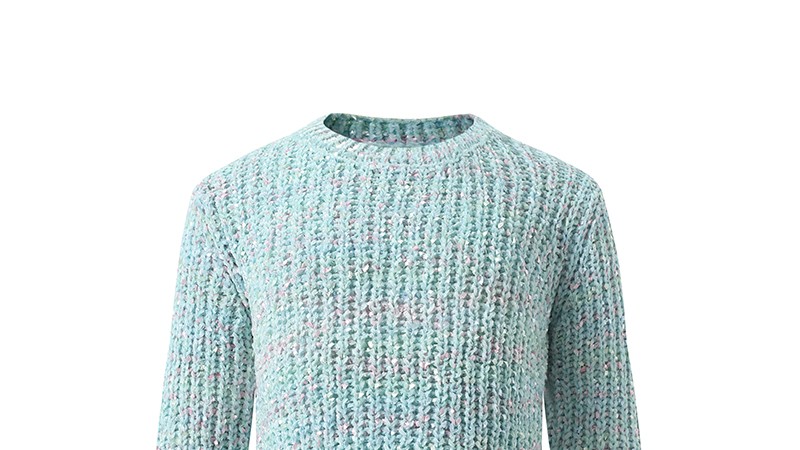
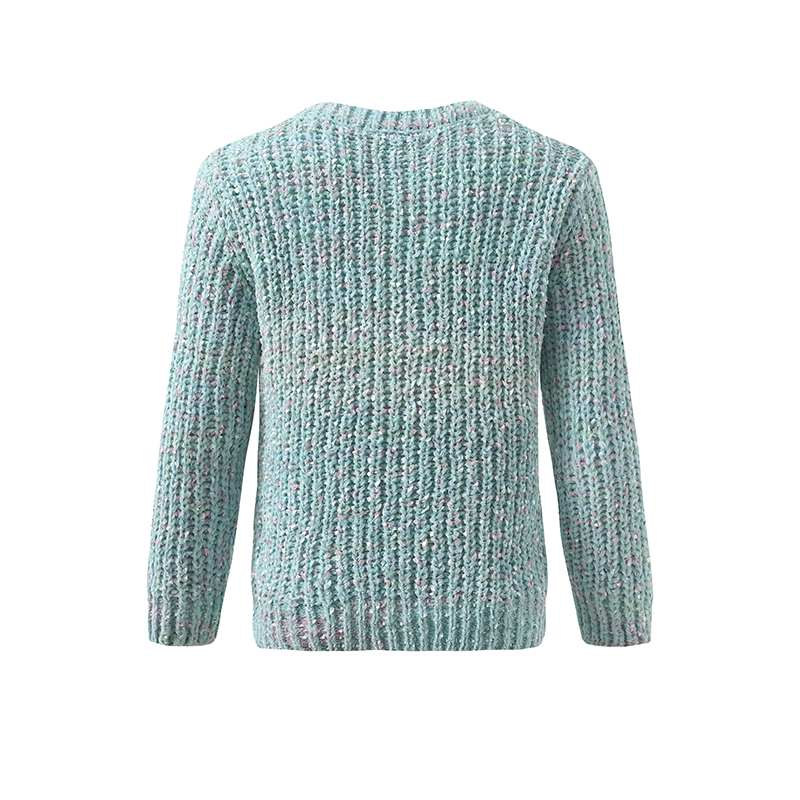
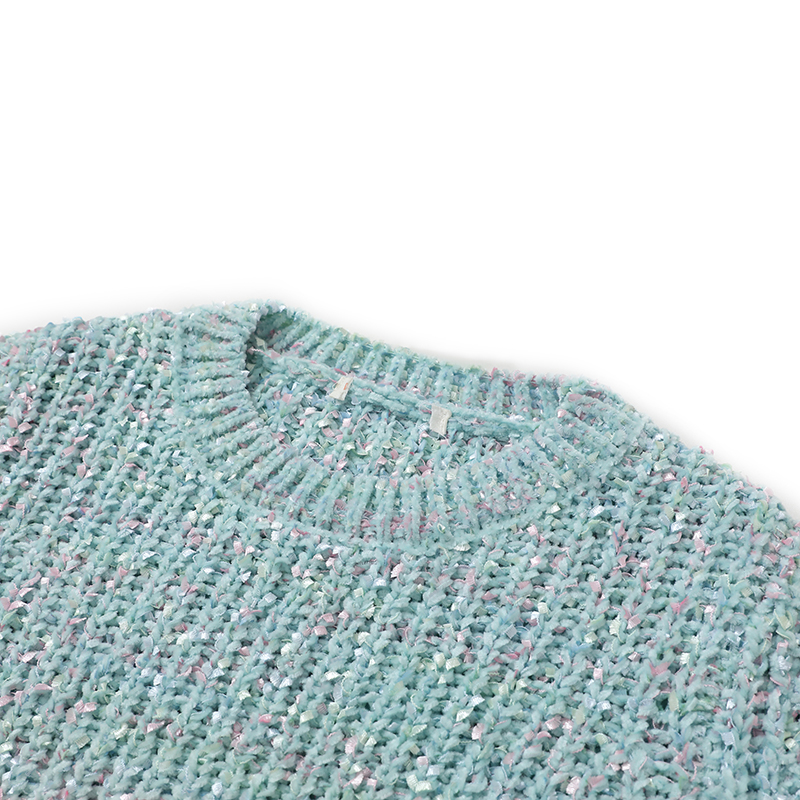
OEM Bespoke Girls’ Soft Plush Jacquard Pullover Sweater Manufacturer — Designed for children’s fashion brands and boutique DTC labels needing gentle, tactile appeal with brand-distinguishable patterning. Built on 12GG precision, uses soft plush yarns compliant with OEKO-TEX Standard 100 Class I, and supports low-MOQ trial orders with fully customized private-label packaging.
Frequently Asked Questions
Q: What is the standard minimum order quantity (MOQ) for knitwear OEM?
MOQ varies widely. For standard styles, we offer a starting MOQ of 150–300 pieces per color/size. However, we can accommodate smaller test orders for new brand collaborations.
Q: How can I verify the quality of a knitwear factory before committing to a large order?
Always request physical top samples (pre-production samples). You can also ask for certified fabric test reports (e.g., OEKO-TEX, GOTS) and arrange a third-party factory audit if scale allows.
Q: How long does it take from sample approval to mass production delivery?
A standard lead time is roughly 30–45 days. However, peak seasons (July–October for Winter collections) often require a longer buffer, so early planning is essential.
Q: What should I look for in a pre-production sample?
A true pre-production sample must use the exact yarn, gauge, and finishing planned for bulk—linked and packed identically. It should include trim attachments (zippers, buttons), care labels, and your branded packaging. Any deviation risks misalignment in bulk.
Q: How do I assess whether a factory truly understands my brand’s aesthetic?
Ask them to walk through one past project—showing original sketch, tech pack, sample iterations, and bulk outcome. Their ability to articulate design intent (e.g., ‘We adjusted the rib height to preserve neckline recovery’) signals deeper engagement than template-based responses.
Conclusion
Choosing the right partner for Knitwear Manufacturing, OEM Apparel, Private Label Clothing isn’t about checking boxes—it’s about matching operational discipline to your brand’s rhythm. Whether you’re developing your first merino blend for a DTC launch or scaling a high-end boutique collection, prioritize partners who treat sampling as R&D, gauge selection as functional engineering, and OEKO-TEX certification as baseline—not differentiator. Focus on what enables your next season: reliable OEM execution, thoughtful ODM collaboration, scalable Private Label support, and disciplined Custom Development from yarn to hangtag. Most importantly—build in time for Quality Control and Sampling as non-negotiable phases, not optional steps. Contact our team to discuss your knitwear project and explore customized manufacturing solutions.