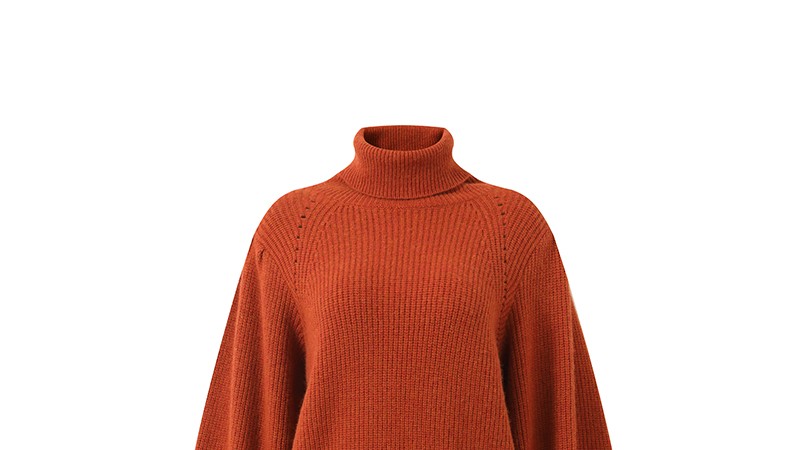
When developing premium cold-weather knitwear, gauge selection directly impacts fabric weight, thermal performance, visual texture, and production scalability. For brands planning Premium Autumn/Winter Collections or Boutique Winter Assortments, the choice between 7GG and 12GG knitwear isn’t about ‘better’ — it’s about alignment with target customer expectations, layering function, retail positioning, and development timelines. A 7GG heavyweight merino wool sweater delivers structural presence and seasonal authority; a 12GG version prioritizes drape and trans-seasonal versatility. Misalignment here risks mismatched product intent, higher sample iteration, or unsuitable fit perception in-market.
Understanding Gauge: What 7GG and 12GG Actually Mean
Gauge (GG) refers to the number of needle rows per inch in a knitted fabric. It is not a standalone quality indicator — rather, it reflects yarn thickness, stitch density, and resulting fabric behavior. 7GG knitwear uses thicker yarns, producing fewer but more prominent stitches per inch. This yields higher fabric weight (e.g., approx. 430g for a women’s turtleneck), greater insulation, and pronounced texture — ideal for statement outer-layer pieces in Knitwear / Women’s Sweater / Merino Wool Collection / Heavy Gauge Knitwear. In contrast, 12GG knitwear employs finer yarns, enabling tighter stitch formation, smoother handfeel, and lighter weight — better suited for mid-layer styles or markets emphasizing fluid silhouette.
Key Differences Beyond Weight and Texture
Weight alone doesn’t determine suitability. Buyers must evaluate how gauge interacts with three core variables:
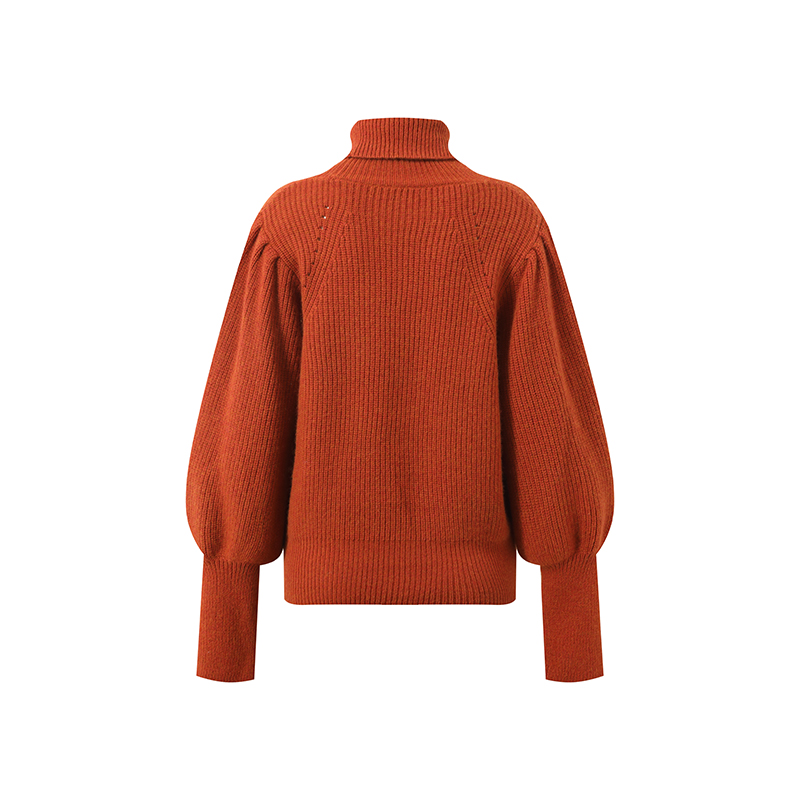
- Construction method: Fully fashioned knitting — used in the 7GG Heavyweight Turtleneck Sweater — shapes panels before assembly, minimizing waste and enhancing fit integrity. This method supports heavier fabrics without compromising seam stability, unlike cut-and-sew approaches that may struggle with thick, low-stretch wool.
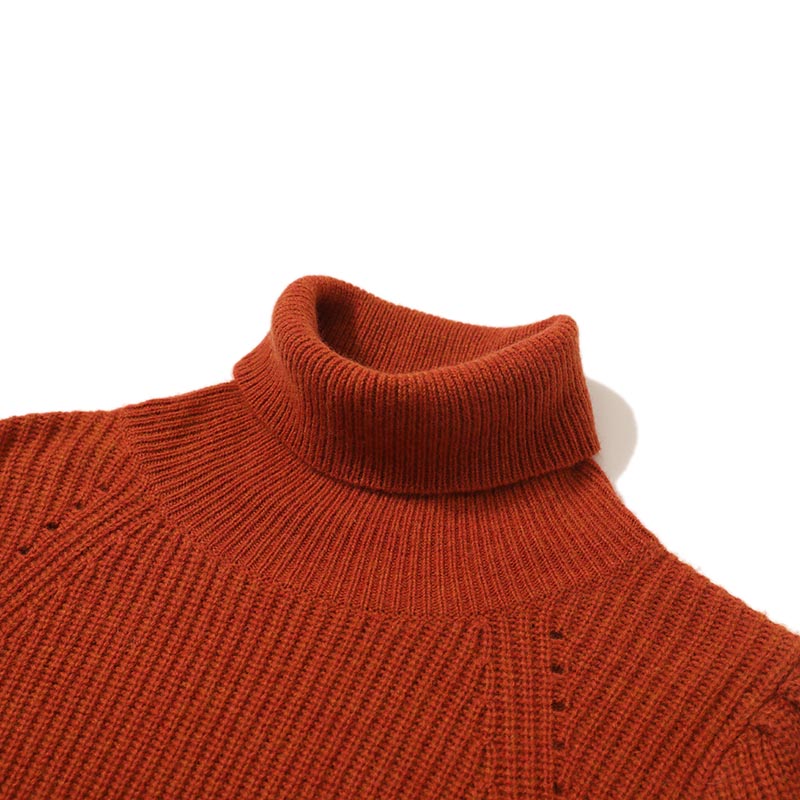
- Collar design: A high turtleneck requires sufficient fabric body to hold shape without collapsing. 7GG’s inherent structure supports vertical rigidity and clean roll definition — critical for premium presentation in boutique assortments.
- Yarn composition: 100% Merino Wool contributes elasticity, breathability, and natural temperature regulation. But its behavior differs across gauges: thicker 7GG yarns retain loft and air-trapping capacity; finer 12GG yarns increase surface area, enhancing moisture wicking at the expense of bulk insulation.
Who Should Choose 7GG Heavyweight Merino Wool?
This construction suits brands where collection strategy centers on Premium Wool Knitwear Categories and cold-weather dominance. It aligns with:
- Private label programs targeting mid-to-high price tiers, where perceived value stems from material authenticity and substantial handfeel;
- Wholesale knitwear programs supplying department stores or specialty retailers requiring seasonally anchored, shelf-differentiated SKUs;
- Apparel buyers curating capsule collections for Northern Hemisphere winters, where layering under coats demands thermal density and minimal compression;
- Fashion brands developing signature silhouettes — such as oversized or cropped turtlenecks — that rely on fabric body to maintain proportion.
It is less appropriate for brands focused on lightweight travel knits, transitional layering, or minimalist aesthetics requiring fine-gauge drape.
OEM & ODM Development: What You Must Confirm Before Sampling
For OEM knitwear supplier or private label sweater China partnerships, gauge-specific development requires precise pre-sample alignment. Buyers should formally confirm the following before approving tech packs:
- Size grading methodology — whether based on internal size charts (EU/US/UK), and how body measurements and garment weight are recalculated for final fit approval;
- Yarn lot consistency protocol — especially for 100% Merino Wool, where micron count and processing affect shrinkage and handfeel;
- Finishing parameters — including fulling, steaming, and anti-shrink treatments — and how dimensional stability will be verified against approved specs;
- QC checkpoints — specifically yarn verification pre-knitting, panel measurement post-knitting, and seam strength evaluation for fully fashioned construction;
- Sample timeline dependencies — e.g., whether custom sizing or non-standard dye lots extend the standard 7–10 working day sample window.
Recommended Products
7GG Heavyweight Turtleneck Sweater — Designed for Premium Autumn/Winter Collections, this piece exemplifies 7GG’s advantages: 100% Merino Wool, fully fashioned construction, high turtleneck collar, and approx. 430g weight — making it suitable for private label programs and wholesale knitwear buyers seeking authentic, seasonally grounded wool knitwear.
Frequently Asked Questions
What is the difference between 7GG and 12GG knitwear?
7GG uses thicker yarn and produces a heavier, more textured fabric with visible stitches, ideal for cold-weather collections. 12GG uses finer yarn for lighter, smoother, more drapey knits suitable for trans-seasonal styles.
Can this 7GG sweater be customized for European and US market sizing?
Yes. Pattern development can adjust grading according to customer size charts, including oversized, relaxed, or regular fits. Body measurements and garment weight are recalculated according to final approved specifications.
What is the minimum order quantity for private label production?
MOQ is 100 pieces per color per style, making it accessible for emerging brands and test runs while supporting scalable bulk production.
How do you control shrinkage risks for 100% Merino Wool sweaters?
Pure wool knitwear requires careful yarn selection and finishing control. Suitable wool yarn treatments and production finishing processes improve dimensional stability, with bulk measurements checked against approved specifications.
Does Kaida support OEM and ODM services?
Yes. Kaida provides both OEM (manufacturing based on your designs) and ODM (design and manufacturing support) services for international fashion brands, wholesalers, and retailers.
Conclusion: There Is No Universal Gauge — Only Contextual Fit
The decision between 7GG and 12GG knitwear rests entirely on brand positioning, customer use case, and collection architecture — not technical hierarchy. A heavyweight merino wool sweater excels in Heavy Gauge Knitwear contexts where substance, seasonal clarity, and tactile authenticity define value. For women’s turtleneck manufacturer partners, gauge selection initiates downstream decisions on pattern engineering, finishing, and QC focus. Buyers developing for Private Label Programs or Wholesale Knitwear Programs should anchor gauge choice in real-world wear scenarios — not just spec sheets. Contact our team to discuss your knitwear project and explore customized manufacturing solutions.