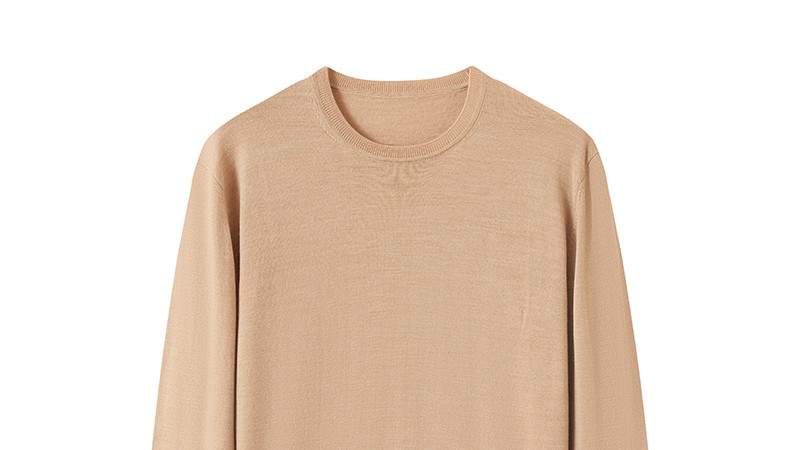
When developing men’s knitwear for fashion brands, private label apparel, or business wear collections, the choice between a crew neck sweater and a v neck sweater is rarely aesthetic alone—it directly impacts fit perception, layering functionality, market positioning, and production specification clarity. For buyers sourcing from an OEM knitwear manufacturer, this decision shapes tech pack requirements, sample review criteria, and material-gauge-fit alignment. A misaligned neckline selection can delay development, increase revision rounds, or reduce end-user adoption—especially in business sweater lines where formality, proportion, and under-layer compatibility matter. This guide compares both styles through a procurement lens, focusing on objective design implications—not subjective preference.
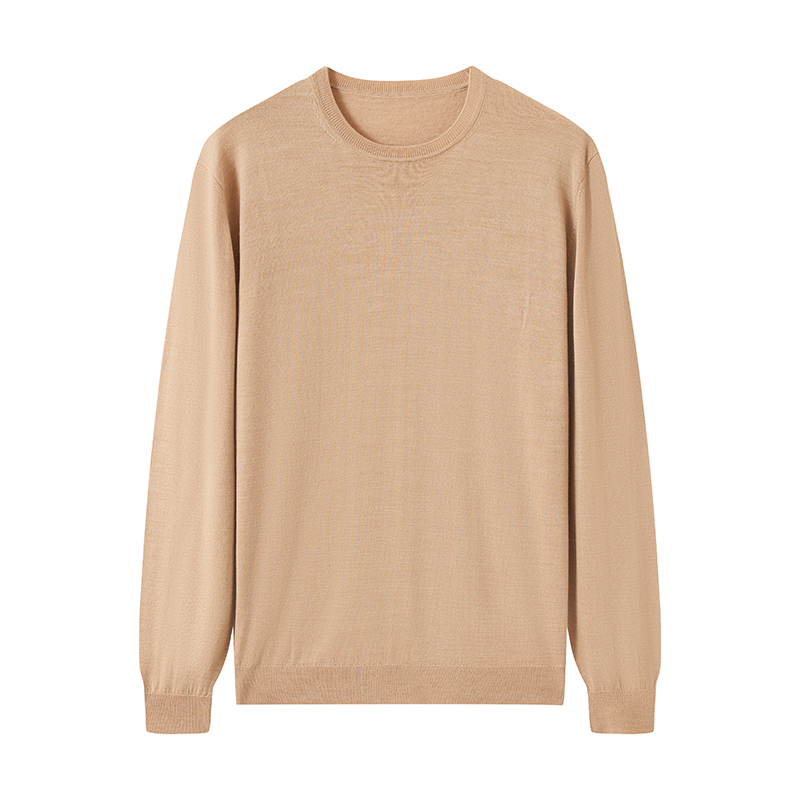
Core Functional Differences Between Crew Neck and V-Neck Sweaters
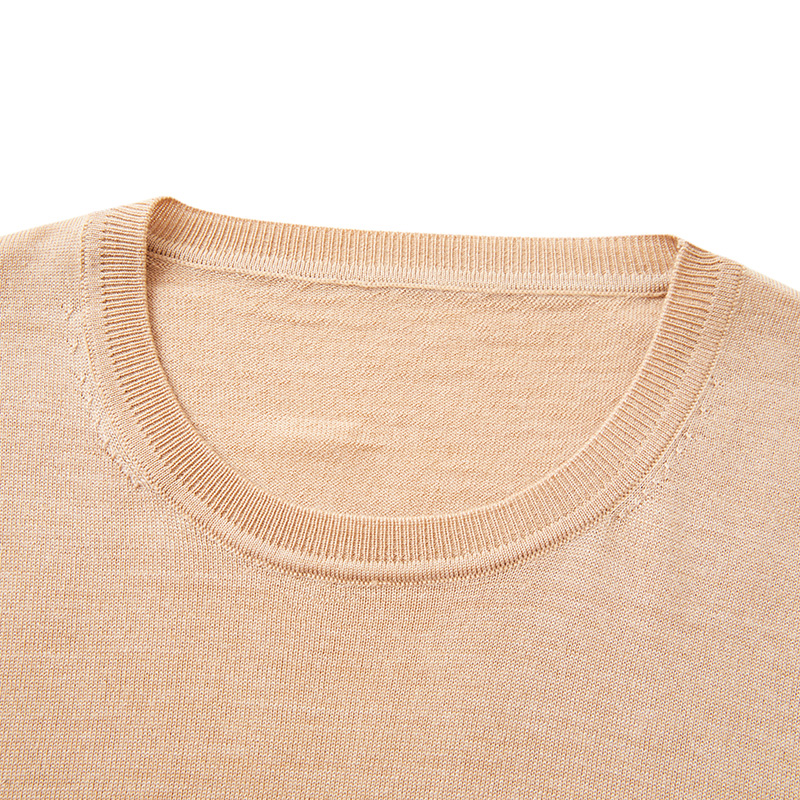
The structural distinction lies in neckline depth, ribbing tension, and front panel shaping. A crew neck sweater features a closed, circular ribbed band sitting at the base of the neck. Its uniform height and circumference provide consistent framing across sizes but limit visibility of collars or dress shirts beneath. A v neck sweater, by contrast, uses diagonal ribbing or shaped knitting to create a tapered opening that extends downward, exposing collarbones and shirt plackets. This affects how the garment interacts with layered pieces—particularly critical for business wear and corporate uniforms. Neither style is inherently more complex to produce, but V-necks require precise shaping control during knitting and finishing to avoid stretching or asymmetry.
How Neckline Choice Aligns With Brand Positioning and Use Case
Buyers should map neckline selection against three criteria: target customer context, intended outfit composition, and collection architecture. Crew neck sweaters suit smart-casual retail collections and e-commerce brands prioritizing versatility—they pair equally well with t-shirts, henleys, or open-collar shirts. V neck sweaters are more common in formalized business sweater ranges, especially where layering over dress shirts and ties is expected. For private label apparel, the choice signals intent: crew neck leans toward lifestyle branding; V-neck implies polish and structure. In corporate uniforms, V-necks often align with established dress codes, while crew necks may be preferred for relaxed-tier staff roles.
Gauge, Material, and Fit Interdependencies
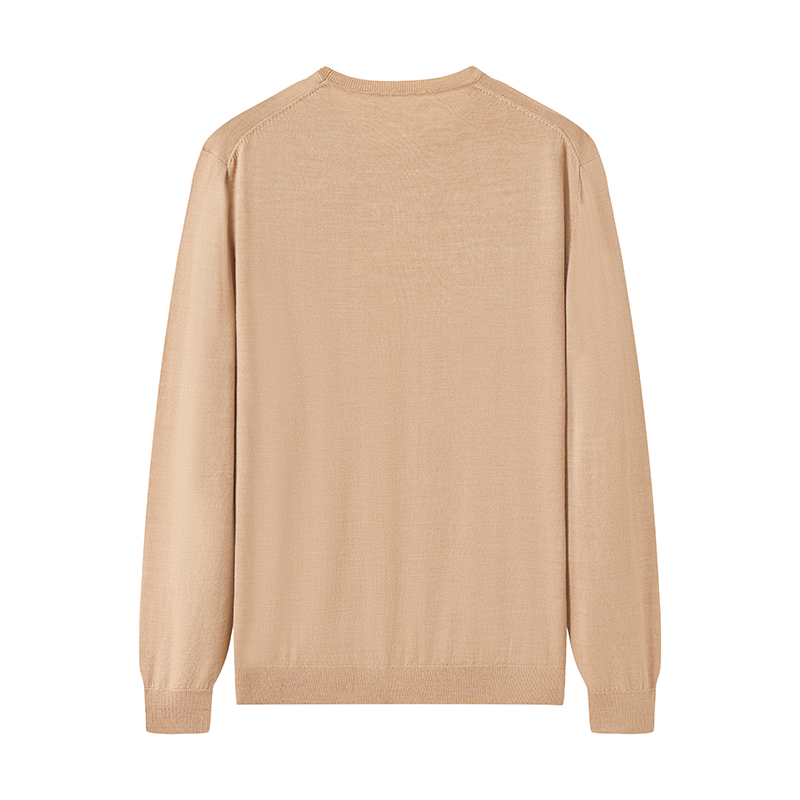
A fine gauge sweater relies on tight stitch density to achieve smooth drape and refined texture—making it sensitive to neckline construction. Fine gauge knits amplify small inconsistencies: uneven ribbing tension around a V-neck can distort the opening’s symmetry; excessive stretch in crew neck ribbing may cause rolling. Materials also interact differently: merino wool offers natural recovery for clean rib definition; viscose-blend yarns add drape but require careful tension calibration; cotton-heavy blends may demand tighter rib gauges to prevent sagging. All men’s fine gauge sweater variants use regular fit, meaning ease is consistent across torso and sleeve—but neckline depth changes visual proportion. A deeper V-neck elongates the torso line; a standard crew neck emphasizes shoulder width. Buyers must confirm these effects during physical sample review—not rely on digital mockups.
OEM & ODM Development: What to Confirm Before Sampling
For brands engaging an OEM knitwear manufacturer or pursuing custom knitwear development, the following must be explicitly defined before sampling begins:
- Exact neckline depth (measured from shoulder seam to lowest point of V or top of crew band)
- Ribbing type and stitch count (1×1, 2×2, or custom repeat)
- Front panel shaping method (shaped knitting vs. cut-and-sew)
- Gauge confirmation: whether ‘fine gauge knit’ refers to needle count, stitch density per inch, or yarn denier (to be confirmed per project)
- Material composition boundaries: e.g., minimum merino content for warmth claims, or maximum viscose for drape control
- Private label placement: location, method (woven label, heat transfer, embroidery), and size constraints
None of these parameters are standardized across suppliers. A brand should treat them as non-negotiable elements of the tech pack—not assumptions to be clarified post-sample.
Why There Is No Universal ‘Better’ Style
No single neckline suits all fashion brands, retail collections, or business wear strategies. The appropriate choice depends on the brand’s customer’s daily environment, existing wardrobe habits, and how the piece integrates into broader styling narratives. A streetwear-focused e-commerce brand may prioritize crew necks for logo placement and casual cohesion; a heritage-inspired private label apparel line may anchor its core collection in V-necks for timeless layering appeal. Even within one brand, segmentation is common: crew necks for weekend capsules, V-necks for office-ready drops. Flexibility in development—such as supporting both necklines within the same fine gauge sweater program—enables responsive collection planning without compromising technical consistency.
Recommended Products for Development Alignment
Men’s Premium Fine Gauge Business Sweater — Designed for brands requiring precision in both formality and function, this style supports either crew neck or V-neck configurations while maintaining regular fit and long sleeve integrity. Its customizable material options (cotton, merino wool, viscose, or blended yarn) allow tailoring to seasonal performance needs, and its OEM & ODM framework accommodates private label integration at any stage of development.
Frequently Asked Questions
What is the difference between a crew neck and a V-neck sweater?
Crew neck sweaters provide a classic casual look, while V-neck sweaters offer a more formal appearance and are ideal for layering over shirts and ties.
Which sweater style is more suitable for business wear?
Fine gauge V-neck sweaters are commonly chosen for business attire, while crew neck sweaters are versatile for both casual and smart-casual collections.
Can you customize the neckline and material?
Yes. We provide OEM and ODM services with customizable necklines, yarn materials, colors, gauges, sizes, and private label branding.
What should I include in my tech pack for neckline development?
Specify neckline depth, ribbing type and count, front panel shaping method, and desired drape behavior. Visual references and graded measurement charts help avoid interpretation gaps during sampling.
How do I assess if a fine gauge sweater meets quality expectations before bulk production?
Review physical samples for ribbing elasticity and recovery, neckline symmetry, seam alignment, and fabric handfeel consistency across dye lots. Compare against your approved reference swatch—not just the first sample.
Selecting between a crew neck sweater and a v neck sweater is fundamentally about intention—not hierarchy. It reflects how a brand defines utility, communicates tone, and serves real customer behaviors. For fashion brands, private label apparel, and business wear developers, the right choice emerges only after clarifying context, validating assumptions with physical samples, and aligning specifications with end-use requirements. There is no universal optimum—only the option most precisely matched to your project’s functional, aesthetic, and commercial goals. Contact our team to discuss your knitwear project and explore customized manufacturing solutions.