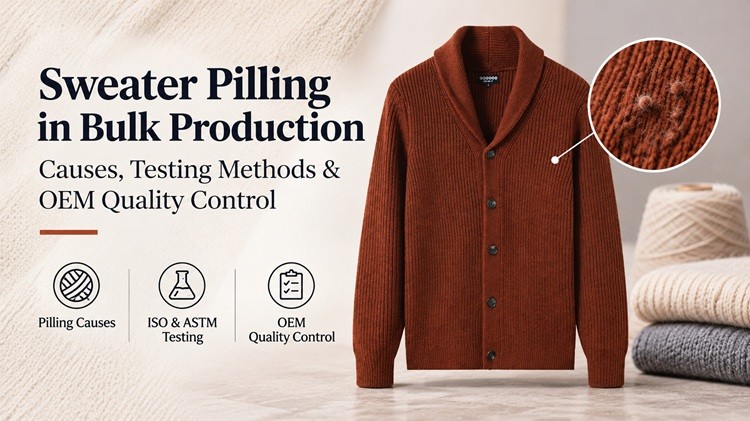
Sweater pilling in bulk production is an important quality concern for fashion brands sourcing knitted sweaters, cardigans, and private label autumn/winter collections. Small fiber balls on a garment’s surface can change its appearance, affect perceived quality, and lead to customer dissatisfaction even when the garment remains structurally functional.
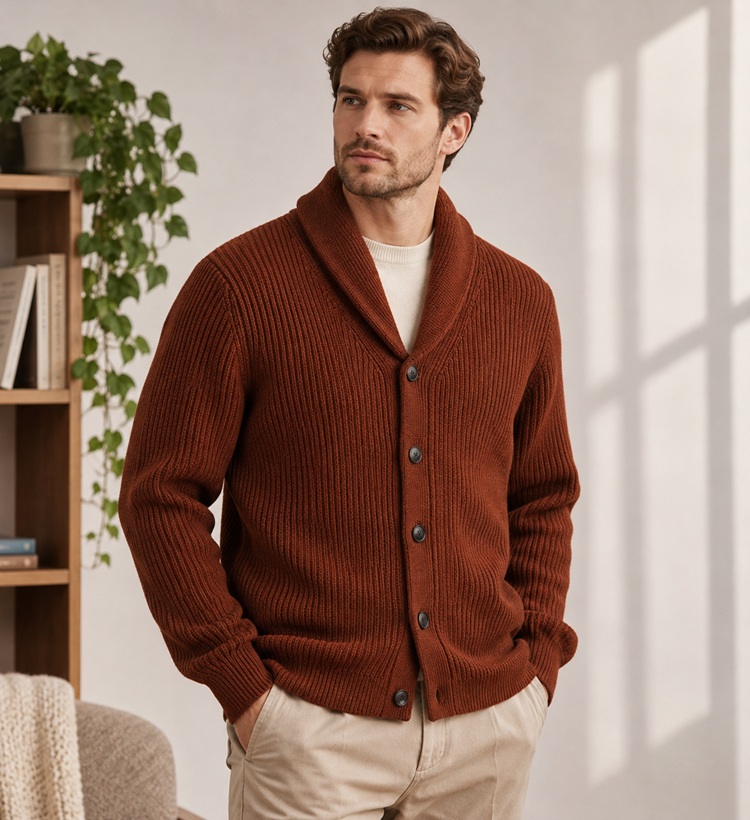
For OEM sweater manufacturing, pilling control is more complex than selecting a particular fiber blend or knitting gauge. Surface performance depends on fiber characteristics, yarn construction, knitted fabric structure, finishing treatments, friction exposure, and the consistency of production materials.
A sample that looks smooth when delivered may develop visible pills after repeated wear. Likewise, a fabric that performs acceptably in one laboratory test may behave differently under another test method or in actual consumer use. This makes knitwear pilling resistance an issue that should be evaluated during product development rather than addressed only after customer complaints.
This guide explains the causes of sweater pilling, how common laboratory tests work, what fashion brands should include in their technical specifications, and how OEM manufacturers and buyers can manage pilling risks before and during bulk production.
What Is Sweater Pilling and Why Does It Matter in Bulk Production?
Pilling is the formation of small, entangled fiber clusters on the surface of a textile. These clusters develop when fibers protrude from the fabric, become entangled through mechanical action, and remain attached to the garment surface.
In knitted sweaters, pilling may become visible in areas exposed to repeated friction, including the underarms, side seams, cuffs, sleeves, waist, and surfaces that regularly contact bags or outerwear.
For fashion brands, the problem extends beyond appearance. Pilling complaints may influence product reviews, returns, customer satisfaction, and the perceived durability of a collection.
However, pilling should not automatically be interpreted as evidence of poor manufacturing. Many knitted fabrics can develop some degree of pilling under wear conditions. The objective of quality control is to establish appropriate performance expectations and verify that production materials meet the agreed requirements.
Why Bulk Production Requires Additional Attention
During sampling, a manufacturer may produce only a small number of garments using selected yarns and carefully controlled settings. Bulk production introduces additional variables, such as different yarn deliveries, machine settings, finishing batches, and production schedules.
If these variables are not adequately controlled, the approved sample may not fully represent the surface behavior of the finished production lot.
Fashion brands should therefore consider pilling performance at three stages:
- Development stage: Evaluate the proposed yarn, knitting structure, and finishing process.
- Pre-production stage: Test representative materials and agree on measurable acceptance criteria.
- Bulk production stage: Verify material and process consistency against the approved specifications.
What Causes Pilling in Knitted Sweaters?
Pilling generally develops through a combination of fiber movement, surface friction, fiber entanglement, and the retention of formed pills.
The process is influenced by several interacting material and manufacturing factors. Understanding these factors helps buyers identify potential risks without relying on oversimplified assumptions about fiber composition or knitting gauge.
1. Fiber Length and Fiber Characteristics
Fiber length can influence how easily fiber ends emerge from a yarn or fabric surface. Shorter fibers may be more likely to migrate outward under certain conditions, although actual performance also depends on yarn construction and finishing.
Fiber strength affects how long a formed pill remains attached to the fabric. Strong fibers may hold pills on the surface for longer, while weaker fibers may break away more readily.
As a result, a fabric with relatively persistent visible pills is not necessarily experiencing more initial fiber migration than another fabric. Pill formation and pill retention are related but distinct aspects of pilling behavior.
2. Yarn Twist and Yarn Structure
Yarn twist helps hold fibers together and influences yarn compactness, strength, softness, and surface hairiness.
Depending on the yarn system, insufficient fiber cohesion may allow more loose fibers to protrude from the yarn surface. However, increasing twist is not a universal solution because it can also change fabric softness, drape, elasticity, and visual appearance.
For OEM knitwear development, yarn selection should balance surface performance with the desired garment hand feel and design requirements.
3. Knitting Structure and Fabric Density
Knitted fabric structure influences how fibers and yarns move under mechanical stress.
Ribbed fabrics, cable structures, jersey knits, and other textured constructions may experience different patterns of surface contact and friction during wear.
Fabric density and loop geometry can also influence surface behavior, but neither factor independently determines pilling resistance.
Buyers should evaluate the finished knitted structure rather than assuming that a particular stitch pattern will always perform better.
4. Mechanical Friction During Wear
Friction is one of the main triggers of pilling.
Common sources include:
- Repeated contact between sleeves and the body of a sweater
- Friction beneath the arms during movement
- Contact with backpacks, handbags, or shoulder straps
- Layering beneath jackets and coats
- Repeated rubbing against furniture or other garments
- Mechanical action during washing and drying
Because these conditions vary between consumers, laboratory testing should be treated as a controlled comparison tool rather than an exact prediction of every wear scenario.
5. Finishing and Surface Treatments
Finishing operations may influence fabric hairiness, fiber cohesion, softness, and surface appearance.
Depending on the fiber system and product requirements, manufacturers may evaluate mechanical surface treatments or suitable chemical finishing processes intended to improve surface performance.
However, an anti-pilling treatment does not guarantee that a garment will remain free of pills. Its effectiveness should be assessed on the actual fabric using the agreed test method.
How Fiber Composition Affects Knitwear Pilling Resistance
Fiber composition is an important starting point for material evaluation, but it cannot establish a reliable pilling grade by itself.
Wool, acrylic, nylon, cotton, and other fibers differ in strength, elasticity, surface characteristics, and behavior within blended yarns.
These differences can influence both the formation and retention of pills.
| Fiber | Relevant Characteristics | Pilling Considerations |
|---|---|---|
| Wool | Natural crimp, elasticity, and variable fiber characteristics | Performance depends on fiber quality, yarn structure, fabric construction, and finishing |
| Acrylic | Lightweight synthetic fiber commonly used in sweaters | Fiber properties and yarn construction can influence surface fuzz and pill retention |
| Nylon | Relatively high strength and abrasion resistance | Strong fibers may contribute to persistent pills in some blended constructions |
| Cotton | Cellulosic fiber with characteristics influenced by staple length and yarn quality | Pilling behavior varies with fiber length, yarn structure, and fabric finishing |
| Blended Yarns | Combine characteristics of multiple fiber types | Actual performance depends on blend ratio, fiber interaction, yarn construction, and finishing |
Important: No fiber category in this table should be interpreted as inherently pill-free or universally superior. Reliable comparisons require testing representative fabric samples.
Case Reference: 7GG Wool-Blend Ribbed Cardigan
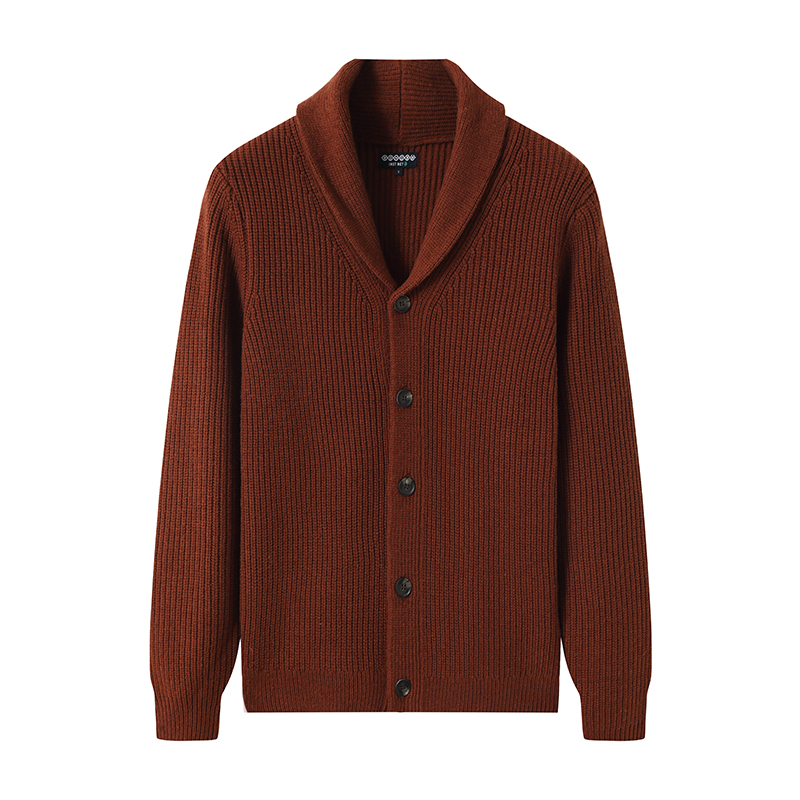
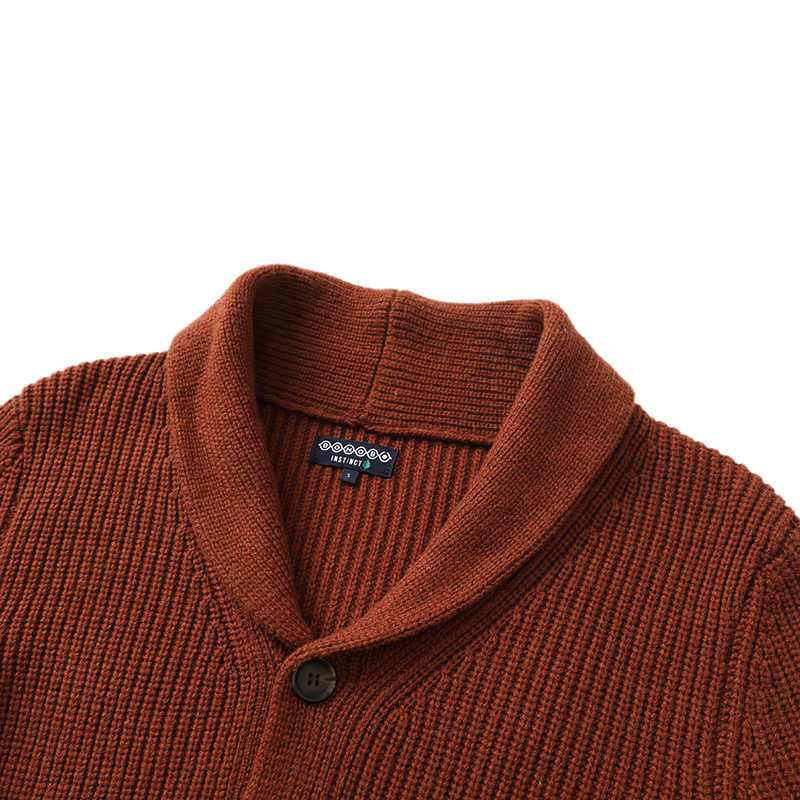
A relevant example for private label sweater sourcing is the Men’s Thick Ribbed Shawl Collar Cardigan from Kaida Knitwear.
The product is described as a heavy-gauge autumn/winter cardigan with a ribbed knitted structure and shawl collar design.
The previously supplied product specifications identify a 7GG knit, an approximate garment weight of 638g ±15g, and a fiber composition of 50% acrylic, 30% nylon, and 20% wool. Buyers should confirm these details against the current product specification before using them for a production order.
What Should Buyers Evaluate in This Type of Cardigan?
For a heavy-gauge ribbed cardigan, pilling risk assessment should consider the yarn’s surface characteristics, fabric structure, and expected wear conditions.
Areas worth examining include:
- Underarm sections: Repeated fabric-to-fabric contact can increase friction.
- Sleeve surfaces: Regular movement and contact with outerwear may influence surface appearance.
- Shawl collar: Contact with the neck, jackets, and surrounding garment surfaces may create localized friction.
- Cuffs and hem: Repeated handling and contact can expose these areas to mechanical wear.
- Front body panels: Contact with bags, seat belts, or other garments may affect the fabric surface.
These are general inspection considerations, not documented defects or verified performance characteristics of the referenced cardigan.
No specific pilling resistance grade should be attributed to this product without an applicable laboratory report.
Does 7GG Knitwear Pill More Than 12GG Knitwear?
Knitting gauge is frequently misunderstood in discussions about sweater quality.
Gauge generally refers to the number of needles per unit of machine width, commonly expressed in needles per inch for flat knitting machines. A 7GG machine has a different needle spacing from a 12GG machine, but gauge alone does not define the final fabric density or pilling performance.
Actual fabric behavior also depends on yarn count, stitch length, knitted structure, fiber characteristics, finishing, and production settings.
A 7GG cardigan may use relatively thick yarns and create a substantial fabric structure, while a 12GG sweater may use finer yarns and a different surface texture.
Neither configuration guarantees better resistance to pilling.
What Should Buyers Compare Instead?
- Fiber composition and fiber characteristics
- Yarn count, twist, and surface hairiness
- Stitch structure and fabric density
- Fabric weight and finishing process
- Relevant laboratory pilling test results
- Appearance after the agreed testing procedure
If a brand is comparing 7GG and 12GG designs, testing should be performed on representative samples of each proposed fabric rather than assuming that the finer gauge will perform better.
How Is Sweater Pilling Resistance Tested?
Standardized laboratory testing provides a structured method for evaluating pilling behavior under controlled conditions.
Two commonly referenced approaches are the ISO 12945 series and ASTM D4970.
Although these standards address pilling evaluation, their procedures and test conditions must be identified precisely. Results from different methods should not automatically be treated as equivalent.
ISO 12945: Textile Surface Pilling Evaluation
The ISO 12945 series covers methods for determining fabric propensity to surface pilling, fuzzing, or matting.
Different parts of the series use different mechanical procedures.
- ISO 12945-1: Uses the pilling box method.
- ISO 12945-2: Uses a modified Martindale method.
- ISO 12945-3: Uses a random tumble pilling method.
The relevant method should be selected according to the buyer’s specification, the material, and applicable testing requirements.
For ISO 12945-2, specimens are subjected to controlled rubbing using a modified Martindale procedure and evaluated according to the applicable standard.
The laboratory report should identify the exact standard edition, test conditions, assessment procedure, and results.
ASTM D4970: Martindale Pilling Resistance Test
ASTM D4970 is a test method for evaluating the pilling resistance and other related surface changes of textile fabrics using a Martindale tester.
It should not be confused with the pilling box method.
The test uses controlled mechanical action to evaluate changes in the fabric surface under specified conditions.
As with ISO methods, the outcome depends on the selected procedure and test parameters.
When requesting ASTM D4970 testing, buyers should specify the applicable edition and agree on the relevant test conditions and evaluation requirements.
Why Different Test Methods Cannot Be Compared Directly
A rating obtained using one method should not automatically be considered equivalent to the same numerical rating obtained using another method.
Differences in mechanical action, specimen preparation, assessment conditions, and evaluation procedures can influence results.
For example, a Grade 4 result under one procedure does not necessarily establish Grade 4 performance under every other pilling test.
To compare materials reliably, buyers should use consistent testing procedures and clearly documented conditions.
Understanding Pilling Test Grades
Pilling evaluations commonly use visual rating scales in which higher ratings generally indicate a better surface appearance under the specified assessment procedure.
However, the precise scale and assessment criteria depend on the applicable standard.
Buyers should avoid treating a single numerical grade as a universal measure of garment quality.
Is Grade 3 Acceptable for Sweaters?
A Grade 3 result may be acceptable under some buyer specifications, but it is not a universal industry pass level.
Acceptance depends on the intended garment category, brand requirements, test method, assessment conditions, and contractual quality standards.
Should Premium Knitwear Require Grade 4 or Higher?
Some buyers may specify relatively demanding pilling performance requirements for premium products. However, a Grade 4 requirement should be established through the relevant test method and agreed technical specification rather than assumed from a product’s price or market positioning.
Brands should consider fabric design, intended use, realistic performance expectations, and testing feasibility before defining acceptance criteria.
What Should a Laboratory Report Include?
- Identification of the tested material
- Applicable standard and edition
- Specimen preparation and conditioning information
- Relevant test parameters and mechanical action
- Assessment procedure and rating scale
- Individual and overall results as required by the method
- Test date and laboratory identification
- Any deviations from the specified procedure
Where accreditation is required, buyers should verify that the laboratory’s accreditation scope covers the relevant test method.
How to Specify Pilling Requirements in an OEM Knitwear Tech Pack
A well-prepared technical package helps translate general quality expectations into measurable production requirements.
Instead of writing only “anti-pilling sweater” or “premium quality knitwear,” buyers should specify how performance will be evaluated.
Recommended Tech Pack Information
| Specification Item | Recommended Information |
|---|---|
| Product identification | Style number, garment description, and approved material reference |
| Fiber composition | Approved fiber percentages and yarn specifications |
| Knitting construction | Gauge, stitch structure, and relevant fabric details |
| Test method | Exact ISO or ASTM standard and edition |
| Test conditions | Parameters required by the selected method and buyer specification |
| Acceptance criteria | Agreed minimum rating or other measurable requirement |
| Sample identification | Approved sample and material batch references |
| Testing stage | Development, pre-production, or bulk production verification |
| Reporting | Required laboratory report and documentation |
The technical package should also state how nonconforming results will be handled, including whether additional testing, corrective action, or material replacement is required.
These details should be agreed upon before production rather than negotiated after a quality dispute occurs.
OEM Quality Control: From Yarn Approval to Bulk Production
Effective pilling control requires coordination between material selection, sample development, testing, and production monitoring.
The following workflow can help fashion brands and manufacturers establish a consistent approach.
Step 1: Review Yarn Specifications
Before sampling, review the proposed fiber composition, yarn count, twist characteristics, and other relevant material properties.
If the project has a specific pilling performance target, the manufacturer should assess whether the proposed yarn and fabric construction are suitable for evaluation against that target.
Step 2: Develop Representative Fabric Samples
Samples should reflect the intended production yarn, knitting structure, and finishing process as closely as practical.
Testing a fabric that differs substantially from the planned bulk material may provide limited information about the final product.
Step 3: Conduct Agreed Laboratory Testing
Use the test method and acceptance criteria specified in the technical package.
Record the material identification, test conditions, results, and any relevant observations.
If the sample does not meet the agreed requirement, the buyer and manufacturer should review potential changes to the yarn, fabric construction, or finishing process.
Step 4: Approve the Pre-Production Sample
Approval should consider both garment appearance and relevant performance requirements.
The pre-production sample should represent the intended construction, materials, measurements, and finishing conditions.
Any material or process changes after approval should be evaluated for their potential effect on performance.
Step 5: Monitor Bulk Production Consistency
During bulk production, manufacturers should maintain traceability of relevant materials and control critical process parameters.
Depending on the production arrangement, this may involve checking yarn batch information, knitting settings, finishing conditions, and inspection records.
Using a different yarn batch does not automatically mean that pilling performance will be unacceptable. However, material substitutions or significant process changes should be assessed against the approved requirements.
Step 6: Verify Production-Representative Materials
Where required by the buyer’s quality plan, specimens should be taken from materials representative of actual bulk production.
For fully fashioned sweaters, this may involve approved production panels or garments rather than fabric cut from a conventional fabric roll.
For cut-and-sew knitwear, specimens may be obtained from production fabric or garments as appropriate to the selected test method.
The sampling procedure should be documented so that test results can be traced to the relevant production material.
Common Mistakes Fashion Brands Make When Evaluating Sweater Pilling
Mistake 1: Assuming Wool-Blend Sweaters Are Naturally Anti-Pilling
Wool content alone does not establish pilling resistance. Fiber characteristics, blending methods, yarn structure, and finishing must also be considered.
Mistake 2: Selecting Materials Based Only on Knitting Gauge
Gauge affects the knitting process and potential fabric characteristics, but it does not provide a reliable standalone measure of pilling performance.
Mistake 3: Accepting an Unsupported Anti-Pilling Claim
Terms such as “anti-pilling,” “low-pilling,” or “premium surface quality” should be supported by an agreed test method and relevant evidence when they are used as performance claims.
Mistake 4: Comparing Test Grades From Different Methods
Numerical ratings are meaningful only in the context of their test procedures. Results obtained under different methods or conditions may not be directly comparable.
Mistake 5: Testing Only an Early Development Sample
Early samples may not represent final production materials. When the quality plan requires it, testing should also address pre-production or bulk-production-representative material.
Mistake 6: Treating Finishing Treatments as Guaranteed Solutions
Finishing may influence surface performance, but it should be evaluated for its effects on pilling, garment hand feel, appearance, and other relevant properties.
How to Reduce Sweater Pilling Risk Without Compromising Design
Fashion brands often want a soft, substantial knitted fabric while also expecting a clean appearance after repeated wear.
These goals may require balancing competing material characteristics.
For example, changing yarn twist or fiber selection may influence pilling behavior but can also affect softness, drape, texture, or cost.
Rather than applying a single treatment to every style, brands should evaluate alternatives through controlled sampling.
Practical Development Options
- Review yarn construction: Compare suitable yarn options with different fiber and twist characteristics.
- Evaluate fabric structure: Test whether adjustments to stitch construction or fabric density improve the desired balance of appearance and performance.
- Assess finishing methods: Determine whether appropriate finishing changes improve surface behavior without compromising the garment’s design.
- Test the finished fabric: Use representative samples after the intended production finishing process.
- Document approved materials: Maintain clear references for the yarn, fabric, and finished garment.
- Provide accurate care instructions: Ensure garment care recommendations reflect the actual material and applicable care testing.
The objective is not necessarily to eliminate all visible pilling under every possible condition. It is to develop a product that meets agreed quality requirements and performs appropriately for its intended use.
What Should Buyers Ask a Knitwear Manufacturer About Pilling Control?
When evaluating an OEM sweater supplier, technical questions can provide more useful information than general claims about manufacturing experience.
- What yarn characteristics are most relevant to pilling risk for this design?
- Can the proposed fabric be tested using our required standard?
- Which test method and edition will be used?
- Can the manufacturer provide representative fabric or garment samples?
- How will material changes be controlled after sample approval?
- Can test reports be linked to specific material batches or production lots?
- What corrective actions are available if a sample does not meet the agreed requirement?
- How will finishing consistency be monitored during bulk production?
- What additional costs or lead-time implications may result from testing or material adjustments?
- How will the approved quality requirements be documented before production begins?
Clear answers help buyers assess the supplier’s technical approach and reduce misunderstandings during product development.
Recommended Knitwear Product for Pilling Risk Evaluation
The Men’s Thick Ribbed Shawl Collar Cardigan is a relevant product reference for brands sourcing substantial autumn/winter knitted garments.
Its ribbed structure, shawl collar design, and wool-blend material make it suitable for discussing fabric surface behavior, friction exposure, and the importance of material verification during OEM development.
For a similar private label project, buyers should request current product specifications and discuss the intended yarn, gauge, garment weight, color requirements, and quality expectations with the manufacturer.
Product reference: Men’s Thick Ribbed Shawl Collar Cardigan – 7GG Wool-Blend Knitwear.
Important: This product reference does not establish a specific pilling test grade, guaranteed anti-pilling performance, or verified laboratory result.
Frequently Asked Questions
What causes pilling in knitted sweaters?
Pilling occurs when fibers migrate to the fabric surface, become entangled through friction, and form small fiber clusters. Fiber characteristics, yarn twist, knitted structure, finishing processes, and wear conditions can all influence the formation and retention of pills.
How is sweater pilling resistance tested?
Sweater pilling resistance can be evaluated using agreed laboratory methods, including relevant parts of ISO 12945 or ASTM D4970. The selected procedure subjects specimens to controlled mechanical action and evaluates the resulting surface changes. Reports should identify the method, conditions, rating scale, and test results.
Does a higher knitting gauge mean better pilling resistance?
Not necessarily. Knitting gauge alone does not determine pilling resistance. Yarn characteristics, fiber length, twist, stitch structure, fabric density, finishing, and friction conditions all contribute to performance. Buyers should evaluate actual fabric samples rather than relying on gauge as a quality guarantee.
Are wool-blend sweaters more likely to pill?
Wool-blend sweaters can develop pilling, but the extent depends on the characteristics of the blended fibers, yarn construction, knitted fabric structure, and finishing. Fiber composition alone cannot establish a reliable pilling grade. Testing representative samples is the preferred approach.
How can fashion brands reduce pilling problems before bulk production?
Brands should define measurable pilling requirements in the tech pack, evaluate representative yarn and fabric samples, agree on a suitable laboratory method, review test results, and establish controls for material and process changes before bulk production.
What pilling test grade should an OEM sweater manufacturer guarantee?
There is no universal pilling grade appropriate for every sweater. Acceptance criteria depend on the garment category, intended market, selected test method, buyer requirements, and product specifications. The buyer and manufacturer should agree on the relevant performance target before production and verify it through documented testing.
Final Thoughts: Managing Sweater Pilling in Bulk Production
Effective management of sweater pilling in bulk production begins with understanding how fibers, yarn construction, knitting structures, finishing, and mechanical wear interact.
Neither a wool-blend composition nor a specific knitting gauge can guarantee satisfactory surface performance. Reliable evaluation requires representative samples, clearly defined test procedures, appropriate acceptance criteria, and consistent production controls.
For private label fashion brands and OEM sourcing teams, the most practical approach is to establish pilling requirements early in product development and maintain traceable specifications through sample approval and bulk production.
If you are planning a custom sweater or cardigan collection, explore Kaida Knitwear and discuss your yarn requirements, knitting structure, sampling expectations, and quality control specifications with the team before requesting a bulk production quotation.