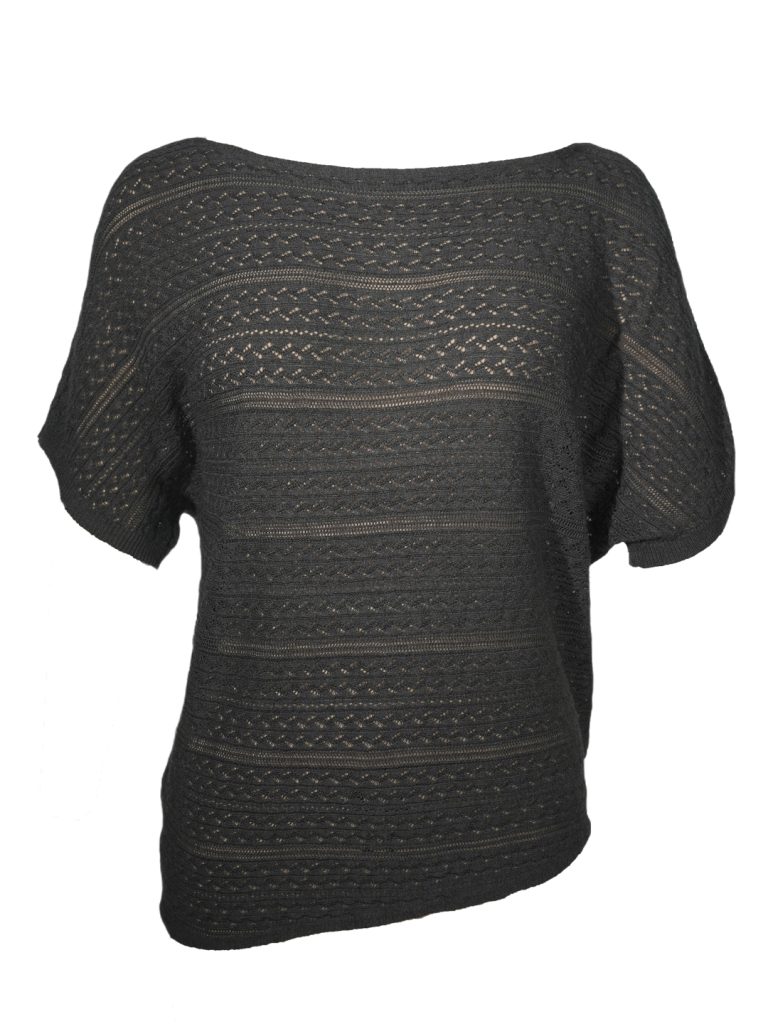
WOMEN'S SWEATER
Custom Women's Lyocell Openwork Stripe Knit Top Factory
OEM & ODM
Available
Low MOQ
From 100 pcs
7-12 Days
Sampling
Worldwide
Shipping
- Product Type
- Women's Short-Sleeve Knit Top
- Neckline
- Boat Neck
- Sleeve Style
- Relaxed Batwing Sleeves With Slightly Dropped Shoulders
- Knit Structure
- Alternating Openwork And Solid Knit Stripes
- Gauge
- 12GG
- Material
- 100% Lyocell
- Color
- Dark Grey
- Weight
- 202 g
- Hem
- Straight Hem Without Heavy Ribbing
PRODUCT OVERVIEW
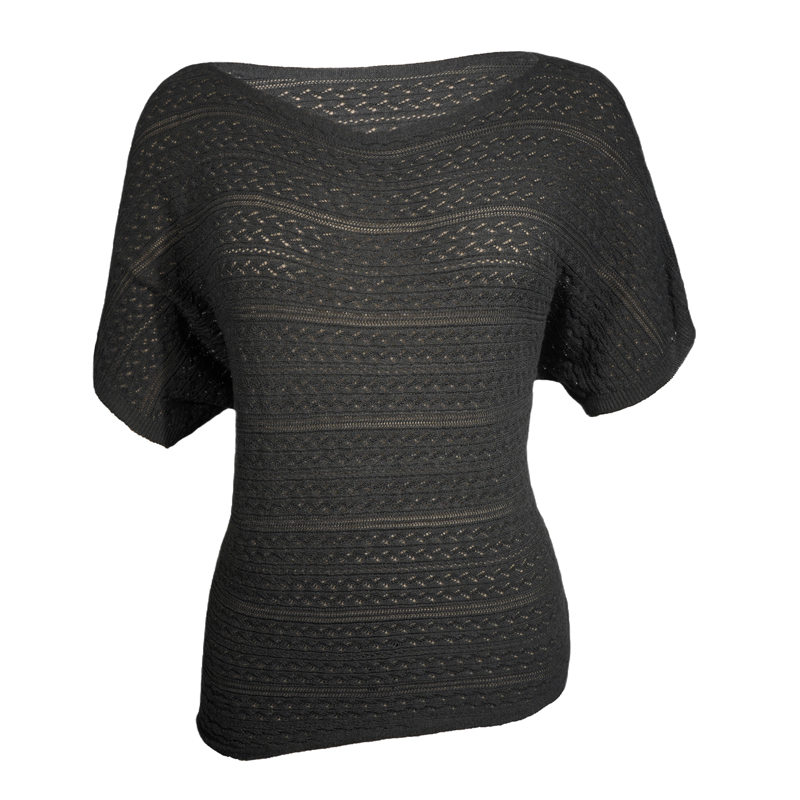
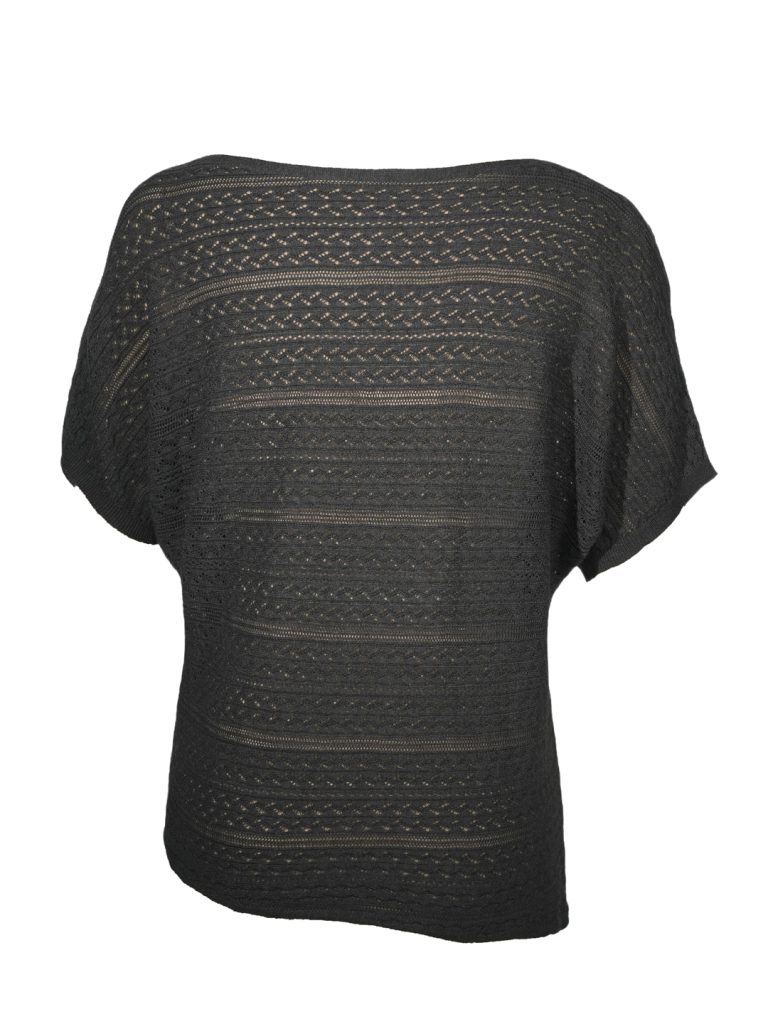
This women's short-sleeve knit top combines a relaxed silhouette with alternating openwork and solid-knit stripes, creating a distinctive textured surface. The dark grey color gives the design a refined, understated appearance, while the horizontal knit patterns add depth and visual interest without excessive decoration. The wide boat neckline complements the dropped shoulders and loose short sleeves, creating an easy, contemporary shape. A clean, straight hem maintains a streamlined finish, allowing the textured knit construction to remain the main design feature. Made from 100% Lyocell, this top offers a lightweight visual character, with alternating openwork sections adding dimension and a semi-sheer effect to the overall appearance. For apparel brands, boutique labels, and wholesale buyers, this style provides an alternative to conventional plain-knit tops. It can be considered for contemporary casualwear collections, coordinated knitwear assortments, and seasonal retail ranges. During OEM product development, buyers can evaluate the sample's pattern definition, neckline proportions, sleeve shape, drape, and finishing details before confirming the final production specifications.
CUSTOMIZATION OPTIONS
Neckline & Dolman Sleeve Structure Options
Select wide boat neck, off-shoulder or crew neck, adjust opening depth and dolman sleeve length. Custom rib binding for edges. Balanced low-tension stitching protects the openwork pattern from distortion while keeping its relaxed drape.
Horizontal Openwork Lace Texture Options
Adjust the density of eyelet lace bands and the width of solid knit stripes. Tune stitch tension to control sheerness. Stabilise the transition between lace and solid sections to avoid uneven stretch and sagging after washing.
Yarn & Gauge Options
Choose cotton, linen blend, viscose or GRS recycled yarn. Select gauge 7G–16G for lightweight openwork texture. Optimise yarn twist to retain cool, breathable hand feel ideal for layering as a summer cover-up.
Fit & Hem Silhouette Options
Customise batwing loose, straight boxy or softly tapered fit. Adjust garment length and asymmetric hem design. Stitch shaping keeps horizontal lace stripes neat on oversized draping styles.
Colour & Finishing Options
Match colours to your Pantone references. Available treatments: softening wash, anti-snag and heat setting for shrink control. OEKO‑TEX, GRS and RWS certifications can be supplied.
MANUFACTURING CAPABILITY
- ✓ Knitwear Design Interpretation: KAIDA can develop women's knit tops from reference garments, technical drawings, or Tech Packs. For this style, development review can focus on the wide neckline, loose short sleeves, body proportions, and horizontal textured pattern layout to ensure the sample reflects the intended design direction.
- ✓ Openwork Pattern Development: The garment features alternating openwork and denser knit sections arranged in horizontal bands. During development, these areas can be reviewed for pattern definition, spacing, alignment, and visual balance. The relationship between the openwork sections and the surrounding knit structure is particularly important to maintaining the character of the design.
- ✓ Sleeve And Body Proportion Control: The relaxed short-sleeve shape and relatively straight body create the top's casual silhouette. Sample assessment can cover sleeve width, armhole placement, body width, garment length, and neckline proportions. These details should be checked together to establish a consistent overall shape before production approval.
- ✓ Knit Surface And Finishing Review: Horizontal pattern transitions create several points that require attention during garment evaluation. Relevant review areas include the clarity of the openwork sections, continuity of the textured bands, neckline finishing, sleeve edges, and lower hem. The final acceptance criteria can be agreed with the buyer based on the approved sample.
- ✓ Sample Approval And Production Reference: The approved sample can serve as the visual reference for bulk manufacturing, supported by confirmed measurements, construction details, pattern placement, and other agreed specifications. Recording these details helps the production team work from a consistent reference rather than relying on general product descriptions.
- ✓ Bulk Order Quality Coordination: Quality checkpoints can be established around the style's distinctive construction, including garment measurements, horizontal pattern alignment, visible knit irregularities, edge finishing, and overall appearance. Inspection requirements and acceptable tolerances should be confirmed for each order according to the buyer's standards.
- ✓ OEM Collection Development Support: For brands planning coordinated women's knitwear ranges, KAIDA can discuss how this design fits into the wider collection, including silhouette references, pattern variations, and product presentation requirements. Development priorities, order details, production schedules, and delivery expectations can then be documented for the individual project.