Introduction
For private label apparel buyers and boutique brand owners, sourcing a heavyweight cotton sweater requires evaluating three core factors: material specification, manufacturing capability, and brand alignment. This guide examines the 5GG heavy cotton sweater category—specifically the Women’s Heavyweight Cotton Sweaters subsegment—using the 5GG Slouchy Jumper Collection as a strategic reference point for OEM sourcing decisions in women’s casualwear.
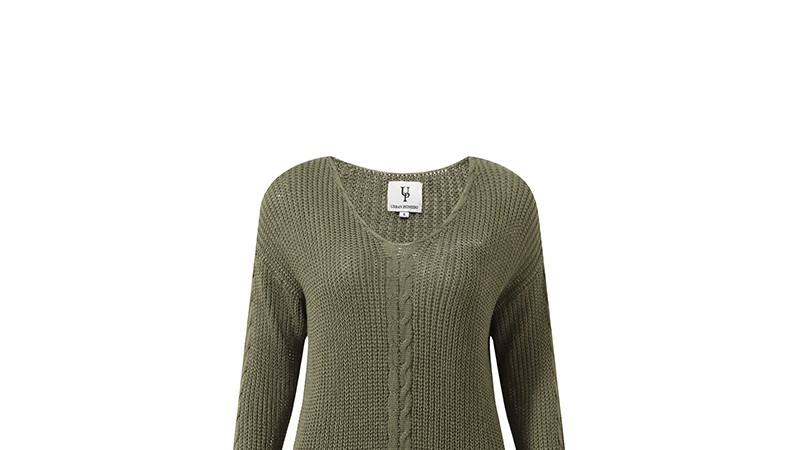
Understanding the 5GG Heavy Cotton V-Neck Slouchy Jumper
In knitwear production, gauge refers to the density of stitches per inch. A 5GG (5 gauge) construction delivers a coarser, more open knit structure, resulting in substantial fabric body and structural integrity without requiring linings or interlinings. When paired with a 330g weight and 100% combed cotton, this combination achieves a balanced handfeel: dense enough to provide warmth for fall and winter collections, yet breathable and soft against the skin after standard garment finishing.
The V-neck styling adds a classic, elongated neckline that layers cleanly under outerwear and suits a broad range of body types. The slouchy / relaxed silhouette combined with a dropped shoulder seam supports inclusive sizing and aligns with current consumer preference for comfortable, casual styling—making it a viable staple for both direct-to-consumer and retail channels.
Key Specifications & Performance Characteristics
To evaluate this sweater category effectively, sourcing professionals should distinguish between gauge, weight, and fit as independent yet interrelated variables:
- Gauge: The 5GG stitch structure allows for a substantial fabric body that holds its shape while retaining enough flexibility for comfortable wear.
- Weight: At 330g, this fabric weight falls into the mid-to-heavyweight range, providing thermal insulation for cooler-weather programs without feeling excessively bulky.
- Fit: The slouchy silhouette is achieved through deliberate pattern engineering—particularly in dropped-shoulder placement and hem tapering—rather than simple size grading, which prevents unintended sagging or loss of shape.
These characteristics are especially relevant for buyers evaluating women’s V-neck jumper OEM partners, as the factory must demonstrate pattern expertise to execute a relaxed fit consistently across production
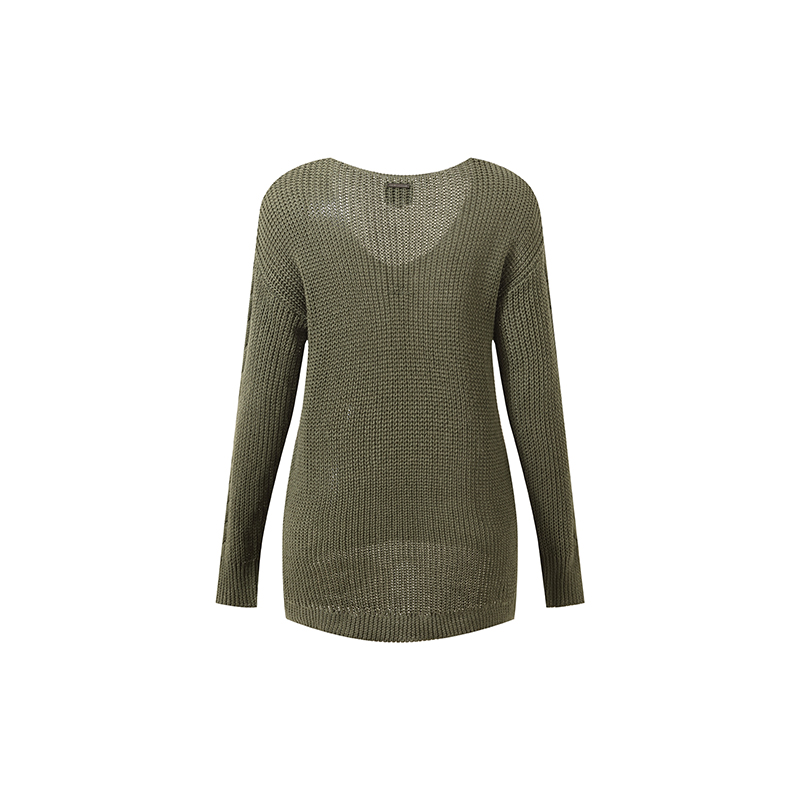
batches.
Advantages & Practical Considerations
Advantages of this construction:
- High perceived quality and substantial feel at an accessible production cost point.
- Reduced shrinkage risk when using pre-shrunk combed cotton with controlled knitting tension.
- Good compatibility with brand customizations such as embroidery, tonal ribbing, or custom neck tapes without requiring additional reinforcement.
- E-commerce compatibility: the consistent drape improves product photography accuracy, and the relaxed fit helps lower size-exchange rates.
Practical limitations to consider:
- Not ideal for ultra-fitted or cropped silhouettes unless significant pattern modifications are applied.
- Limited stretch recovery compared to elastane-blended knits, which may affect activewear cross-over applications.
- Requires appropriate moisture management in humid storage environments prior to packaging.
This sweater construction is best suited for retail private label apparel and fall/winter knitwear programs where tactile quality, comfort, and seasonless styling are key priorities.
Sourcing Considerations for Private Label Brands
When planning a 5GG heavy cotton sweater program, procurement decisions should reflect three practical criteria: target market expectations, supply chain capabilities, and development timelines.
For brands launching a new women’s casualwear collection, a single-color pilot (e.g., oatmeal, charcoal, navy) can validate fit and fabric performance before expanding into a full color range. For established boutique brand seasonal lines, subtle design variations—such as ribbed cuff depth, V-neck depth adjustments, or pocket placement—offer differentiation within the product line without increasing sampling complexity.
For DTC fashion brand sourcing, selecting a factory that offers a 7–12 day sample turnaround is critical. This sampling window allows time for internal fit reviews and production scheduling without compressing bulk lead times. For contract manufacturing for e-commerce sellers, confirming MOQ flexibility is essential: 100 pcs per color per style is practical only if it applies uniformly across all color variants selected for the order.
Material Focus: The Role of 100% Combed Cotton
Combed cotton undergoes an additional spinning preparation process that removes short fibers and surface impurities. This results in smoother yarns with increased tensile strength and reduced pilling tendencies. In 5GG knit constructions, where the loop size is larger and surface area is more exposed, this processing step directly influences the garment’s long-term appearance retention.
Uncombed or carded cotton may present a similar appearance when newly finished, but after repeated laundering, differences in surface fuzzing, seam definition, and collar shape become noticeably pronounced. For private label knitwear manufacturer partnerships, buyers are advised to request a yarn specification sheet—not merely a fiber composition claim—to confirm combed cotton is used consistently across the production process.
OEM Manufacturing Capabilities
A vertically integrated knitwear factory provides inherent advantages for wholesale sweater sourcing, including control over yarn procurement, dye lot consistency, and streamlined handoffs between knitting, linking, and finishing stages. However, vertical integration alone does not guarantee quality outcomes—process discipline at each stage is equally critical.
When reviewing an OEM supplier’s capability for this style, consider evaluating:
- How gauge calibration and tension consistency are verified across production batches.
- Approaches to maintaining fit consistency in dropped-shoulder constructions across wide-width panels.
- Seam allowance standards and post-wash finishing processes to ensure dimensional stability.
Full OEM/ODM support extends beyond logo placement. It includes pattern adaptation, stitch-type substitutions (e.g., adjusting rib structures at cuffs or hems), and trim specifications—covering details such as thread weight, needle type in linking, and custom packaging options.
Recommended Product
Private Label Cotton Sweater Manufacturer | Women’s 5GG Heavy Cotton V-Neck Slouchy Jumper — Developed for retail private label apparel and boutique brand seasonal lines, this style combines an accessible MOQ (100 pcs per color per style) with authentic heavyweight character. Its 330g 100% combed cotton construction and dropped-shoulder execution provide a solid foundation for brands seeking tacti
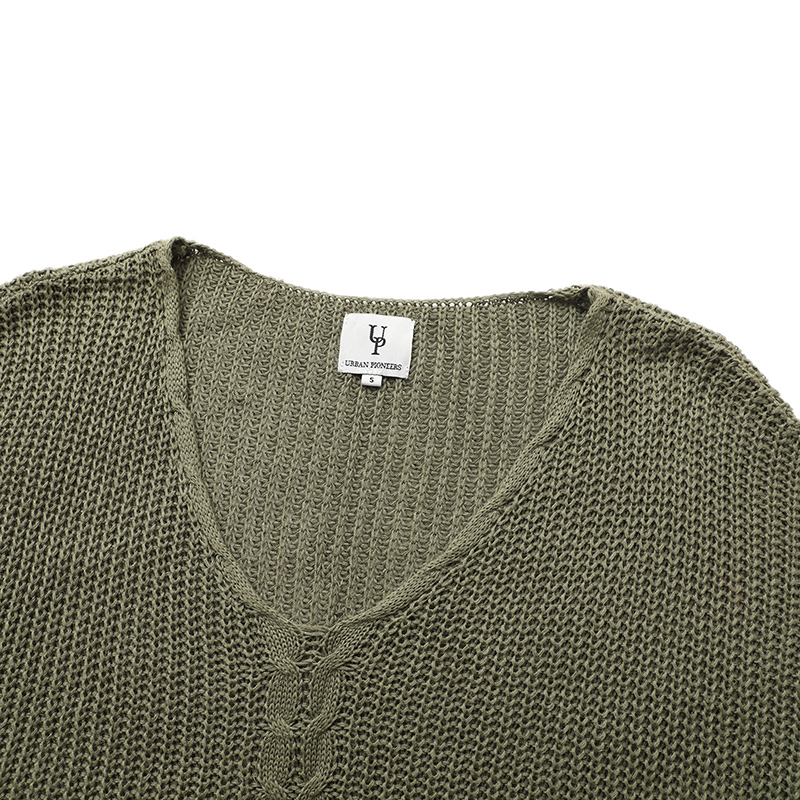
le quality and reliable OEM production support.
Frequently Asked Questions
Q: What is the minimum order quantity for this 5GG cotton slouchy jumper?
The MOQ is 100 pcs per color per style, making it practical for emerging boutique brands and smaller retail test orders while maintaining manufacturing efficiency.
Q: Can I customize the color, fit, or add design details like ribbing or embroidery?
Yes, full OEM/ODM customization is supported. You may specify Pantone colors, adjust the slouchy fit, add ribbed cuffs or hem details, and include embroidery, woven labels, or custom packaging.
Q: What is the typical sampling and production timeline for bulk orders?
Sample development typically takes 7–12 days. Bulk production lead time is determined upon order confirmation and depends on total volume and the specific customization requirements.
Q: How does the relaxed fit perform across extended size ranges?
The dropped-shoulder and slouchy silhouette provide inherent flexibility across a broader size range compared to fitted styles. However, graded patterns should still be validated with the factory for proper proportionality across the intended size matrix to ensure consistent appearance.
Conclusion
Selecting a 5GG heavy cotton sweater involves more than choosing a garment—it involves selecting a manufacturing partner whose capabilities align with your brand’s quality expectations and production schedule. Whether you are establishing a private label knitwear manufacturer relationship, executing a women’s V-neck jumper OEM brief, or developing a 330g cotton pullover supplier pipeline, clarity on gauge specifications, fabric weight, and fit intention is essential to avoid downstream production issues.
Effective sourcing in the Knitwear > Women’s Heavyweight Cotton Sweaters category requires attention to sampling timelines, material processing (particularly combed cotton), and confirmation that OEM flexibility covers structural elements such as sleeve cap shaping and hem finishing—not just graphic or label customization.
Contact our team to discuss your knitwear program requirements and explore tailored manufacturing solutions for your next collection.