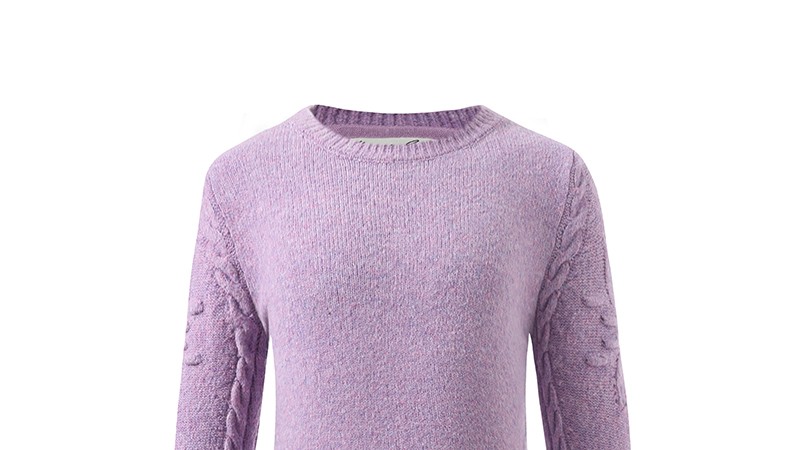
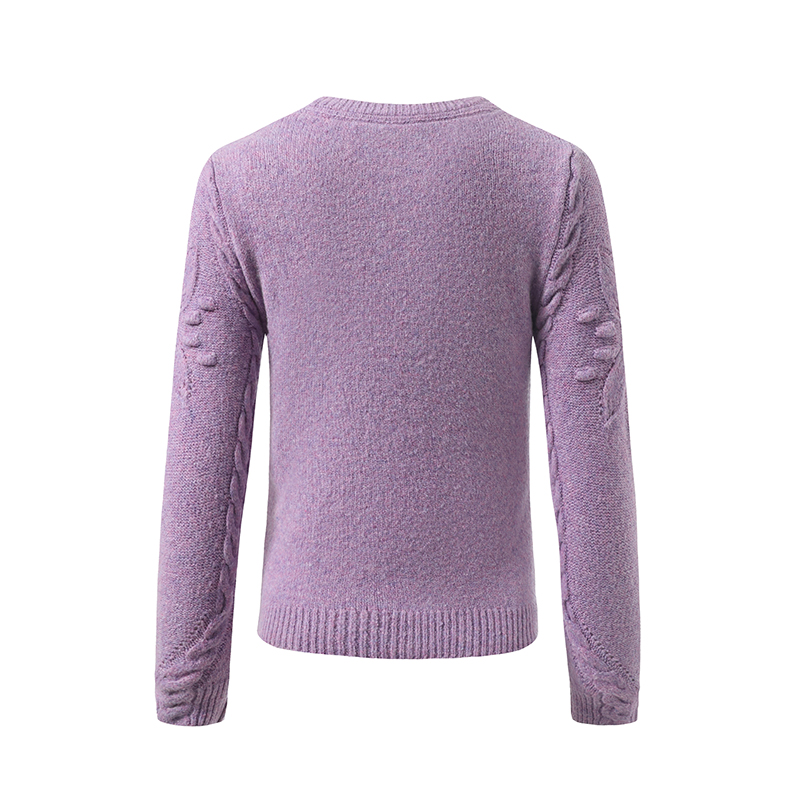
Selecting the right girls sweater OEM partner for your Spring/Autumn collections is a strategic decision that goes beyond aesthetics—it directly affects garment fit, fabrication drape, seasonal versatility, and your ability to scale production reliably. The 5GG fine knit, constructed with a 37% cotton / 34% acrylic / 26% polyester / 3% spandex blend—exemplified by the Girls’ 5GG Crewneck Sweater – Equestrian Jacquard Series—strikes a proven balance between breathability, shape retention, and cost-efficiency for private label knitwear programs. However, this specification is not a one-size-fits-all solution. While it excels as mid-weight layering for sizes 2Y–14Y, it may require yarn customization for humid climates or brands with stringent sustainability mandates. Savvy buyers must assess how this technical foundation aligns with their end-users’ expectations—prioritizing wash durability, stretch recovery, and compliance readiness, not just visual appeal.
Why 5GG Gauge Matters in Girls’ Knitwear Engineering
Gauge defines the number of needle rows per inch—and 5GG represents a medium-fine knit that bridges the gap between chunky winter structures (3GG) and delicate summer weaves (7GG+). This specific gauge delivers a clean, uniform surface texture that is exceptionally suited for intricate jacquard motifs and structured crewneck silhouettes. It ensures stable stitch definition while maintaining enough natural elasticity to accommodate the active lifestyles of children. Importantly, gauge alone does not dictate final fabric weight or hand-feel—these are influenced by yarn thickness, machine tension, and loop length. The 190g ±10g weight achieved at 5GG indicates a dense yet resilient fabric; it is structured enough to hold tailored shapes but soft enough for everyday wear. For kids apparel manufacturer workflows, buyers should always verify that gauge consistency is preserved during custom grading from 2Y to 14Y, ensuring sizing accuracy across the entire production run.
Decoding the Cotton Acrylic Spandex Blend: Performance & Durability
The engineered composition of 37% cotton, 34% acrylic, 26% polyester, and 3% spandex is designed for real-world wear. Cotton provides natural softness and moisture absorption against the skin; acrylic adds lightweight bulk and wool-like warmth at a competitive price point; polyester enhances structural integrity and abrasion resistance; while spandex offers controlled recovery (typically 15–20% stretch) that keeps its shape through active play. This thoughtfully calibrated blend minimizes the pilling common to 100% acrylic garments and reduces the shrinkage risks associated with high-cotton ratios—critical factors for school uniform programs and equestrian apparel that undergo frequent laundering. Buyers should confirm whether the cotton acrylic spandex sweater utilizes combed, carded, or ring-spun fibers, as this directly influences pilling resistance and surface smoothness. While yarn customization is supported, any composition change requires re-validation of dye uptake, shrinkage tolerance, and OEKO-TEX® Standard 100 certification scope (which applies to the final finished fabric).
OEM vs. ODM: Selecting the Right Development Path for Your Brand
For boutique kidswear labels, ODM services offer a significant advantage—providing pre-engineered base patterns, proven grading rules, and an existing jacquard library to accelerate the sampling phase and reduce upfront development costs. In contrast, school uniform suppliers and equestrian brands typically require full OEM execution, which involves precise logo scaling, exact mascot intarsia placement, and rigorous color matching via Pantone TPX/TCX lab dips. Both approaches demand early-stage alignment on custom sweater manufacturer capabilities. Can they translate your vector artwork into seamless jacquard motifs without distortion across varying sizes? Do they offer custom grading that aligns with your specific regional body measurement standards (beyond standard ISO 8559)? The low entry barrier of a 100 pcs per color MOQ is attractive, but brands must confirm whether this minimum applies to base styles only or extends to variant options like sleeve length adjustments and custom collar treatments.
Essential OEM Development Checklist Before Sampling
- Confirm whether the 7–10 day sample lead time includes physical lab dips for color approval or is restricted to digital color matching only.
- Verify the technical requirements for custom jacquard development—specifically if AI or EPS files are required, and inquire about defined repeat dimensions and stitch count limitations.
- Clarify the grading methodology used: is it proportional grading, statistically derived, or based on third-party anthropometric scan data?
- Insist on reviewing pre-production fabric swatches—not just finished garment samples—to accurately assess shrinkage, fabric skew, and true hand-feel before committing to bulk cutting.
- Confirm the exact certification coverage: does the manufacturer provide OEKO-TEX® Standard 100 Class I (for infants/toddlers) or Class II (for older children), and request the specific documentation format for CPSIA compliance (e.g., certified third-party lab reports).
Tailoring the 5GG Sweater to Your Target Market
Equestrian apparel brands benefit significantly from the 5GG structure’s ability to showcase embroidered crests and jacquard monograms cleanly, without puckering, while the spandex content offers essential freedom of movement for riding postures. For school uniform programs, the inherent polyester-acrylic ratio improves wrinkle resistance and facilitates stain release through institutional laundering cycles, ensuring a crisp appearance day after day. Private label knitwear lines leverage this versatile base to differentiate through branding elements—custom hangtags, woven neck labels, and bespoke retail packaging that reinforce brand identity without disrupting core garment construction. Meanwhile, seasonal fashion collections take advantage of the blend’s dye receptivity for rich color palettes and its ability to handle subtle intarsia transitions, making it a canvas for storytelling motifs in boutique collections. Note: this specific weight and blend are engineered specifically for transitional seasons (Spring/Autumn) and is less suitable for tropical climates or heavy winter layering.
Recommended Products
OEM Girls’ Cotton Acrylic Spandex Fine Knit Sweater — Engineered for brands seeking certified, scalable production of 5GG crewnecks for girls’ sizing (2Y–14Y). This solution supports full yarn composition adjustments, Pantone color matching, and comprehensive private label customization. It is ideally suited for equestrian, school, and boutique scenarios where consistent weight (190g ±10g), reliable stretch recovery, and OEKO-TEX®/CPSIA compliance are non-negotiable requirements for market success.
Frequently Asked Questions
What is the minimum order quantity for OEM girls’ knitwear production?
The MOQ starts from 100 pcs per color, making it accessible for emerging brands and boutique labels to test new designs without overcommitting inventory.
How long does it take to produce a sample?
Sample lead time is typically 7–10 days, depending on the complexity of the design and any customizations required.
Can I customize the yarn composition?
Yes, reputable manufacturers offer yarn composition adjustments to meet your target pricing, hand-feel requirements, climate needs, or sustainability goals.
What certifications should I look for in a children’s knitwear manufacturer?
Look for OEKO-TEX® Standard 100 certification (ensures textiles are free from harmful substances) and CPSIA compliance for U.S. market requirements.
Can the manufacturer create custom jacquard designs from my artwork?
Yes, reliable knitwear manufacturers can develop custom jacquard and intarsia designs from your artwork files, including brand graphics, school logos, mascots, and seasonal illustrations.
What size ranges are typically available for girls’ knitwear?
Most manufacturers offer size ranges from 2Y to 14Y, with custom grading available to match your target market’s body proportions.
There is no single “best” 5GG knitwear factory or universal formula for girls’ sweaters. The ideal knitwear manufacturer is defined by alignment—not just on technical specifications like gauge and MOQ, but on a shared understanding of your brand’s customer journey, channel constraints, and quality validation process. Whether you are developing an equestrian-themed jacquard series or a minimalist private label line, success depends on early, precise communication regarding tech pack details, sampling protocols, and compliance documentation. The 190g 5GG cotton acrylic spandex sweater provides a reliable proven starting point—but its ultimate suitability is determined by how effectively you map these variables to your specific program requirements.
Ready to bring your knitwear collection to life? Contact our team today to discuss your project and request a customized manufacturing consultation.